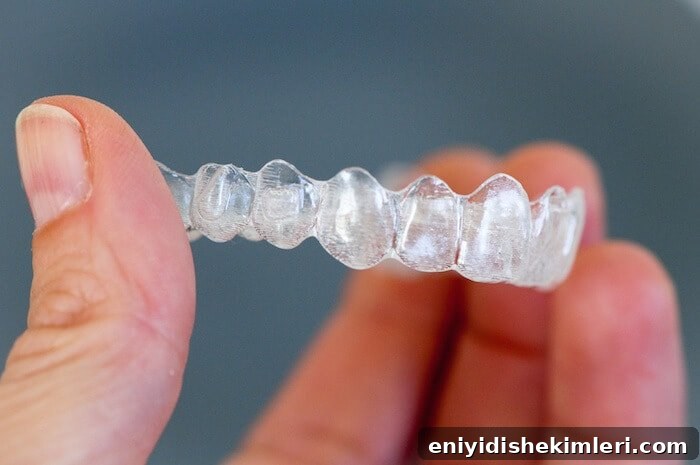
Invisalign is far more than a cosmetic treatment. Although marketing often emphasizes appearance and convenience, the true value of Invisalign lies in its health benefits and functional improvements for the entire mouth and jaw.
Beyond near-invisibility and the convenience of removable aligners, here are the ten most important reasons to consider Invisalign, presented from least to most important.
10. Aesthetics
While a better smile is often the most visible result, cosmetic improvement is secondary to the oral health advantages. Aesthetic benefit is simply an additional perk that many patients appreciate.
9. Aligners double as protective appliances
Invisalign trays can serve multiple purposes beyond tooth movement. They can be used as night guards to protect against grinding, or as temporary protection during sports and other activities. The trays can also be used during whitening treatments, offering a practical, multi-use appliance.
8. Shorter, more efficient dental cleanings
Properly aligned teeth are easier to clean both at home and professionally. When teeth are straight, flossing is more effective and dental hygienists can clean surfaces more thoroughly. Crooked or crowded teeth create hard-to-reach areas where plaque and bacteria can persist, reducing the effectiveness of routine cleanings.
7. Improved speech and phonetics
Tooth position affects pronunciation and speech clarity. Small changes in tooth length or bite alignment—such as an open bite or protruding front teeth—can cause lisps or slight whistling. For professionals who rely on precise speech, such as actors and voice artists, Invisalign can help refine articulation by adjusting tooth position.
6. Reduced food impaction and easier oral hygiene
Misaligned teeth often leave gaps where food can become trapped, a condition known as food impaction. Trapped food promotes bacterial growth, which can lead to gum inflammation, recession, and discomfort. Aligning the teeth reduces these gaps, making brushing and flossing more effective and lowering the risk of chronic gum problems.
5. Relief from facial, jaw, and neck pain
For many patients, correcting the bite and wearing an aligner can reduce muscle tension and symptoms related to grinding. When there is no structural joint pathology, aligners can help “deprogram” overactive muscles and alleviate temporomandibular disorder (TMD) symptoms, decreasing facial and jaw pain over time.
4. Better bone architecture and gum positioning
Teeth do not exist in isolation: their alignment affects the underlying bone and gum tissues. Proper tooth positioning promotes healthier bone architecture and better gum contours, creating a more self-maintaining environment for long-term oral health. Crooked teeth can lead to uneven bone support and compromise gum health.
3. Improved digestion through efficient chewing
The mouth begins the digestive process. A proper bite allows more effective mastication, which breaks food into smaller particles and aids digestion and nutrient absorption. Poor chewing efficiency can impact digestion and reduce the nutritional value you get from food.
2. Correct lower-to-upper jaw relationship
Good jaw alignment is essential for proper function. Think of the jaw like a door with two hinges: it needs to open and close smoothly and meet its strike plate (the teeth) without friction. A misaligned bite can cause undue stress on the jaw joints, leading to TMJ problems such as pain, clicking, popping, and worsening function. Correcting jaw position helps preserve joint health and prevents progressive damage.
1. A healthy, functional bite
The primary goal of orthodontics—including Invisalign—is to create a functional, healthy bite. A proper bite supports overall oral health, reduces pain, improves chewing and speech, and protects the supporting bone and gums. While a beautiful smile boosts confidence, the lasting benefits come from improved function and reduced risk of dental disease.
Orthodontic treatment is a science focused on long-term health. Too often it is presented mainly as a cosmetic option, which overlooks the important structural and medical reasons to treat malocclusion. Aesthetic improvements are valuable, but they are most meaningful when paired with better health and function.
We want to look thin before we’re truly fit—prioritize function and health first.
Mark Burhenne DDS