
Both of my parents died of Alzheimer’s, so brain health isn’t just research for me — it’s personal. I’ve spent decades studying cognitive function, longevity, and prevention, and a 2023 study changed how I think about magnesium.
Study: Alateeq, Khawlah; Erin I. Walsh; and Nicolas Cherbuin. Dietary magnesium intake is related to larger brain volumes and lower white matter lesions with notable sex differences. European Journal of Nutrition (2023).
This research found that higher magnesium intake is associated with larger brain volume, especially in regions involved in learning and memory. On average, people with higher magnesium intake had brains that appeared nearly a year younger by midlife.
Notably, women experienced greater benefits than men. Possible explanations include generally lower baseline magnesium levels among women and hormonal shifts — particularly during menopause — that can affect magnesium absorption and use. Translation: if you want to protect your brain, check your magnesium.
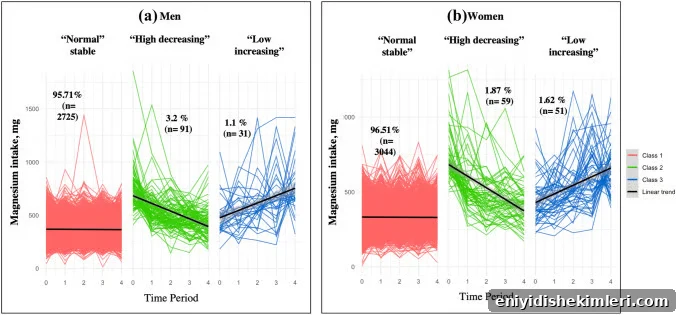
Researchers tracked magnesium intake over time for men (left) and women (right).
The blue group (“Low Increasing”) began with low magnesium intake but increased over time — and this group showed larger brain volumes and fewer white matter lesions, both indicators of healthier brains.
Big takeaways:
- Increasing magnesium intake now can help protect your brain long term — especially for women, who showed the largest gains in the study.
- Higher magnesium intake was linked to bigger brain volumes and fewer white matter lesions, markers associated with reduced brain aging.
- People with low magnesium intake tended to have higher blood pressure, while those who raised intake saw improvements.
The study also suggests that increasing magnesium earlier in life sets the stage for better brain health later. The best time to start was yesterday; the next best time is today.
Why magnesium helps the brain
Magnesium supports several brain-protective processes, including:
- Neuroplasticity — supporting the brain’s ability to adapt and form new connections.
- Reducing inflammation — lowering chronic inflammation that accelerates brain aging.
- Preventing hippocampal shrinkage — helping preserve the hippocampus, essential for memory and learning.
- Regulating neurotransmitters — balancing calming GABA and excitatory glutamate to prevent toxicity.
- Supporting stress resilience — helping control cortisol and mitigating stress-related brain aging.
Are you low in magnesium?
Some signs of magnesium deficiency that may appear in the mouth include:
- Dry, cracked lips
- Burning sensations on the tongue
- Canker sores on the tongue or inside the cheeks
- White spots on the tongue
- Swollen or inflamed gums
- Difficulty swallowing
- Persistent bad breath
- Altered taste sensations
If you notice even one of these signs, you might be low in magnesium and should consider dietary or supplemental adjustments.
Best dietary sources of magnesium
Aim to get as much magnesium from whole foods as possible:
- Pumpkin seeds
- Dark chocolate
- Leafy greens (spinach, kale, Swiss chard)
- Avocados
- Almonds & cashews
Because modern soils are often depleted, it can be harder to meet needs through diet alone. Tip: soaking nuts and seeds reduces phytic acid, an anti-nutrient that binds minerals and limits absorption. Reducing phytic acid can improve magnesium uptake and also supports tooth remineralization.
Which magnesium supplement to take?
If you choose to supplement, I recommend products that include multiple magnesium forms rather than a single type. Different forms offer distinct benefits:
- Glycinate — supports brain function and relaxation
- Taurate — supports heart health
- Orotate — supports energy and performance
- Malate — helps with chronic pain and muscle recovery
- Citrate — aids digestion and metabolism
- Chelate — supports muscle recovery
- Sucrosomial — supports bone health and immune function
When evaluating a supplement, consider whether it contains multiple forms, whether the company uses third-party testing for purity and potency, and whether it includes glycinate, the form most strongly linked to brain health in the 2023 study. Many people remain deficient even when supplementing because their chosen product lacks key forms.
With a full-spectrum magnesium approach, people often report better sleep, clearer cognition, improved heart health, and fewer muscle issues.
I welcome your feedback — which study or topic should I explore next?

P.S. Have you noticed changes in sleep or cognition after taking magnesium? Reply and let me know.