If you take Prilosec, Nexium, or any medication for acid reflux, please read this.
If you use birth control or follow a vegan or vegetarian diet, read on.
If you take blood pressure medication, this is important for you.
And if you get Botox—I’m not suggesting you stop. There’s something you should know that can make it work better. More on that below.
There is a mineral your body uses every day that you cannot store. Unlike iron or vitamin D, your body has no reserve of it: you use it or you lose it. The medications and dietary patterns mentioned above accelerate its loss.
One study found people using acid reflux medicines absorb roughly 71% less of this mineral than healthy controls. That’s not a minor decrease—it’s substantial.
Hormonal birth control also lowers levels. In one trial, participants whose values fell below 50 mcg/dL were much more likely to develop clinical symptoms.
ACE inhibitors and thiazide diuretics increase urinary loss, meaning you excrete more of this mineral.
Eating a plant-based diet can reduce absorption as well: phytates in grains, legumes, and nuts can cut uptake by up to 50%.
Roughly a third of American adults use at least one of the medications above. Combine that with the growth of plant-based diets and the fact that the zinc content of many vegetables has dropped substantially over recent decades, and the risk of inadequate intake becomes clear.
Standard blood tests are often misleading. Serum levels decline only after bodily stores have been depleted for months, so normal bloodwork does not always mean sufficient tissue levels.
So what mineral am I talking about?
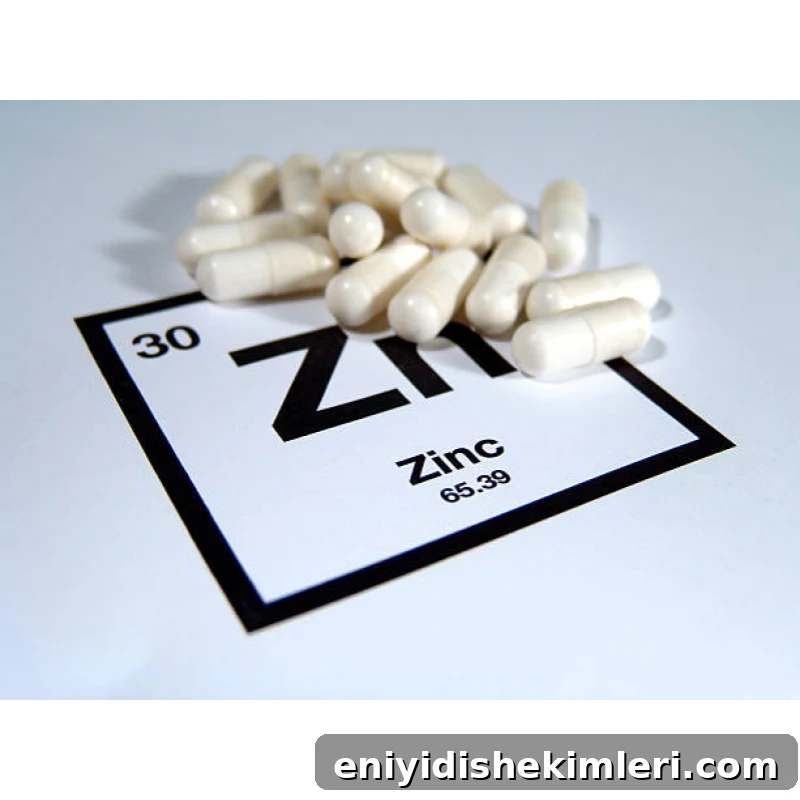
It’s zinc.
Zinc deficiency commonly shows up in the mouth before it appears elsewhere. These are some oral signs to watch for:
→ Persistent bad breath that doesn’t improve with regular brushing. Zinc ions bind to sulfur compounds that cause halitosis; without enough zinc those compounds accumulate.
→ Recurrent canker sores. Studies show a much higher prevalence of zinc deficiency among people with recurring aphthous ulcers compared with those without.
→ Dry mouth. Zinc activates a receptor in salivary glands (ZnR/GPR39) that promotes saliva production through a distinct pathway. Low zinc can reduce salivation.
→ Altered taste. A meta-analysis of clinical trials found that zinc supplementation significantly improved taste disorders, with many patients noticing substantial improvement in weeks.
→ Slow-healing gums. Zinc is essential for collagen production and tissue repair; low zinc can delay recovery after dental procedures or cause easily bleeding gums.
What research shows about zinc:
Immune function: Meta-analyses indicate zinc can shorten the duration of common colds, with a higher proportion of people recovered by day five compared with placebo.
Sleep: Randomized trials combining zinc with magnesium and melatonin have demonstrated improved sleep quality, including faster onset and more restorative sleep in older adults.
Mood: Early randomized trials suggest zinc may modestly enhance outcomes when added to antidepressant therapy; research is still evolving.
Blood sugar: Trials using moderate daily zinc doses have reported a reduced progression from prediabetes to type 2 diabetes over 12 months.
Inflammation: Systematic reviews and meta-analyses show zinc supplementation lowers markers of inflammation such as C-reactive protein and IL-6.
Bone health: Zinc therapy in older adults has been associated with improvements in bone mineral density at the spine and hip within months.
Eye health: Large trials of antioxidants plus zinc found a reduced risk of progression to advanced macular degeneration.
Hair: Meta-analyses indicate lower zinc levels in people with certain types of hair loss compared with healthy controls.
Regarding Botox, a randomized, controlled study found zinc supplementation prolonged the effect of botulinum toxin treatments by about 30%, an effect noticeable to participants.
Because of all this, zinc is one of the supplements I recommend most often.
If you recognize any of the oral signs above—especially if you take acid-reducing drugs, hormonal contraception, blood pressure medicines, or follow a primarily plant-based diet—addressing zinc intake could be a simple, impactful step.
— Mark

STUDIES CITED & FURTHER READING:
Medications & Zinc Depletion:
- Farrell CP, Morgan SL. “Proton Pump Inhibitors Interfere With Zinc Absorption and Zinc Body Stores.” Gastroenterology Research. 2016;9:243-251. PMID: 27957023
- Fallah S, Sani FV, Firoozrai M. “Effect of contraceptive pill on the selenium and zinc status of healthy subjects.” Contraception. 2009;80:40-43. PMID: 19501214
- Mitic N, Milosevic N, Cvetkovic T, et al. “Diuretics, Ca-Antagonists, and Angiotensin-Converting Enzyme Inhibitors Affect Zinc Status in Hypertensive Patients on Monotherapy: A Randomized Trial.” Nutrients. 2018;10(9):1284. PMID: 30208601
- WHO/FAO. “Human Vitamin and Mineral Requirements.” 2004. FAO Guidelines
Oral Health:
- Halboub ES, Al-Maweri SA, Parveen S, et al. “Zinc supplementation for prevention and management of recurrent aphthous stomatitis: a systematic review.” J Trace Elements in Medicine and Biology. 2021;68:126811. PMID: 34146924
- Oh J, Park K, Doo A, et al. “Zn2+ stimulates salivary secretions via metabotropic zinc receptor ZnR/GPR39 in human salivary gland cells.” Scientific Reports. 2019;9:18121. PMID: 31776425
- Mozaffar B, Ardavani A, Muzafar H, Idris I. “The Effectiveness of Zinc Supplementation in Taste Disorder Treatment: A Systematic Review and Meta-Analysis of Randomized Controlled Trials.” J Nutrition and Metabolism. 2023;2023:6711071. PMID: 36937245
Immune Function:
- Hemilä H, Chalker E. “Zinc acetate lozenges may improve the recovery rate of common cold patients: an individual patient data meta-analysis.” Open Forum Infectious Diseases. 2017;4(2):ofx059. PMID: 28480298
Sleep:
- Rondanelli M, Opizzi A, Monteferrario F, et al. “The effect of melatonin, magnesium, and zinc on primary insomnia in long-term care facility residents in Italy: a double-blind, placebo-controlled clinical trial.” J Am Geriatrics Society. 2011;59(1):82-90. PMID: 21226679
Mood:
- Ranjbar E, Kasaei MS, Mohammad-Shirazi M, et al. “Effects of zinc supplementation in patients with major depression: a randomized clinical trial.” Iranian J Psychiatry. 2013;8(2):73-79. PMID: 24130605
Blood Sugar:
- Ranasinghe P, Wathurapatha WS, Ishara MH, et al. “Zinc supplementation in prediabetes: a randomized double-blind placebo-controlled clinical trial.” J Diabetes. 2018;10(5):386-397. PMID: 29072815
Inflammation:
- Mohammadi H, Talebi S, Ghavami A, et al. “Effects of zinc supplementation on inflammatory biomarkers and oxidative stress in adults: A systematic review and meta-analysis of randomized controlled trials.” Journal of Trace Elements in Medicine and Biology. 2021;68:126857. PMID: 34560424
Bone Density:
- Nakano M, Nakamura Y, Miyazaki A, Takahashi J. “Zinc Pharmacotherapy for Elderly Osteoporotic Patients with Zinc Deficiency in a Clinical Setting.” Nutrients. 2021;13(6):1814. PMID: 34071733
Eye Health:
- Age-Related Eye Disease Study Research Group. “A randomized, placebo-controlled, clinical trial of high-dose supplementation with vitamins C and E, beta carotene, and zinc for age-related macular degeneration and vision loss: AREDS Report No. 8.” Archives of Ophthalmology. 2001;119(10):1417-1436. PMID: 11594942
Hair Loss:
- Wu R, Li Y, Peng H, et al. “Association between serum trace elements level and alopecia areata: a systematic review and meta-analysis.” J Cosmetic Dermatology. 2025;24(1):e16740. PMID: 39739356
Botox:
- Koshy JC, Sharabi SE, Feldman EM, et al. “Effect of dietary zinc and phytase supplementation on botulinum toxin treatments.” J Drugs in Dermatology. 2012;11(4):507-512. PMID: 22453589