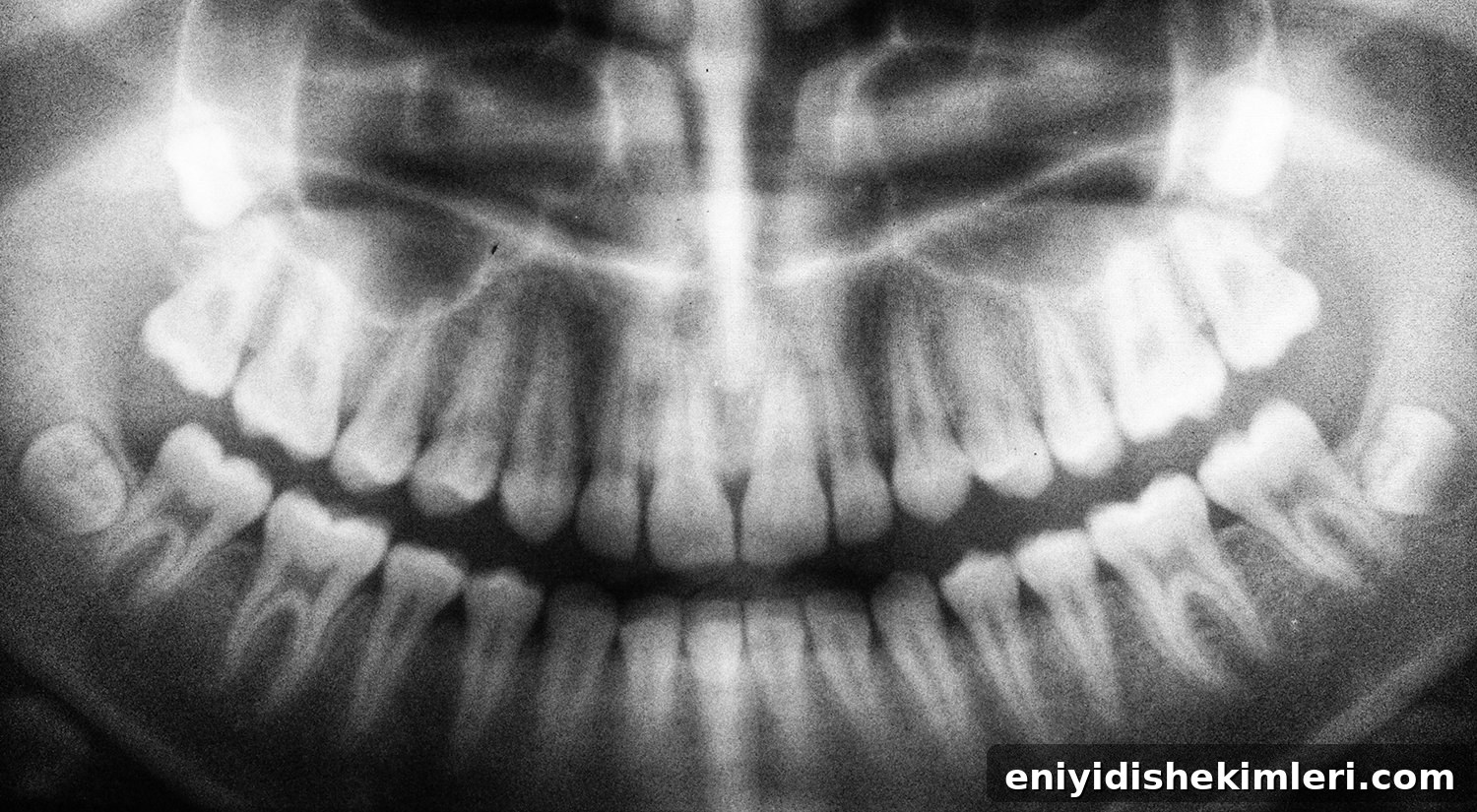
Invisible and odorless, x-rays can pass through your body, accumulate over time, and damage cells. Most concerningly, ionizing radiation from x-rays can increase cancer risk.
X-rays remain an essential diagnostic tool for dentists and physicians. They reveal bone and other hard-tissue problems that may need prompt treatment. However, repeated or high exposure to ionizing radiation carries potential long-term hazards.
Excessive radiation exposure from x-rays increases the risk of long-term health consequences.
While dental and medical x-rays provide important benefits, it’s important to understand the potential harm that ionizing radiation can cause and to balance risk and necessity.
Dental X-Rays: Types and When They’re Used
Dental imaging includes several intraoral and extraoral x-ray types, each serving specific diagnostic purposes:
- Bitewing: Used to detect cavities between teeth. The patient bites down on a film or sensor so the dentist can evaluate interdental areas and crown margins.
- Periapical: Captures the full tooth from root to crown and focuses on specific teeth in the upper or lower jaw to evaluate root and bone health.
- Occlusal: Shows the placement of an entire arch and can help identify the position of erupting or displaced teeth.
- Panoramic: A single broad view of the entire mouth used to assess tooth eruption, impacted teeth, jaw structure, and possible masses.
- Tomograms: Isolate a specific layer of teeth by blurring other layers, useful for identifying problems in a targeted area.
- Cephalometric projections: Often used in orthodontics to analyze the side profile of the head and tooth-jaw relationships.
- Sialography: Uses contrast dye to image salivary glands when blockages or gland disorders are suspected.
- CT scanning: More common in hospital settings for complex cases, CT scans evaluate facial bones, fractures, and surgical planning.
- Cone-beam computed tomography (CBCT): A 3D dental scan that can reveal lesions or anatomic details not visible on 2D films; often used for implant planning and complex endodontic cases.
Cancer Incidence Among Dentists
In one community in South Carolina, five dentists over age 60 died from glioblastoma over a six-year period. With roughly 510 practicing dentists in that age group locally, that translates to a much higher observed rate than in the general population over 60.
Comparing local dentist mortality to population data suggested a substantially higher incidence in that small group. This raises the question: why might dentists experience elevated rates of certain cancers?
Genetics alone are unlikely to explain such a difference. Published research indicates that environmental and lifestyle factors contribute substantially—often 70% to 90%—to cancer development in the U.S.
Personal Experience: A Cancer Diagnosis
I have been diagnosed with an aggressive form of multiple myeloma, a cancer of plasma cells. My case is not curable with conventional therapies available today.
I am in my early 70s. Studies have reported that dentists in my age group have an increased cancer risk compared with the general population. I believe my long-term, repeated exposure to dental x-rays during dental school and training contributed to the cellular damage that ultimately led to my diagnosis. Although other environmental exposures likely played a role, ionizing radiation is cumulative and can be a significant factor.
My dental education spanned six continuous years in the early 1970s, during which I spent extensive time in clinical settings where x-ray machines were in frequent use. Protective measures and protocols were less rigorous then than they are now, and repeated exposure over long periods may have increased my risk.
Low-Dose Ionizing Radiation and Cancer Risk
Historically, only high-dose radiation was thought to cause lasting harm. Studies of atomic-bomb survivors and nuclear accidents informed that view. However, more recent research shows that repeated low-dose exposures can also produce cumulative and delayed damage.
Cellular damage from repeated low-dose ionizing radiation accumulates, and harmful effects may take decades to become apparent.
Damage from low-dose radiation can also affect cells that were not directly irradiated and, in some cases, produce chromosomal changes that manifest in future generations. Contemporary research highlights mechanisms such as oxidative stress, inflammation, and intercellular signaling that can propagate injury beyond the initially exposed tissue.
Studies have linked frequent dental x-ray exposure in the past to increased risks of certain brain tumors. Reviews in environmental health literature also conclude there are potential cancer risks associated with repeated dental imaging.
Biological effects of accumulating low-dose exposure can include:
- Disruption of the gut microbiome and its barrier function
- Generation of oxidative stress and free radicals
- Altered cell-to-cell communication and tissue responses
- Changes in gene regulation related to cancer risk influenced by diet and lifestyle
- Possible transmission of DNA damage or susceptibility to subsequent generations
How to Reduce X-Ray Exposure Risks
For most patients, routine dental x-rays do not present daily high doses that will immediately cause harm. Still, prudent precautions and judicious use of imaging reduce cumulative risk.
Melatonin has been investigated for reducing cellular toxicity from radiation in therapeutic settings, but prevention and minimizing unnecessary exposure remain the best strategies.
Recommendations for Patients
- Always request protective shielding such as a lead apron and thyroid collar during x-rays to protect sensitive organs.
- If no clinical signs suggest decay, periodontal disease, or trauma, ask whether x-rays are necessary at routine checkups. A clinical exam should inform imaging decisions.
- If your treatment plan involves periodic x-rays, discuss risks and alternatives with your dentist.
- Limit nonessential exposure to electromagnetic fields from devices near the body; research suggests certain exposures can affect cellular and mitochondrial function.
- Pregnant women should avoid x-rays whenever possible. Confirm pregnancy status before performing dental imaging.
Recommendations for Dentists
- Limit ionizing radiation to what’s necessary for diagnosis and treatment planning. Use radiographs selectively and follow the ALARA principle.
- Support overall health and immune resilience through balanced nutrition and lifestyle choices that enhance host defenses.
- Address mitochondrial health as part of preventive care and wellness, using evidence-based strategies such as anti-inflammatory nutrition, appropriate exercise, and medically supervised therapies when indicated.
- Adopt digital radiography whenever possible, since it typically uses lower radiation doses than older analog systems.
FAQs
Q
Why would my dentist need to take x-rays?
A
X-rays are indicated when there are symptoms suggesting cavities, signs of periodontitis or bone loss, a history of trauma, or when age and clinical findings warrant closer evaluation. They help reveal problems that are not visible during a routine exam.
Q
What does the ADA say about dental x-rays?
A
The American Dental Association supports the use of x-rays when clinically necessary and recommends applying the ALARA (as low as reasonably achievable) principle to minimize exposure. Pregnancy is a notable exception where extra caution is advised.
Q
Are dental x-rays safe for my child?
A
X-rays can be the best option for diagnosing certain conditions in children. To minimize risk, ensure x-rays are taken only when necessary, use digital imaging when available, and inquire about alternative diagnostic tools such as laser detection when appropriate.
The Bottom Line
Dental and medical x-rays are invaluable for accurate diagnosis and effective treatment. They should be used judiciously and only when a qualified healthcare professional determines they are necessary. Be proactive: ask questions, understand the reasons for imaging, and make informed decisions about your care.
Dr. Al Danenberg is a nutritional periodontist who continues to see patients via telemedicine consultations. To schedule an online consult, contact his practice directly.
References
- Tamimi, A. F., & Juweid, M. Epidemiology and outcome of glioblastoma. In Glioblastoma.
- Wu, S., Powers, S., Zhu, W., & Hannun, Y. A. Substantial contribution of extrinsic risk factors to cancer development. Nature.
- Koifman, S., et al. Cancer mortality among Brazilian dentists. American Journal of Industrial Medicine.
- Burgio, E., Piscitelli, P., & Migliore, L. Ionizing Radiation and Human Health: Reviewing Models of Exposure and Mechanisms of Cellular Damage.
- Claus, E. B., et al. Dental x‐rays and risk of meningioma. Cancer.
- Hwang, S. Y., et al. Health effects from exposure to dental diagnostic x-ray. Environmental Health and Toxicology.
- Najafi, M., et al. The melatonin immunomodulatory actions in radiotherapy. Biophysical Reviews.
- Srinivasan, S., et al. Mitochondrial dysfunction and the cancer connection. Biochimica et Biophysica Acta (BBA)-Bioenergetics.
- Sengupta, S., & Balla, V. K. A review on magnetic fields and ultrasound for non-invasive cancer treatment. Journal of Advanced Research.
- Han, G. S., et al. Shielding effect of thyroid collar for digital panoramic radiography. Dentomaxillofacial Radiology.
- Santini, S. J., et al. Role of mitochondria in oxidative stress induced by electromagnetic fields. Oxidative Medicine and Cellular Longevity.