Are you anxious about visiting the dentist? You’re not alone. Dental fear affects roughly one in four people and is even more common than fear of heights. CBD oil has become a popular, natural option to ease dental anxiety, and research combined with patient reports suggest it can reduce anxious feelings. Beyond anxiety relief, CBD may also help with pain, inflammation, sleep, and recovery after dental procedures.
Many patients find a dose of CBD prior to dental treatment helpful. However, misinformation surrounds hemp and CBD products, so it’s important to understand how to use CBD safely and effectively.
In this article I’ll explain what CBD oil is and how it can be used to ease dental anxiety, reduce pain and inflammation, improve sleep, and potentially support healing after dental work.
What is CBD oil?
CBD (cannabidiol) is one of the primary compounds in hemp and cannabis plants. Unlike THC, the compound responsible for marijuana’s “high,” CBD is non-psychoactive and won’t make you feel intoxicated. Many people take CBD for anxiety, depression, and other conditions because it can influence mental function without causing a high.
Legal and regulatory hurdles have slowed research, but existing studies and clinical reports indicate CBD can help with anxiety, inflammation, pain, and some neurological conditions. As an oil extract, CBD is not strongly antibacterial, which can be beneficial: overly aggressive antimicrobial use in the mouth can damage the oral microbiome and cause more dental issues over time.
For dental use, CBD is often recommended to reduce procedure-related anxiety and to manage post-procedure inflammation and pain. Compared to many prescription pain medications, CBD is generally well tolerated with fewer side effects.
You may see products labeled as hemp oil, CBD oil, or hemp-derived CBD. CBD comes in many formats—capsules, sprays, tinctures, and topical products—so choose the form that best fits your needs.
6 CBD Benefits for Oral and Dental Health
Consider trying CBD oil if you experience:
- Strong anxiety about dental visits or procedures (dental phobia)
- Poor sleep quality
- Chronic dental or oral pain
- Tooth sensitivity to hot and cold
- Nausea or digestive upset after anesthesia
- Receding gums or inflamed gums (periodontitis, gingivitis)
Below are key ways CBD can support dental and oral health.
1. Reduce Dental Anxiety
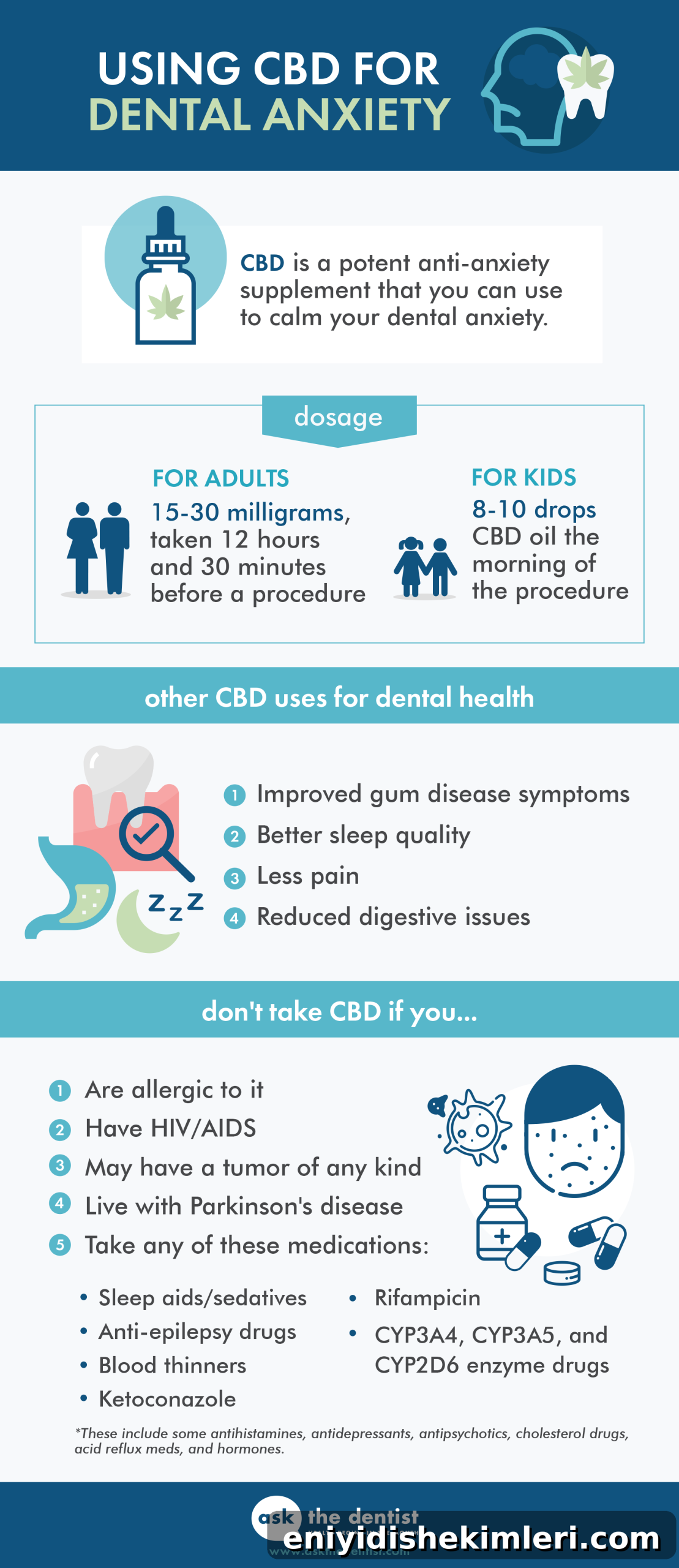
Multiple studies indicate CBD can reduce anxiety. Many patients find CBD oil calming before dental procedures, making treatment more manageable. A practical dosing approach used by some clinicians is a small, weight-based dose the night before and the morning of a procedure to minimize fear and improve the overall experience.
For adults: about 1.5 mg of CBD per 10 pounds of body weight the night before and again the morning of a procedure (many people take 15–30 mg total). For children: a few drops of a CBD spray the morning of the visit can be helpful. Discuss dosing with a healthcare professional before use.
2. Improve Sleep Quality
Research shows CBD may help improve sleep for some people. Better sleep protects overall health and supports oral health: poor sleep contributes to mouth breathing, dry mouth, and increased risk of cavities and gum disease. Using CBD sublingually (under the tongue) or in slow-release forms before bed can promote deeper sleep and reduce dental risks associated with disrupted sleep.
3. Relieve Pain
CBD can ease tooth and jaw pain, especially when sensitivity or inflammation is involved. While severe or unexplained dental pain should always prompt a dental visit, CBD can be a useful, non-addictive option for managing postoperative or chronic, mild-to-moderate pain during recovery from dental procedures.
4. Reduce Nausea After Anesthesia
Nausea is common after dental procedures that require anesthesia. CBD has anti-nausea properties and may reduce vomiting and discomfort. Taking CBD before a procedure that involves sedation or general anesthesia can help minimize postoperative stomach upset, though you should inform your care team about any supplements you use.
5. Support Gum Health
Early research—mainly in animal models—suggests CBD may limit inflammation and bone loss associated with periodontitis. While human research is limited, adding CBD to a daily oral-care routine might be beneficial for inflamed or receding gums when used alongside professional dental care.
6. Other Health Benefits
The mouth reflects systemic health, and CBD has been studied for a wide range of conditions, including inflammatory and neurological disorders. Although not a cure-all, CBD’s anti-inflammatory and pain-relieving properties may indirectly support oral health in people with chronic systemic conditions.
Types of CBD Products
Common forms of CBD include:
- CBD oil/tinctures
- CBD isolate
- CBD wax and concentrates
- CBD crystals
- CBD e-liquids for vaping
Tinctures, capsules, gels, and topicals vary in bioavailability. Sublingual sprays or drops under the tongue absorb faster than oral ingestion. Concentrated forms like isolates or waxes are typically reserved for people with severe chronic pain. For most dental-related uses, CBD oil tinctures or capsules provide a reliable, easy-to-dose option.
How to Choose Quality CBD
When shopping for CBD, look for transparency and third-party testing. Ask vendors these questions:
- Is the hemp USDA-certified organic? Organic sourcing reduces pesticide exposure.
- Who manufactures the product? Reputable brands disclose their producers.
- What is the actual CBD content? Avoid products diluted with fillers or other essential oils.
- Is there independent third-party testing? Verify certificates of analysis from an accredited lab.
- What dosage do you recommend? Clear dosing guidance reflects confidence in product potency.
- Where is the hemp grown? U.S.-grown hemp often provides more transparent sourcing.
Because supplements are less regulated than pharmaceuticals, read user reviews and choose products with clear testing and honest labeling.
Additional Tips to Manage Dental Anxiety
CBD can help, but other strategies also reduce fear:
- Keep regular dental visits to reduce buildup of anxiety and avoid larger problems.
- Floss regularly at home to minimize sensitivity or pain from neglected gums.
- Choose a dentist who listens, explains procedures, and responds compassionately.
- Consider practices that reduce anxiety during treatment, such as distraction techniques or offices that offer comfort measures.
If you suffer severe dental phobia, ask about offices that use additional comfort measures, including therapy animals or specialized behavioral approaches.
Cautions and Side Effects
Most research shows CBD causes few side effects at common doses, but side effects can include drowsiness, dry mouth, changes in appetite, low blood pressure, lightheadedness, diarrhea, and, in rare cases, abnormal liver tests. Side effects are more likely with high doses used to treat serious conditions.
Certain groups should be cautious and consult a doctor before using CBD, particularly at higher doses: people with serious health conditions (HIV/AIDS, tumors, Parkinson’s), and anyone taking medications that may interact with CBD.
Drug Interactions to Watch For
CBD can interact with medications metabolized by CYP3A4, CYP3A5, and CYP2D6 enzymes. Notable interactions include:
- Sleep aids and sedatives—CBD may enhance sedative effects.
- Anti-epileptic drugs—CBD can alter blood levels of some seizure medications and affect liver function.
- Blood thinners like warfarin—CBD can increase their effects; monitoring is recommended.
- Antifungals like ketoconazole and antibiotics like rifampicin—these can alter CBD levels.
- Many commonly prescribed drugs (statins, antihistamines, certain antidepressants, beta-blockers, and others) may be affected; consult your physician and pharmacist if you take prescription medications.
Perform a simple patch test to check for allergic skin reactions: apply one or two drops of CBD oil to the inner thigh and wait 24 hours for a reaction. Allergic responses are rare but possible.
The Bottom Line
CBD oil is a useful, natural option to ease dental anxiety and may help with postoperative pain, inflammation, nausea, and sleep—factors that influence oral health. To use CBD safely, choose well-tested, organic products, confirm potency and third-party lab results, and consult your healthcare provider if you take medications or have significant health conditions.
Have you tried CBD for dental visits or for other dental-related issues? Share your experience with your dental care team and consider combining CBD with proven dental hygiene and regular professional care for the best results.