
Feeling overwhelmed by all the dentist choices? Want to know how to find a good dentist with confidence? By the end of this article you’ll have practical tools to choose the right dental practice for you and your family.
This guide covers what to consider before choosing a dentist, reliable ways to find one, key questions to ask, and how to recognize warning signs of a poor practice.
Whether you’ve moved to a new city, your employer changed insurance plans, your previous dentist retired, or it’s simply been too long since your last visit, there are clear, straightforward steps you can take to find a dental provider who meets your needs.
5 Factors to Consider Before Choosing a Dentist
The best way to find a good local dentist is to take the process step by step.
Begin by making a short list of candidate offices, then gather information and narrow it down. With a little research you can build a lasting relationship with a dentist who fits your goals.
Below are five important factors to help you refine that initial list.
Factor #1: Is this provider in your dental insurance network?
In the U.S., dental insurance—especially for preventive care like cleanings—often influences dental choices. Dental insurance works differently than medical insurance, so check how a new practice will handle your coverage.
If you don’t know which providers are in-network, check your insurer’s website or contact your employer’s HR department for a list. That list is a useful starting point.
If your preferred dentist is out-of-network but you’d rather keep seeing them, consider these options:
- Ask your dentist if they will accept the insurer’s payment and write off the remaining balance. Keep in mind this may use up your annual benefits faster if you need major treatment.
- Request an in-network fee schedule from your dentist so you can compare prices and potentially pay similar amounts to staying in your current practice.
In either case, clarify billing and agreements before your appointment so you understand expected payments.
Factor #2: Should you choose a dentist who’s a member of the ADA?
Membership in the American Dental Association (ADA) is one credential you may see recommended, but it is not the only indicator of quality. Dentists often belong to different professional organizations that reflect their specialties and interests.
For example, a dentist may be a member of the American Academy of Dental Sleep Medicine (AADSM) if they focus on sleep-related disorders, or of other specialty organizations that match their approach to care. Memberships require continuing education, but they are not a guarantee of superior care by themselves.
More important than association memberships is whether a dentist is board-certified and licensed by their state dental board. If you have specific concerns—sleep apnea, bruxism, or systemic oral health connections—look for a dentist whose affiliations and training align with those needs.
Factor #3: Are you looking for a functional dentist?
Functional dentistry focuses on treating root causes and linking oral health to overall health. A functional dentist often provides guidance on diet and lifestyle, educates patients on prevention, and emphasizes minimally invasive care.
If you prefer that whole-person approach, narrow your search to dentists who explicitly practice or support functional dentistry. If you want more traditional care, general and family dentists will handle routine exams, cleanings, fillings, crowns, and basic restorative work.
Factor #4: What type of dental work are you looking for?
Your dental needs should heavily influence your choice of provider.
If you want routine checkups and cleanings, prioritize a comfortable, professional office with a friendly staff. For sleep apnea, bruxism, or airway concerns, seek a dentist with sleep medicine expertise. For cosmetic dentistry, look for providers with strong portfolios of before-and-after cases and patient reviews. For children, pediatric dentists specialize in care tailored to young patients.
If you need specialized care—orthodontics, periodontics, prosthodontics, endodontics, or oral surgery—consider whether the practice performs those services in-house or refers to trusted specialists. If you’re in pain and need immediate care, dental schools and emergency clinics can be useful options.
Factor #5: Does the dentist offer a translator?
If English is not your first language, confirm whether the office provides translators or staff who speak your primary language. Medical and dental terminology can be confusing, so accurate communication is essential.
If a translator isn’t available but you like the practice, bring a trusted friend or family member who can help translate, especially when discussing complex treatment plans.
7 Ways to Find a Good Dentist
After you’ve considered the factors above, use these practical methods to find a dentist you’ll trust.
1. Ask People You Trust
Talk to family, friends, and co-workers about their dental experiences. Ask who has had extensive procedures and still praises their dentist—those recommendations are especially valuable.
2. Get a Referral from a Physician or Pharmacist
Physicians and local pharmacists often have experience with dentists in the area and can suggest names based on professional feedback.
3. Search the Database of Your Chosen Dental Society
Professional associations maintain directories of members. Searching the directory of a relevant dental society can help you find specialists or providers who match your needs.
4. Review Your Dental Insurance Network
Use your insurance plan’s provider list as a practical starting point, then assess each candidate against your personal priorities.
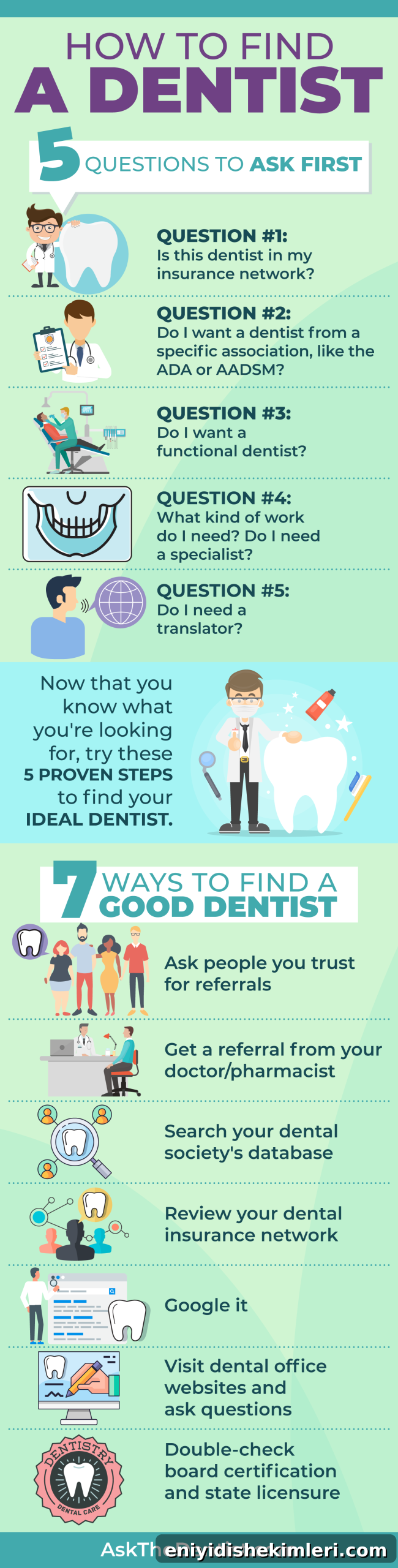
5. Google It (Or Use a Dental Provider Review Site)
Patient reviews reveal common themes about punctuality, communication, bedside manner, and clinical results. Search “dentist near me” and read recent reviews to help refine your list.
6. Narrow It Down with Questions + A Website Visit
Visit each practice’s website to learn about the team, services, office policies, and patient resources. A polished, informative website can indicate professionalism, though a good dentist may not always have an elaborate site.
7. Double-Check Board Certification and State Licensure
Confirm that your chosen dentist is licensed in your state and has appropriate board certification for any specialty services. If certification or licensure is missing, it’s a sign to look elsewhere.
10 Questions to Ask Before or At Your First Appointment
These questions help you evaluate a practice’s philosophy, costs, and capabilities:
Q
Do you offer patients nutritional counseling?
A
Some dentists provide basic diet advice focused on sugars and acids. Functional dentists often offer more comprehensive nutritional and lifestyle guidance aimed at preventing dental problems and supporting overall health. If you prefer one approach over the other, ask specifically.
Q
What are your primary goals in patient care?
A
Look for answers that emphasize prevention and minimally invasive treatment. A dentist focused on performing the least invasive necessary care is generally aiming for long-term patient wellness rather than unnecessary procedures.
Q
What will it cost?
A
Request a price list for standard procedures and ask about in-network versus out-of-network rates. Inquire about x-ray fees, fillings, crowns, and payment plans or financing options. Clarify costs before proceeding with non-emergency work.
Q
What work is done in-house versus referred out?
A
A solid practice will handle routine and less-invasive procedures and refer more complex cases to trusted specialists. If a practice performs almost no procedures in-house, you may want to consider other options.
Q
Where did you receive your degree?
A
All accredited dental schools meet core standards, but if a dentist trained outside your country, you may want to research that school’s reputation and any additional licensing requirements.
Q
How long have you been in practice?
A
Experience matters, but newer dentists can also offer excellent, up-to-date care. Consider the balance between proven experience and familiarity with modern techniques when making your choice.
Q
How do you approach patients with dental anxiety?
A
Ask whether the practice offers nitrous oxide, oral sedatives, or other calming approaches and what those options cost. A caring office will have strategies to help anxious patients feel safe.
Q
What is your procedure for dental emergencies?
A
Find out how quickly they respond to emergency calls, whether they offer urgent appointment slots, and how after-hours care is managed.
Q
Do you participate in continuing education?
A
A dentist who actively pursues continuing education demonstrates a commitment to staying current with best practices. Ask what courses or programs they attend regularly.
Q
What are your office hours and do you offer evening or weekend times?
A
Office hours indicate how well a practice accommodates working families. If evenings or weekends are important, confirm availability before committing to a long-term relationship.
How to Spot a Bad Dentist
Most dentists want the best for their patients, but there are red flags to watch for when evaluating a practice based on experience and clinical observations.
Warning signs include:
- Unkempt office: The waiting area, treatment rooms, and restrooms should be clean and well-maintained.
- Rude or impatient staff: Friendly, patient staff help reduce stress for anxious visitors and reflect the practice’s culture.
- Negative reaction from children: For pediatric care, observe how children respond to the staff and environment.
- Limited treatment options: A dentist who insists there is only one way to treat every problem may not be offering balanced care.
- Defensiveness about records or second opinions: A trustworthy dentist will cooperate with requests for records and support patients seeking second opinions.
- Multiple extensive procedures recommended at once: Be cautious if a practice urges numerous invasive treatments without clear justification—consider a second opinion.
- An uncomfortable feeling: Trust your instincts. If something feels off, it’s reasonable to keep looking.
Key Takeaways: How to Find a Good Dentist
Start by defining what you want from a dentist: routine preventive care, functional or sleep-related treatments, cosmetic work, or specialized services for children or complex problems.
Research thoroughly—ask trusted people, consult professionals, use insurer directories, read reviews, and visit websites. Narrow your list by asking the questions above and verifying licensure and certifications.
Pay attention to red flags and trust your judgment. A good dental office combines clinical competence with a clean, welcoming environment and staff who communicate clearly and respectfully.
With careful consideration and a few simple steps, you can find a dentist who supports strong oral health for you and your family for years to come.