
Is a tongue tie — a restriction of the lingual frenulum — the cause of your child’s breastfeeding troubles or speech difficulties?
For many years tongue tie was little understood. Early in my practice, most patients had never heard of it. When I suggested that they or their children might be tongue tied, I was often the first clinician to mention it.
When I explained that a tongue tie could underlie oral myofunctional problems or even contribute to sleep-disordered breathing and sleep apnea, some people were surprised. In recent years, though, awareness has grown as more families prioritize successful breastfeeding.
Diagnoses have risen dramatically, and more dentists and orthodontists are recognizing the role of myofunctional therapy alongside surgical treatment.
Today tongue ties and their effects on craniofacial development are becoming mainstream, which is good news: fewer people will suffer from undiagnosed or untreated symptoms.
Early detection and treatment matter. This article covers what parents and adults need to know about tongue ties.
What is a tongue tie?
Tongue tie, or ankyloglossia, occurs when the tissue that anchors the tongue to the floor of the mouth (the lingual frenulum) is unusually short, thick, or tight. That restriction can limit tongue movement and interfere with normal tongue use.
Being tongue tied is a real medical condition that can affect oral and facial development and create health issues that sometimes don’t appear until later in life.
Everyone has a lingual frenulum; lift your tongue and you can see it. When the frenulum functions normally, the tongue can rest against the roof of the mouth, supporting the upper jaw and helping guide facial growth. A restrictive frenulum prevents the tongue from achieving that resting position.
Tongue tie is also described as short frenum, anchored tongue, or tethered oral tissue (TOT).
How to diagnose a tongue tie in babies, children, or adults (with pictures)
Diagnosing tongue tie can be part science, part clinical judgment. Experts do not always agree on criteria. Some restrictive ties are easy to see, while others are hidden beneath the mucosa and can only be detected by touch or functional assessment. For that reason, diagnosis should involve a pediatrician, ENT, dentist, myofunctional therapist, or a board-certified lactation consultant.
Clinical classification systems help estimate severity. Kotlow’s assessment measures the distance from the frenulum attachment to the tongue tip:
- Class 1: Mild, 12–16 mm
- Class 2: Moderate, 8–11 mm
- Class 3: Severe, 3–7 mm
- Class 4: Complete, < 3 mm
Clinicians also describe anterior ties (visible and measurable) and posterior ties (submucosal, felt more than seen). Hazelbaker’s method uses slightly different categories and functional criteria to help identify ties, including submucosal posterior ties.
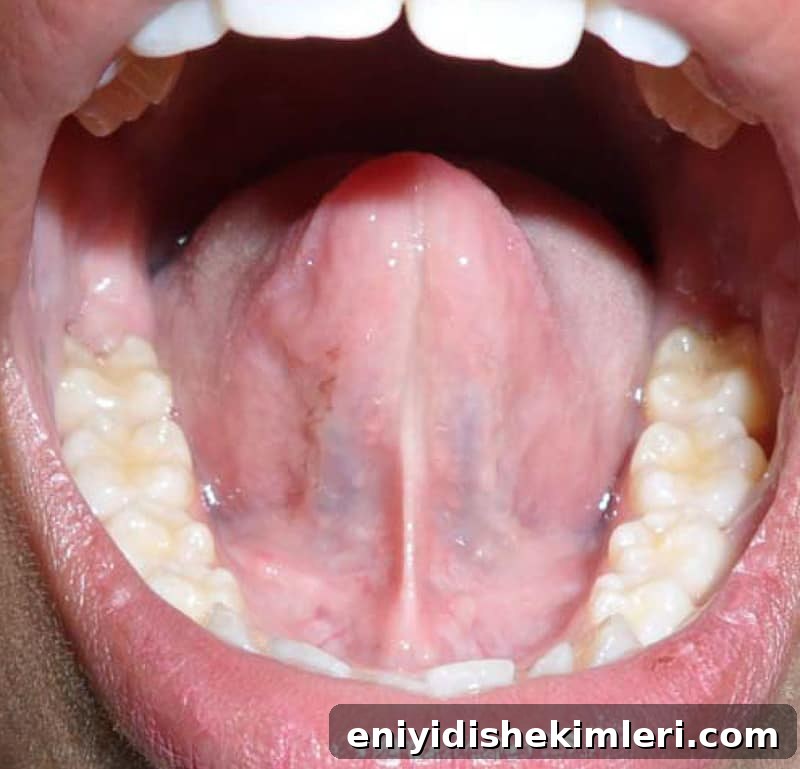
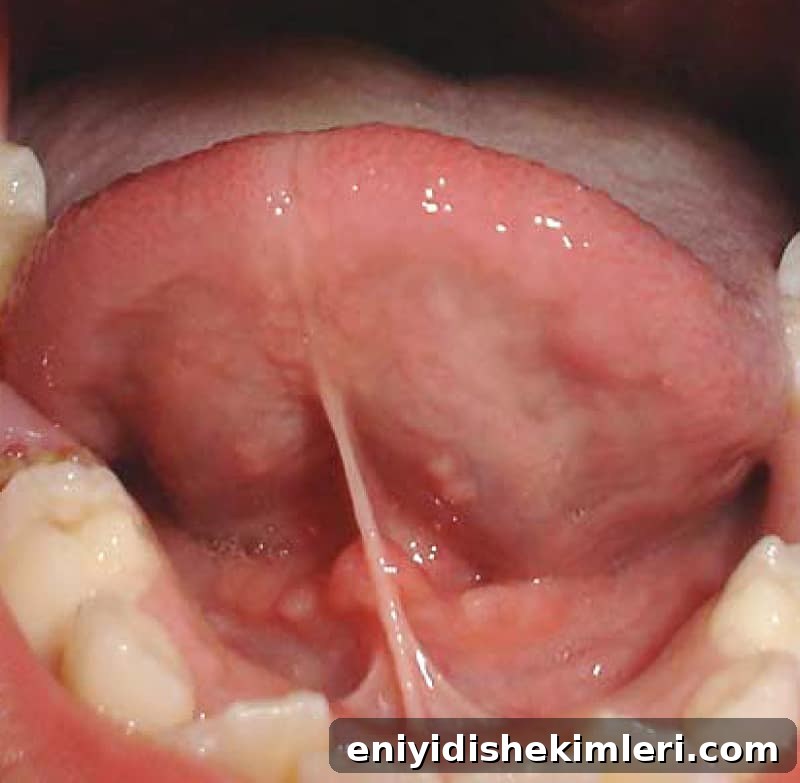
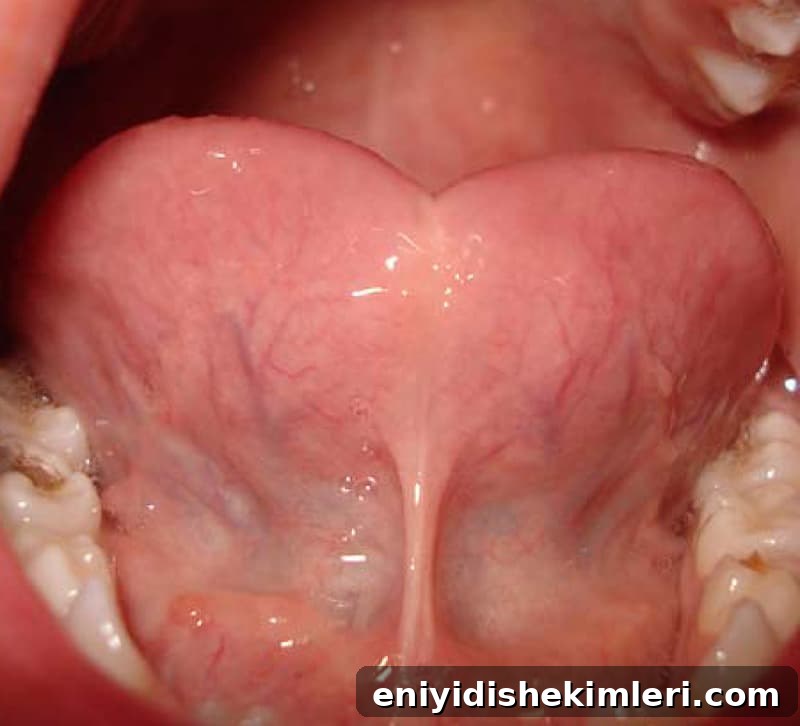
Other visual clues commonly used in newborns include a heart-shaped tongue tip, a fanned or “Eiffel tower” frenum, unusually thick frenum tissue, lip ties, nipple pain in the nursing parent, clicking during latch, prolonged drooling, and limited ability to lift, move sideways, or protrude the tongue.
In older children or adults, tongue tie can present as speech sound difficulties (commonly “r” and “l”), trouble licking or sticking the tongue past the upper lip, problems with intimate activities involving the tongue, or difficulty clearing food from the teeth.
Examples of tongue ties are illustrated in the images below:
8 symptoms of tongue tie
As a myofunctional therapist, tongue posture is central to my work. A restricted tongue can affect breastfeeding, jaw and facial growth, airway development, oral hygiene, and overall health.
The tongue should rest high on the palate, filling and supporting the upper jaw. When restricted, the tongue can’t provide that support. The palate may develop narrow and high, teeth can crowd, the lower jaw may remain small or set back, and the airway can be compromised.
Common issues associated with tongue tie include:
- Speech difficulties
- Mouth breathing
- Jaw pain, clenching, and grinding
- Headaches
- Tension in the head, neck, and shoulders
- Forward head posture
- Snoring, sleep-disordered breathing, and sleep apnea
- Higher risk of cavities and gum disease
- Slower orthodontic progress and higher relapse rates
Below are the eight most significant issues that often arise from a tongue tie.
1. Breastfeeding problems
Breastfeeding is often how a tongue tie is first detected. A restrictive frenulum can prevent the baby from creating an effective vacuum on the breast because the tongue can’t reach the lower gumline, causing latch difficulties and nipple pain.
Some families switch to bottle feeding or endure painful, frustrating feedings. In severe cases, poor breastfeeding can contribute to decreased milk supply or slow weight gain. If a baby is bottle fed and gaining well, the tie may go unnoticed.
Successful breastfeeding does not rule out a tongue tie; problems such as maternal pain or mastitis can still occur even when the infant gains weight.
Research is mixed: some reviews show frenotomy reduces maternal pain but not clear breastfeeding rates, while some trials report improved breastfeeding outcomes in the first month after release. From an orofacial development standpoint, breastfeeding and early tongue mobility support healthy mouth and jaw formation.
When possible, correcting a tongue tie early — ideally within the first days of life — appears to offer the best outcomes for breastfeeding.
2. Speech difficulties
Tongue tie can affect speech, particularly sounds that require precise tongue placement such as “r” and “l.” Not every tongue-tied child will have speech problems, but limited tongue mobility can contribute to articulatory difficulties. After release, children often need speech therapy to retrain habitual patterns.
3. Improper jaw and facial growth
Proper tongue posture guides the growth of the palate and midface. A chronically low or forward tongue position due to a tie can lead to a narrower palate, crowded teeth, and altered jaw growth. These changes increase the likelihood of needing orthodontic treatment later in life.
4. Sleep disorders
Restricted tongue mobility in childhood can encourage mouth breathing and poor tongue posture, contributing to a smaller airway as the face develops. These changes raise the risk of sleep-disordered breathing and pediatric obstructive sleep apnea, which can have cognitive and behavioral consequences.
If a child shows ADHD-like symptoms or sleep issues, consider evaluation for sleep-disordered breathing, assessment for tongue tie, and consultation with a myofunctional therapist to address muscle patterns post-release.
5. TMJ pain
Poor tongue posture can alter jaw mechanics and place chronic stress on the temporomandibular joint (TMJ), potentially contributing to TMJ dysfunction, jaw pain, and even migraines. Myofunctional therapy following frenectomy helps retrain muscles and improve jaw function.
6. Slowed orthodontic treatment and relapse
When the tongue can’t support the dental arch or apply normal forces to the teeth, orthodontic treatment may take longer and retain less stable results. Untreated tongue ties increase the chance of relapse after braces.
7. Problems with oral hygiene
A restricted tongue can’t effectively sweep food debris and biofilm from teeth, making plaque control more difficult. That can increase inflammation, cavities, and gum disease, and make dental care more uncomfortable.
8. Suboptimal digestion
Efficient digestion begins in the mouth. Limited tongue mobility can impair chewing and bolus formation, which may contribute to digestive issues, nutrient absorption problems, and related symptoms over time.
Tongue tie causes and risk factors
The exact cause of tongue tie remains uncertain. Recent research suggests genetic and epigenetic factors play a role; some studies have linked ankyloglossia with mutations affecting methylation pathways. While familial cases are common in clinical practice, population studies have not consistently confirmed strong heritability. Boys appear to be more frequently affected than girls.
Treatment for tongue tie: surgery and myofunctional therapy
Surgical procedures for tongue tie
Most tongue ties are released with a simple in-office procedure called a frenectomy (also called frenotomy or frenulectomy). The procedure takes only a few minutes and can be performed with sterile scissors, a scalpel, or a laser, often without general anesthesia.
Choose a clinician experienced in tongue-tie release; an inadequate release may require revision.
In older children or adults with severe restrictions, a frenuloplasty under general anesthesia may be necessary. Postoperative care and exercises are essential to prevent reattachment and to promote full functional recovery. Insurance often covers the procedure; out-of-pocket costs typically vary.
Myofunctional therapy for tongue tie and why it matters
Releasing the frenulum is only one step. Myofunctional therapy trains the tongue and orofacial muscles to achieve proper posture and movement. I recommend doing exercises for several weeks before surgery to strengthen the tongue, and continuing therapy afterward to retrain function and prevent recurrence of dysfunctional patterns.
Without this rehabilitation, the tongue may not regain full range of motion or ideal resting posture despite the surgical release.
Consequences of untreated tongue ties
Given the wide-ranging effects and the relative simplicity of treatment, a diagnosed tongue tie in a child is often worth releasing. The full impact on facial growth, airway development, and long-term health can be difficult to predict, and symptoms may emerge or worsen later in life. Adults with unreleased tongue ties commonly present with jaw pain, headaches, or sleep apnea and are often surprised to learn a tie was present.
Lip ties
Lip ties occur when the tissue connecting the upper lip to the gum is tight or thick, restricting lip movement. Lip ties commonly coexist with tongue ties and can affect breastfeeding, speech, and dental development. Treatment follows the same principles: surgical release and myofunctional therapy.
Tongue tie in adults: should adults have theirs released?
Yes. It’s never too late to benefit from a release and from myofunctional therapy. Adults who undergo frenectomy and rehabilitation can experience improvements in comfort, function, and sometimes sleep and breathing.
Key takeaways
Tongue tie is a real condition that can affect breastfeeding, speech, jaw and facial development, airway health, oral hygiene, and digestion. Early detection and appropriate treatment — a combination of surgical release when indicated and structured myofunctional therapy before and after the procedure — produce the best outcomes.
From experience, adults who discover they were tongue tied often wish they had known and treated it earlier. If your child is diagnosed, seek an experienced practitioner for the release and a myofunctional therapist to guide rehabilitation.
Sarah Hornsby, RDH