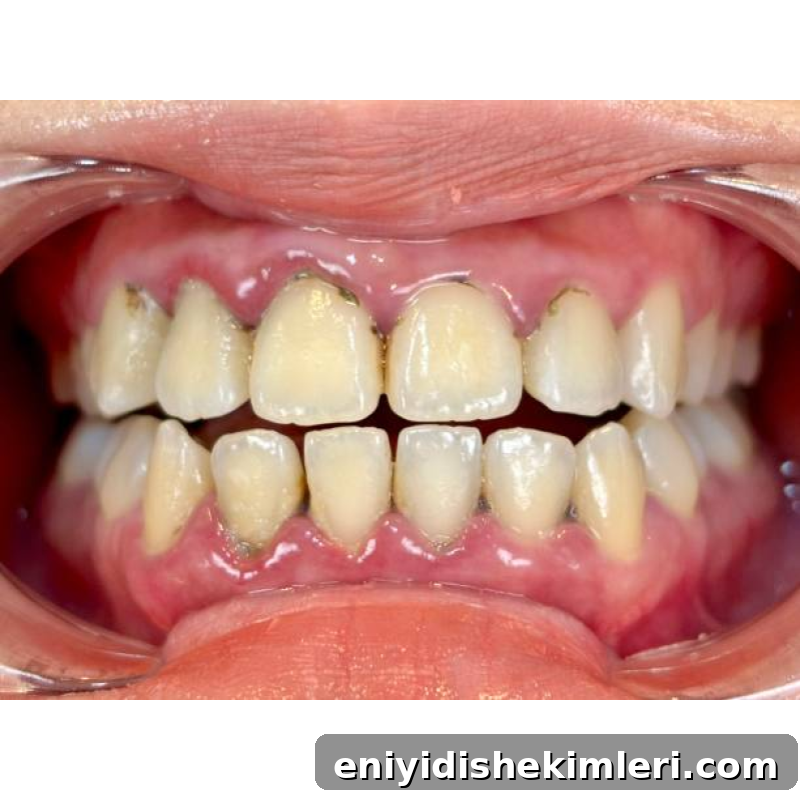
If you’re dealing with receding gums and nothing you’ve tried seems to help, this article is for you.
You may have heard your dentist say, “Some people are just prone to it,” or “It’s genetic,” or “You’re getting older—this is normal.” Those statements can feel dismissive. While gum tissue does not generally grow back on its own, you can reliably stop further recession and protect your teeth.
Below I’ll explain common causes many dentists don’t fully address—the reasons why excellent brushing alone may not stop recession—and I’ll outline a practical protocol I’ve used with patients for over 40 years to halt progression.
Let me start with a case: a former patient, call her Sarah. She visited three dentists who all said the same thing: “You’re brushing too hard. Use a softer brush.” She switched to the softest brush and became so cautious she felt she wasn’t cleaning properly. Her gums kept receding. That’s because brushing technique is only one factor—and not always the main one.
When we reviewed Sarah’s history, we found several contributors:
– Chronic mouth breathing (she woke with a dry mouth each morning)
– Nighttime teeth grinding (her partner reported audible grinding)
– Untreated gum inflammation (her gums bled when she flossed)
– Nutrient deficiencies (low magnesium and vitamin D, impairing bone and gum maintenance)
After addressing these factors, her recession stopped, sensitivity decreased, and within six months her gums looked healthier than they had in years. Recession is common—about half of people under 40 show some recession, rising to roughly 80% by age 65—so you’re not alone. Gum recession is progressive; the sooner you identify the underlying causes, the better your chances of preserving your teeth long-term.
Be wary of internet claims
You’ve likely seen products promising to “regrow your gums naturally” with powders, oil pulling, or supplements. There is no toothpaste, herb, oil, or supplement that reliably regenerates lost gum tissue. The only way to replace significant lost gum tissue is a surgical gum graft performed by a periodontist. If a product promises to regrow gum tissue, don’t waste your money or delay appropriate care.
Why gums recede—and what really happens when inflammation heals
One counterintuitive fact: when chronic gum inflammation finally resolves, recession can become more noticeable. Chronic inflammation causes swelling and engorgement of gum tissue. As inflammation heals through improved hygiene, professional care, or treatment of underlying issues, the swollen tissue shrinks and remodels, which can expose more of the tooth root. In other words, successful treatment of inflammation sometimes reveals tissue loss that was masked by swelling.
Once the gum margin has been lost or thinned, it doesn’t spontaneously regenerate. That’s why prevention and early intervention matter. Certain life stages or dental situations are higher risk: braces make cleaning harder and can promote inflammation; crowded teeth often have thinner bone and gum coverage; dental trauma, root infections, or abscesses can cause localized bone loss and recession.
If your gums are receding despite good hygiene, ask what systemic or mechanical factors might be contributing. Recession is often part of a broader metabolic or structural picture, not just a local brushing issue.
The grinding and airway connection
Teeth grinding and clenching (bruxism) can apply intense, repeated force to teeth, gums, and the supporting bone, contributing to recession and bone resorption. Importantly, bruxism is frequently linked to sleep-disordered breathing. When the airway is partially restricted during sleep, the body may respond by clenching and moving the jaw forward to open the airway. So grinding can be a symptom of an underlying airway problem.
If you experience mouth breathing, snoring, grinding, waking with dry mouth, or daytime fatigue, consider that airway compromise may be a root cause. Treating only the teeth without addressing the airway can leave you vulnerable to ongoing tissue damage.
Practical protocol I use to stop recession
Below are consistent strategies I’ve used in practice and in my own care. They target mechanical, microbial, and nutritional contributors.
1. Use appropriate tools and replace them regularly. Choose a soft-bristled toothbrush and replace it every 4–6 weeks. Replace it sooner if bristles are splayed or frayed.
2. Support the oral microbiome—don’t indiscriminately destroy it. The mouth hosts many bacterial species, some beneficial. Broad antiseptic mouthwashes can disrupt helpful bacteria that contribute to nitric oxide production and healthy blood flow to the gums. Instead, consider daily tongue scraping to remove biofilm, and targeted oral probiotics designed to support a balanced oral microbiome.
3. Address mouth breathing first. Chronic mouth breathing dries gums, reduces saliva, and promotes harmful bacteria. It’s also a sign of possible airway compromise. Simple measures—evaluating nasal breathing, treating nasal obstruction, and working with an airway-aware clinician—can be transformative. Some people find strategies like mouth taping helpful for encouraging nasal breathing, but any intervention should be appropriate for your individual health and safety.
4. Support gum and bone health nutritionally. Gum cells need nutrients to repair and resist inflammation. Magnesium and vitamin D are important for bone and gum health; vitamin K2 helps direct calcium into bone rather than soft tissue. CoQ10 can be helpful, especially for people on statins, since statins can lower CoQ10 levels. Addressing deficiencies should be done with guidance from a clinician and based on testing when possible.
5. Preserve nitric oxide production. Nitric oxide supports blood flow and healing. Beneficial oral bacteria convert dietary nitrates into nitric oxide, so preserving those bacteria matters. Eating nitrate-rich vegetables like arugula, beets, and spinach supports this pathway and can improve gum blood flow and healing.
6. Consider adjunctive therapies. Red and near-infrared light therapy can stimulate tissue repair and reduce inflammation when used appropriately. Night guards or other protective devices can reduce the mechanical damage from grinding while you investigate airway issues.
7. Understand grafting options when needed. For severe localized recession, a connective tissue graft can cover exposed roots, but it is surgical, costly, and success varies by case and operator skill. Grafting does not fix underlying causes; without addressing contributors like inflammation, airway issues, or grinding, recession can continue elsewhere.
What your dentist should discuss with you
Many dentists frame recession purely as a hygiene problem: brush softer, floss more, and consider a graft if it worsens. That approach misses systemic and mechanical contributors like inflammation, mouth breathing, nutritional gaps, and grinding. A comprehensive evaluation that considers these factors will give you a much better chance of stopping progression.
Gum recession is common and progressive, but it is stoppable. The most effective approach addresses the real causes rather than relying on a single “fix.” Start with one practical change—small, consistent steps add up. Over time, those changes can determine whether you keep your natural teeth for life.
I’m rooting for you.
– Mark

P.S. Know someone who would benefit from this information? Forward this to them and encourage them to sign up for future emails.