How much sleep do you need? If your answer is based on a personal idea of a “good night’s sleep,” you may be missing the point: sleep quality matters as much as — if not more than — sleep duration.
Poor sleep reduces life quality and raises the risk for many chronic illnesses. That’s why getting sleep right is essential.
This article examines why sleep matters, the consequences of poor sleep, and practical steps to improve sleep habits and sleep quality.
The Importance of Sleep
How important is sleep, and how can you tell if you’re getting enough? Sleep governs your readiness for the next day and influences long-term health. I refer to the ability to sleep well as your “sleep ability.”
Chronic stress is a major disruptor of sleep. In today’s fast-paced, digitally connected world, stress is common and can fragment sleep. Research shows clear links between stress and sleep disturbances. Your immune response to both acute and chronic stress can alter mood, emotional health, and physical health.
Recovery from acute stress often includes a restorative rebound in REM and slow-wave sleep. Chronic stress, however, tends to fragment sleep. Hormones such as cortisol shift across sleep cycles, and prolonged sleep loss can worsen the effects of glucocorticoids — with outcomes like cognitive decline and impaired carbohydrate tolerance.
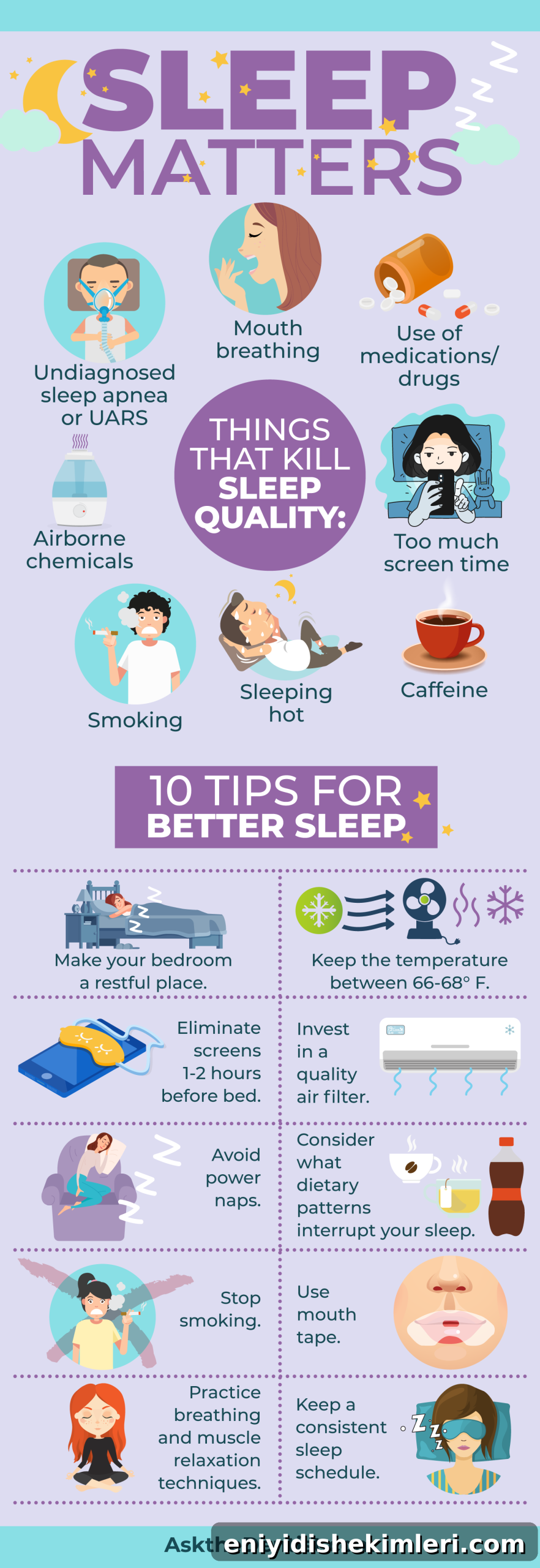
Stress is not the only threat to sleep. Other common contributors to poor sleep include:
- Undiagnosed sleep apnea or upper airway resistance syndrome (UARS)
- Mouth breathing at night
- Certain medications or recreational drugs
- Too much evening screen time
- Caffeine late in the day
- Indoor air pollution and chemical build-up
- Sleeping in a room that is too warm
- Smoking
In my book The 8-Hour Sleep Paradox I explain that many people focus on sleep quantity — how long they sleep — when the real issue is often sleep quality. If you sleep eight hours and still wake up tired day after day, something needs to change.
The good news: improving sleep quality is possible and can refresh your energy and mental clarity.
What Affects Your Sleep?
All living systems maintain homeostasis — a steady internal balance of conditions such as fluid levels, body temperature, blood sugar, and electrolytes. Sleep is part of that balance and requires sensible diet, regular activity, stress management, and consistent sleep habits.
The balance between sleeping and waking is regulated by homeostasis.
Two biological systems primarily control sleep timing:
- Circadian rhythm (your internal clock)
- Sleep-wake homeostasis (sleep drive)
There’s also a role for individual behavior, though it’s usually less influential than the other two.
1. Circadian Rhythm
Your internal clock continues to drive cycles of wakefulness and sleep even under constant light or dark. Body temperature and melatonin levels rise and fall across 24 hours; melatonin supports circadian rhythm by promoting adenosine signaling. Light exposure — especially blue light from phones, tablets, and computers — strongly influences this clock. Limiting electronic media in the hours before bed helps preserve the natural signals that prepare you for sleep.
A restorative sleep episode is highly influenced by circadian rhythm. It’s why we’re usually sleepier at night.
2. Sleep-Wake Homeostasis
The longer you stay awake, the stronger your drive to sleep becomes. Humans typically reach peak sleepiness after about 30 hours of continuous waking. Disrupting the sleep-wake cycle harms cognitive function and increases stress on the body.
Many factors affect sleep and can be managed:
- Recent meals and nutrition
- Daily schedule and stress load
- Exercise timing and intensity
- Caffeine and alcohol
- Mattress and pillow quality
- Nighttime disturbances
Some influences are less controllable, but many practical improvements are within reach.
Dangers of Sleep Deprivation
Even a single night of poor sleep can disrupt energy, mood, and hormone balance. Chronic sleep fragmentation accelerates aging, harms mental health, and raises the risk of disease. Research on sleep deprivation lists several cognitive effects:
- Microsleeps (brief involuntary sleep episodes)
- Reduced attention, short-term memory, and decision-making
- Slower reaction times, increasing accident risk
- Difficulty learning new tasks
- Reduced creative and divergent thinking
- Perseveration on ineffective solutions
- Performance declines over prolonged tasks
- Reduced situational awareness
Sleep loss also disrupts hormones that regulate appetite — leptin and ghrelin — which can contribute to weight gain. In short, even one night of sleep loss can impair cognition, learning, and metabolism.
10 Tips for Better Sleep
You can improve sleep by creating a healthier sleep environment and routine. Medication should be a last resort after lifestyle changes and evaluation, ideally with a sleep study if problems persist. Before consulting a doctor, keep a sleep diary for two weeks to log sleep duration, perceived quality, and relevant conditions.
Simple, nonpharmacological steps include:
1. Make your bedroom a dedicated restful space
Reserve the bedroom for sleep and low-stress activities. Avoid work, intense conversations, and screen time in bed. Eliminate lights, including electronic displays, and invest in a supportive mattress and pillow so you wake without pain.
2. Keep the bedroom cool (around 66–68°F)
A cool sleeping temperature helps deeper, more restorative sleep.
3. Stop screen use 1–2 hours before bed
Screens emit blue light and mimic alerting signals. Replace screens with reading, caffeine-free tea, or calming audio. Aim for at least 60 minutes, but two hours is better.
4. Improve indoor air quality
Indoor air pollution can be much higher than outdoor levels. A quality air filter reduces toxins your body must clear while you sleep, supporting restorative processes.
5. Avoid daytime naps if they impair nighttime sleep
Napping can be helpful for some, but if it reduces nighttime sleep quality or duration, skip it.
6. Watch evening meals and caffeine
Avoid heavy or carb-rich meals close to bedtime and stop caffeine six to eight hours before bed.
7. Quit smoking
Smoking increases sleep disturbances, daytime sleepiness, and the risk of sleep-disordered breathing. Quitting improves sleep and overall health.
8. Consider mouth tape if you mouth-breathe
Mouth breathing can worsen airway collapse, contribute to snoring, and cause dry mouth. Using gentle mouth tape can encourage nasal breathing and reduce disturbances for some people.
9. Practice relaxation and breathing techniques
Breathing exercises, progressive muscle relaxation, and guided imagery help shift attention away from stress and toward calm, lowering arousal before sleep.
10. Keep a consistent sleep schedule
Go to bed and wake at consistent times to strengthen your circadian rhythm and improve sleep regularity.
How Long Should You Sleep?
Many people default to the idea that eight hours is the ideal. But while recommended ranges exist, sleep quality is more important than strictly reaching eight hours. Sleep restores muscular, nervous, immune, and skeletal systems; the most critical factor is whether those systems get the deep restorative sleep they need.
Polyphasic vs. Monophasic Sleep
Monophasic sleep is one main sleep period per day. Polyphasic sleep includes multiple shorter sleep episodes. Historically, polyphasic sleep patterns were common and some studies show people can function with different patterns without reduced performance. Chronotypes — individual differences in sleep timing — also influence the optimal pattern for each person.
Recommended Sleep Times
Official recommendations vary by age. In general:
- Infants and young children need the most sleep
- Teenagers typically require 8–10 hours
- Adults generally need 7–9 hours
- Older adults may need slightly less, around 7–8 hours
These ranges are guidelines; the key is whether sleep is restorative and supports daytime function.
Stages of Sleep
A normal night of sleep cycles through four stages: stage 1 (light sleep), stage 2 (deeper non-REM sleep), stage 3 (deep slow-wave sleep), and REM sleep (dreaming). Deep non-REM sleep is most restorative for the body, while REM plays a role in memory, emotional processing, and creative thinking.
Dreaming: Why It Matters
Dreams remain a research frontier. Theories suggest dreams help process emotions, prepare responses to threats, support creative thinking, and consolidate important memories while filtering out irrelevant information. REM sleep and dreaming likely play a role in reorganizing neural information for better learning and emotion regulation.
Sleep Tracking and Limits
Consumer sleep trackers and apps can give a helpful baseline for sleep patterns and snoring, but they do not replace formal sleep studies when a disorder is suspected. Tools like snore trackers and wearables can inform discussions with a health professional, but persistent daytime tiredness, loud snoring, or witnessed pauses in breathing warrant evaluation by a sleep specialist.
Common Sleep Disorders
Common sleep disorders that disrupt quality include:
- Bruxism (teeth grinding) — can fragment sleep and be linked to airway problems
- Snoring — sometimes a sign of airway obstruction
- Sleep apnea — repeated breathing pauses that raise cardiovascular risk
- Restless legs syndrome — leg discomfort and movements that prevent deep sleep
- Narcolepsy — excessive sleepiness and REM-related symptoms
- Insomnia — trouble falling or staying asleep
- REM sleep behavior disorder — physically acting out dreams
- Circadian rhythm disorders — misaligned internal clock, including jet lag
Many of these conditions are treatable once identified, from oral appliances and night guards to CPAP therapy for sleep apnea.
Other Sleep Issues
Pregnancy, sleepwalking, night terrors, bedwetting, sleep paralysis, and sleep-related eating can all affect sleep quality. Occasional episodes are often benign, but frequent or severe events should prompt medical attention.
FAQs
Q
How can I fall asleep right away? Is that a good benchmark?
A
Try these steps:
- Avoid caffeine 6–8 hours before bed
- Do relaxation or breathing exercises
- Stop screen use at least an hour before bed
- Take a warm bath to encourage relaxation
Aiming to fall asleep immediately isn’t necessarily healthy. Normal sleep latency is roughly 10–15 minutes. Falling asleep far faster can signal excessive sleepiness from chronic sleep deprivation.
Q
Can lack of sleep be deadly?
A
Yes, chronic sleep deprivation and untreated sleep disorders can lead to life-threatening conditions. Long-term poor sleep affects mental and physical health, increases cardiovascular risk, and can contribute to accidents and serious medical problems.
Q
What brain areas control sleep?
A
Sleep and wakefulness are regulated by networks in the brain that include areas of the hypothalamus. These neurons modulate arousal systems and coordinate signals that promote sleep or wakefulness.
Q
Do genetics influence sleep?
A
Yes. Genetic factors shape many sleep traits and predispose some people to familial sleep disorders. Environment and behavior also influence sleep duration and quality.
Q
Do white noise machines help?
A
Yes. White noise or other steady sound generators can improve sleep stability in noisy environments and reduce awakenings caused by intermittent sounds.
Key Takeaways
Sleep is essential for health, recovery, and daily performance. While recommended sleep durations vary by age, sleep quality is the primary goal. Use sleep tracking tools to establish a baseline, but pay attention to symptoms: persistent tiredness, loud snoring, teeth grinding, witnessed breathing pauses, or frequent nighttime movements all deserve evaluation.
Many sleep disruptions are treatable. Interventions range from simple lifestyle changes and improved sleep environments to medical therapies such as oral appliances or CPAP for sleep apnea. Addressing sleep problems improves health, mood, and daytime function — so don’t ignore the signs.