
When we think about improving our health, losing weight, and living longer, oral health is rarely the first thing that comes to mind.
We focus on a healthier heart, lungs, and brain—but what about a healthier mouth?
The truth is that the mouth is connected to every other system in the body.
The condition of your oral health influences your heart and lungs, your risk of dementia, the quality of your sleep, and overall levels of inflammation and toxicity. It can even affect fertility and pregnancy outcomes.
Caring for your mouth helps you live a longer, healthier, and more enjoyable life.
Consider two ways to picture the aging process.
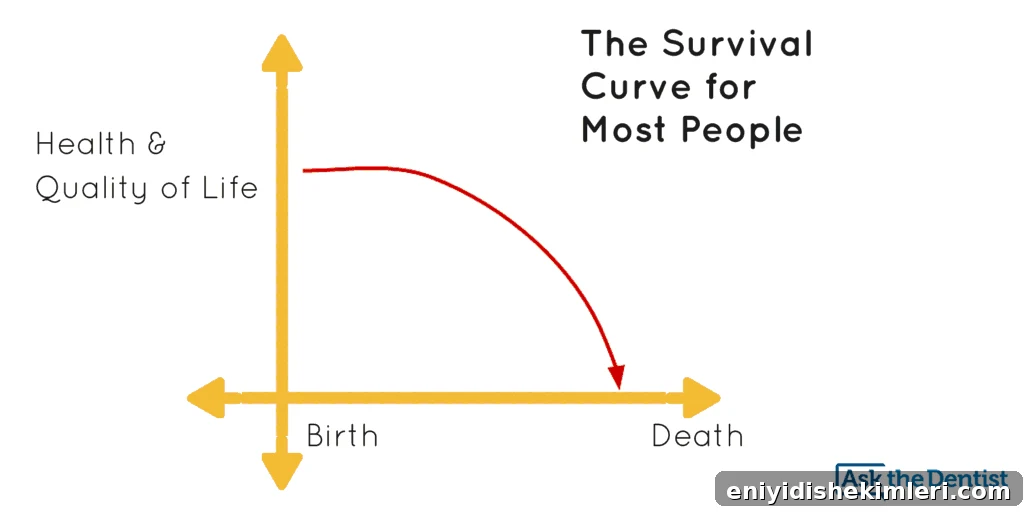
The first curve shows quality of life steadily declining as we near the end of life. This pattern is common, especially when people do not take preventive measures or maintain consistent self-care.
Many of us watch loved ones fade gradually—often losing cognitive function and independence in ways that seem inevitable. In some cases, poor oral health has been a contributing factor.
The second pattern is known as “squaring the life curve.” It represents maintaining a high quality of life until close to the end.
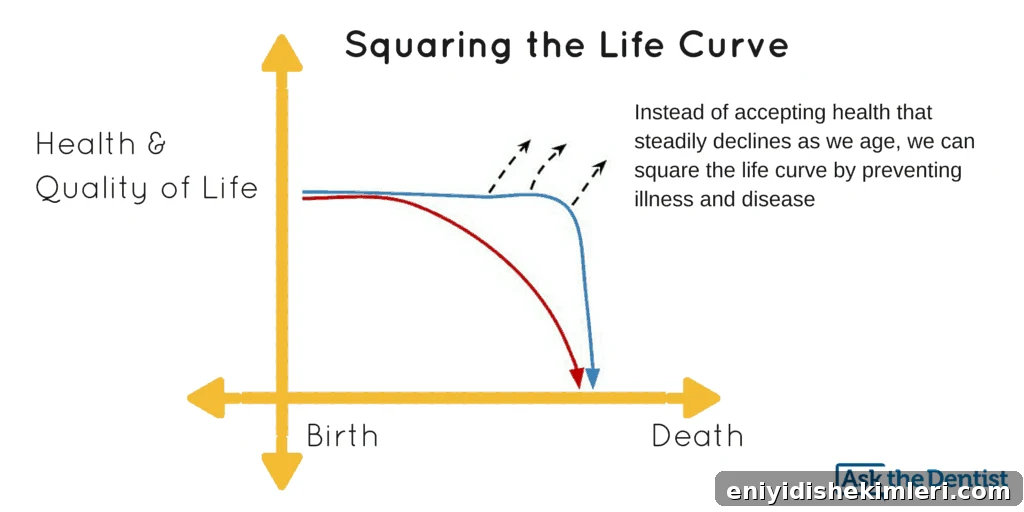
Prevention, a balanced diet, regular exercise, and consistent care for both body and mind can help square the life curve—keeping you healthy and active well into older age.
As a health professional, squaring the life curve guides my approach. I encourage you to picture your own aging this way: not simply living longer, but living better for all of those extra years.
Imagine being 80 years old and still able to:
- Walk without a walker or wheelchair
- Live without chronic illness
- Hear and see your grandchildren
- Do what you love
- Travel
- Eat foods you enjoy with a full set of functional teeth
- Enjoy life without persistent pain
The way you care for your mouth will affect each of these outcomes—either supporting them or making them harder to achieve.
How oral care influences overall health
- Determines levels of inflammation and toxicity throughout the body
- Impacts inflammatory load on the heart and the entire cardiovascular system
- Affects resistance to cognitive decline and dementia
- Influences pregnancy health and the wellbeing of your baby
Poor oral health pushes you toward a steeper decline and a lower quality of life. That’s why starting good oral-care habits now matters: prevention is key to squaring your life curve.
By preventing conditions like periodontal disease and managing oral inflammation, you’re not only extending life—you’re preserving the ability to enjoy it.
Five steps to optimal oral health to square your life curve
- Floss daily to remove plaque and prevent gum disease
- Brush gently but thoroughly to clean teeth and protect enamel
- Clean your tongue regularly to reduce bacterial buildup
- Follow a low-inflammation, nutrient-rich diet to support oral and systemic health
- Visit your dentist for regular professional cleanings and checkups
- Address teeth grinding (bruxism) to prevent wear, pain, and jaw problems
Maintaining excellent oral health supports your whole-body wellness and helps you stay active, engaged, and free of pain as you age.
Mark Burhenne DDS
Learn More:What Exactly Is the Mouth-Body Connection?