The dentist you choose today can affect your heart, your brain, and your overall health decades from now.
Imagine two people: the same age, similar genes, and comparable diets.
Years ago, one chose a dentist who treats the mouth as part of the whole body. The other chose a conventional drill-and-fill dentist covered by insurance.
Over the next eight weeks I want to follow these two people and their health trajectories, organ by organ. We’ll begin with the heart — the last place most people expect a dentist to have influence.
When I first told patients that their gums could affect their heart, some colleagues warned me to stay in my lane.
Medicine tends to separate the mouth and the heart into different specialties, different clinics, and different insurance forms. But the body doesn’t recognize those divisions — it functions as one interconnected system.
What convinced me was a 1989 study showing that people who had just had a heart attack had noticeably worse dental health than similar patients who hadn’t, even after accounting for smoking, cholesterol, and other common risk factors. Reading that changed how I thought about heart health for my patients.
Since then, the evidence has only grown. Late last year the American Heart Association summarized a decade of research connecting gum disease with cardiovascular disease.
When gums become inflamed, the tight seal between gum and tooth begins to break down. Bacteria that normally stay in the mouth can enter the bloodstream. Researchers repeatedly find oral bacteria inside arterial plaque.
A low, persistent inflammation in the gums keeps the whole body slightly inflamed. Chronic inflammation is exactly what gradually stiffens and clogs arteries.
Now return to our two people.
The drill-and-fill dentist fixes cavities and crowns cracked teeth but may never link progressively bleeding gums to the patient’s cardiovascular risk.
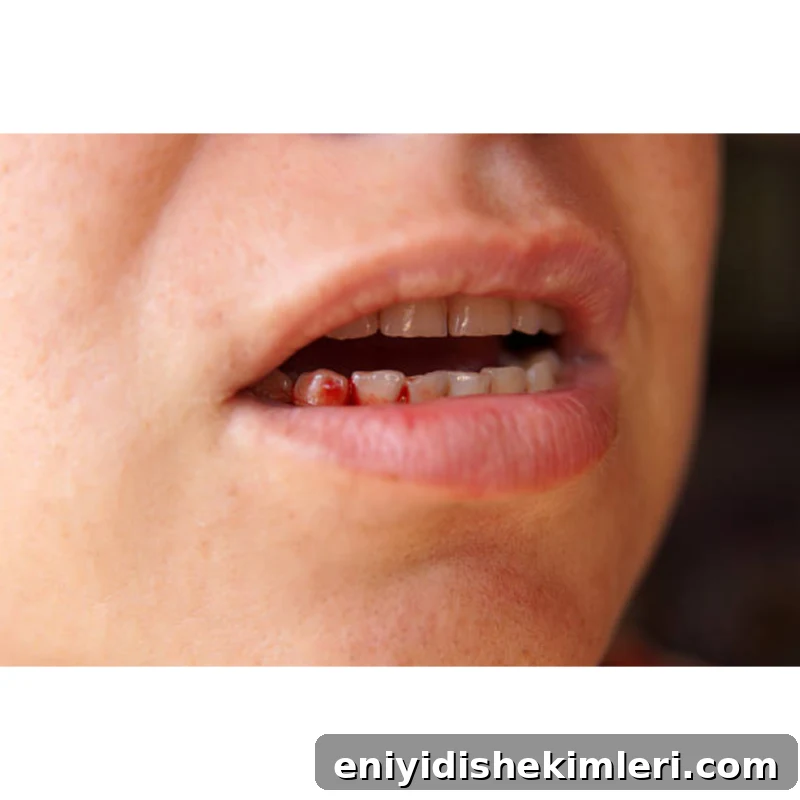
A whole-body dentist treats bleeding gums as an early warning sign — and the best ones communicate that concern to your physician.
Your cardiologist and your dentist may never speak about you, even though both are addressing the same health issue from different angles.
So what can you do right now?
- Find out where you stand. At your next cleaning, ask directly: “Are my gums bleeding when you check, and how deep are my pockets?” (Pockets are the gaps where gum meets tooth.) Bleeding is the earliest sign of inflammation and is reversible at that stage. Record the numbers — year to year you want them stable, not getting deeper.
- Clean between your teeth every day. Gum disease starts where a toothbrush can’t reach. Floss, use an electric flosser, a water flosser, or small interdental brushes. Brushing alone won’t reverse early inflammation.
- Protect the bacteria that help lower blood pressure. Certain bacteria on the tongue convert dietary nitrate from leafy greens and beets into nitric oxide, a molecule that relaxes arteries and helps maintain healthy blood pressure. Antiseptic mouthwashes can wipe out these bacteria; in studies, a week of antiseptic rinses nudged blood pressure upward. Consider gentler alternatives and keep eating your greens.
- Choose foods that protect your gums. Reduce sugar and refined carbohydrates that feed bacteria linked to gum inflammation. Favor anti-inflammatory choices: leafy greens, omega-3 fatty acids, vitamin C–rich foods, and green tea.
- If you already have gum disease, treat it. This often requires deeper cleaning below the gumline (scaling and root planing), not just a routine polish. Treating active gum disease has been shown to lower blood markers of inflammation, such as CRP, and in some studies to improve arterial function.
Bleeding gums are a vital sign, like fever or blood pressure.
Next week: researchers keep finding gum-disease bacteria inside the brains of people with Alzheimer’s. I’ll explain what that may mean — and why I read that research as a son, not just as a dentist.
Take care of your heart, and I’ll see you next week in Part 2,
Dr. B

P.S. A few products I use to support gum and heart health include a magnesium supplement, a gentler rinse as an alternative to antiseptic mouthwash, a gum defense supplement, green tea, and a hydroxyapatite toothpaste I use daily.
Further reading & citations
Mattila KJ, et al. “Association between dental health and acute myocardial infarction.” BMJ. 1989;298(6676):779–781. This Finnish study found that heart-attack patients had worse dental health even after accounting for common risk factors.
Tran AH, et al. “Periodontal Disease and Atherosclerotic Cardiovascular Disease: A Scientific Statement From the American Heart Association.” Circulation. 2026;153(6):e73–e88. The American Heart Association’s updated consensus summarizing recent evidence.
Kozarov EV, et al. “Human atherosclerotic plaque contains viable invasive Actinobacillus actinomycetemcomitans and Porphyromonas gingivalis.” Arterioscler Thromb Vasc Biol. 2005;25(3):e17–e18. Researchers found live oral bacteria inside arterial plaque.
Tonetti MS, et al. “Treatment of periodontitis and endothelial function.” N Engl J Med. 2007;356(9):911–920. Treating gum disease improved arterial function and lowered CRP in this study.
Kapil V, et al. “Physiological role for nitrate-reducing oral bacteria in blood pressure control.” Free Radic Biol Med. 2013;55:93–100. A study showing that antiseptic mouthwash can raise blood pressure by eliminating bacteria that produce nitric oxide.
For more on why cardiologists and dentists should communicate and practical tips about mouthwash, nitric oxide, and gum disease, look for reputable resources and speak with your dental and medical providers.