Last week I helped my son-in-law fix a leaky kitchen faucet.
The culprit was a worn rubber gasket. It should have made a watertight seal, but after years of use it had deteriorated—and water was leaking everywhere.
“If we don’t replace this,” I told him, “you’re not just dealing with a drip. You’re facing water damage behind the walls.”
As we worked, I kept thinking about patients who ignore bleeding gums.
Your gums are your body’s gasket. When that seal fails, the consequences go far beyond a little bleeding. It’s like a blown head gasket in an engine: you lose power, performance drops, and eventually the whole system is compromised.
Most people don’t notice their gasket is failing until it’s too late.
Your Gums Are a Gasket—And Here’s Why That Matters
Think of a head gasket in a car. When intact, it seals the combustion chamber and keeps everything running smoothly. When it blows, the engine loses compression, fluids mix, and performance collapses.
Your gums serve the same protective role for your body.
Healthy gums form a tight seal—the sulcular epithelium—around each tooth, roughly 1–3 mm deep. When this seal is intact, bacteria remain above the gumline where saliva, the tongue, and brushing can control them.
When that seal breaks down, bacteria migrate beneath the gumline into the periodontal pocket. Once there, they have direct access to the bloodstream through the thin tissue lining the gums.
This is when you start losing power.
Your immune system goes into overdrive fighting an infection it can’t fully eliminate. Chronic inflammation becomes the norm, and like a car with a blown head gasket, multiple systems begin to suffer.
What Happens When the Gasket Fails
When your gum seal degrades, a predictable cascade follows:
1. Bacteria colonize below the gumline
These are typically anaerobic, gram-negative bacteria that thrive in low-oxygen environments and produce potent endotoxins—not the same microbes responsible for simple cavities.
2. Your immune system mounts a chronic inflammatory response
White blood cells respond, but bacteria protected in pockets prevent definitive resolution. The result is persistent inflammation that drains your energy and damages tissue.
3. The inflammation breaks down the bone and tissue holding your teeth
Over time, the periodontal ligament and alveolar bone are lost. Teeth literally lose their foundation.
4. Inflammatory mediators enter your bloodstream
Molecules such as C-reactive protein (CRP), interleukin-6 (IL-6), and tumor necrosis factor-alpha (TNF-α) can spill into circulation. These markers are linked to:
- Cardiovascular disease
- Alzheimer’s and cognitive decline
- Diabetes (a bidirectional relationship)
- Pregnancy complications, including higher pre-eclampsia risk
- Rheumatoid arthritis
- Certain cancers
5. Oral bacteria can appear in arterial plaques We’ve recovered Porphyromonas gingivalis and other periodontal pathogens from atherosclerotic plaques in people with heart disease. The connection is both inflammatory and microbial.
When I tell patients, “Your gums are the gateway to your entire body,” this is exactly what I mean.
A failing gasket doesn’t just leak a little—it compromises everything downstream.
The Gasket Test: How to Know If Yours Is Failing
Gum disease is often painless until it becomes advanced. Here are simple checks you can do at home:
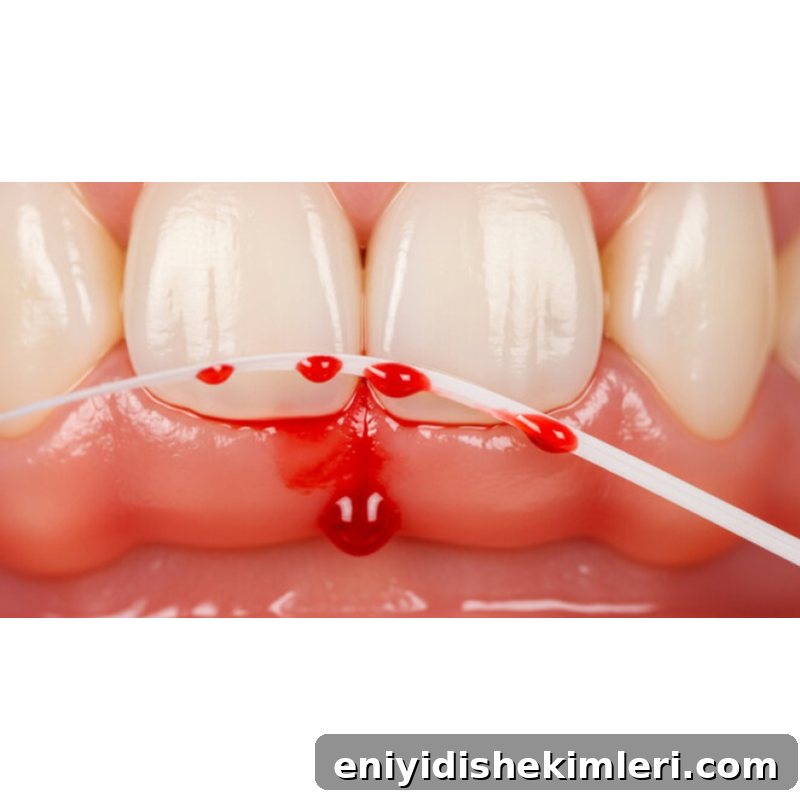
✅ Do your gums bleed when you floss? Bleeding during flossing is the top sign the gum seal is compromised. Healthy gums don’t bleed.
✅ Do you notice redness or puffiness at the gumline? Inflamed gums look swollen and shiny rather than firm and pink.
✅ Can you see more of your tooth than before? Gum recession indicates a loosening seal.
✅ Do you have persistent bad breath? Chronic halitosis often signals bacterial activity beneath the gumline.
✅ Has it been more than six months since your last professional cleaning? Even with excellent home care, you can’t reach below the gumline; regular professional cleanings are essential.
If you answered yes to any of these, your gasket may be leaking—and you should take action.
How I Keep My Gasket Intact (And What You Should Do Too)
I’m 66 and my gums are as healthy now as they were in my 30s. My goal is to keep them that way for decades more. Here is the daily protocol I follow:
1. Floss every night I floss before brushing so toothpaste can reach between the teeth. Flossing removes the buildup that inflames gums.
2. Use a nano-hydroxyapatite toothpaste Nano-hydroxyapatite helps remineralize enamel and smooth surface roughness where bacteria hide, supporting the gum seal without harsh surfactants or agents that can disrupt the oral microbiome.
3. Scrape the tongue daily The tongue is a reservoir for bacteria; cleaning it reduces recolonization of the mouth.
4. Avoid antiseptic mouthwashes Strong antiseptics can disrupt beneficial oral bacteria that contribute to gum health and nitric oxide production.
5. Support the oral microbiome with probiotics Specific oral probiotics, such as Streptococcus salivarius strains, can help crowd out pathogenic bacteria and promote a balanced microbial environment.
6. Use CoQ10 to support cellular energy in gum tissue Gum tissue requires significant cellular energy for maintenance and healing; CoQ10 supports mitochondrial function and has been shown to improve gum health by reducing pocket depth and inflammation.
7. Ensure adequate vitamin C for collagen production Gums are rich in collagen. Even mild vitamin C deficiency weakens gum tissue. I aim for sufficient daily intake through food and supplements to support tissue integrity.
8. Get professional cleanings every 3–6 months Calculus (hardened plaque) can’t be removed by home care alone and serves as a scaffold for bacteria. People with active disease may need periodontal therapy like scaling and root planing.
9. Address mouth breathing and sleep issues Mouth breathing dries gums and reduces saliva’s protective effects. If you snore, wake with dry mouth, or suspect sleep-disordered breathing, consult a sleep specialist. Airway health and gum health are closely linked.
10. Supplement strategically for gum strength Gum tissue benefits from nutrients that support collagen, bone health, and inflammation control, including vitamin C, vitamin K2, omega-3 fatty acids, and magnesium.
11. Drink green tea daily Green tea catechins, especially EGCG, inhibit bacterial enzymes that degrade collagen and reduce bacterial attachment to gums. I drink 2–3 cups of green tea daily to help protect the gum seal.
Your gasket is working hard for you. Don’t wait until it fails to start protecting it.
To your great health,
Mark

Further Reading & Citations
Dadkhah A, et al. “The Effect of Coenzyme Q10 on Periodontitis: A Systematic Review and Meta-Analysis of Clinical Trials.” Journal of Prosthodontics. 2022 Mar;31(S1):e21-e31.
Fernandez MDS, et al. “Clinical efficacy of adjunctive use of coenzyme Q10 in non-surgical periodontal treatment: A systematic review.” European Journal of Oral Sciences. 2025 Apr;133(2):e70002.
Effectiveness of CoQ10 Oral Supplements as an Adjunct to Scaling and Root Planing in Improving Periodontal Health. Journal of Indian Society of Periodontology. 2015.
Janket SJ, Baird AE, Chuang SK, Jones JA. Meta-analysis of periodontal disease and risk of coronary heart disease and stroke. Oral Surg Oral Med Oral Pathol Oral Radiol Endod. 2003 May;95(5):559-69.
Blaizot A, Vergnes JN, Nuwwareh S, Amar J, Sixou M. Periodontal diseases and cardiovascular events: meta-analysis of observational studies. Int Cardiovasc Forum J. 2009.
Fu YD et al. Meta Analysis of the Correlation between Periodontal Health and Cognitive Impairment in the Older Population. J Prev Alzheimers Dis. 2024.
Sgolastra F, Petrucci A, Severino M, Gatto R, Monaco A. Relationship between Periodontitis and Pre-Eclampsia: A Meta-Analysis. PLoS ONE. 2013;8(8):e71387.
Le QA et al. Periodontitis and Preeclampsia in Pregnancy: A Systematic Review and Meta-Analysis. Matern Child Health J. 2022 Dec;26(12):2419-2443.
Stöhr J, Barbaresko J, Neuenschwander M, Schlesinger S. Bidirectional association between periodontal disease and diabetes mellitus: a systematic review and meta-analysis of cohort studies. Sci Rep. 2021 Jul 1;11(1):13686.