
Canker sores and cold sores are often confused, but they are different conditions. One is caused by a virus and is contagious, while the other is noncontagious and usually less serious. Understanding the differences helps you choose the right care.
This article explains how to tell the difference between canker sores and cold sores, whether they are contagious, how to prevent them, and how to treat them.
In this article, you’ll learn:
- the differences between canker sores and cold sores
- how to know if you’re contagious
- prevention strategies
- treatment options
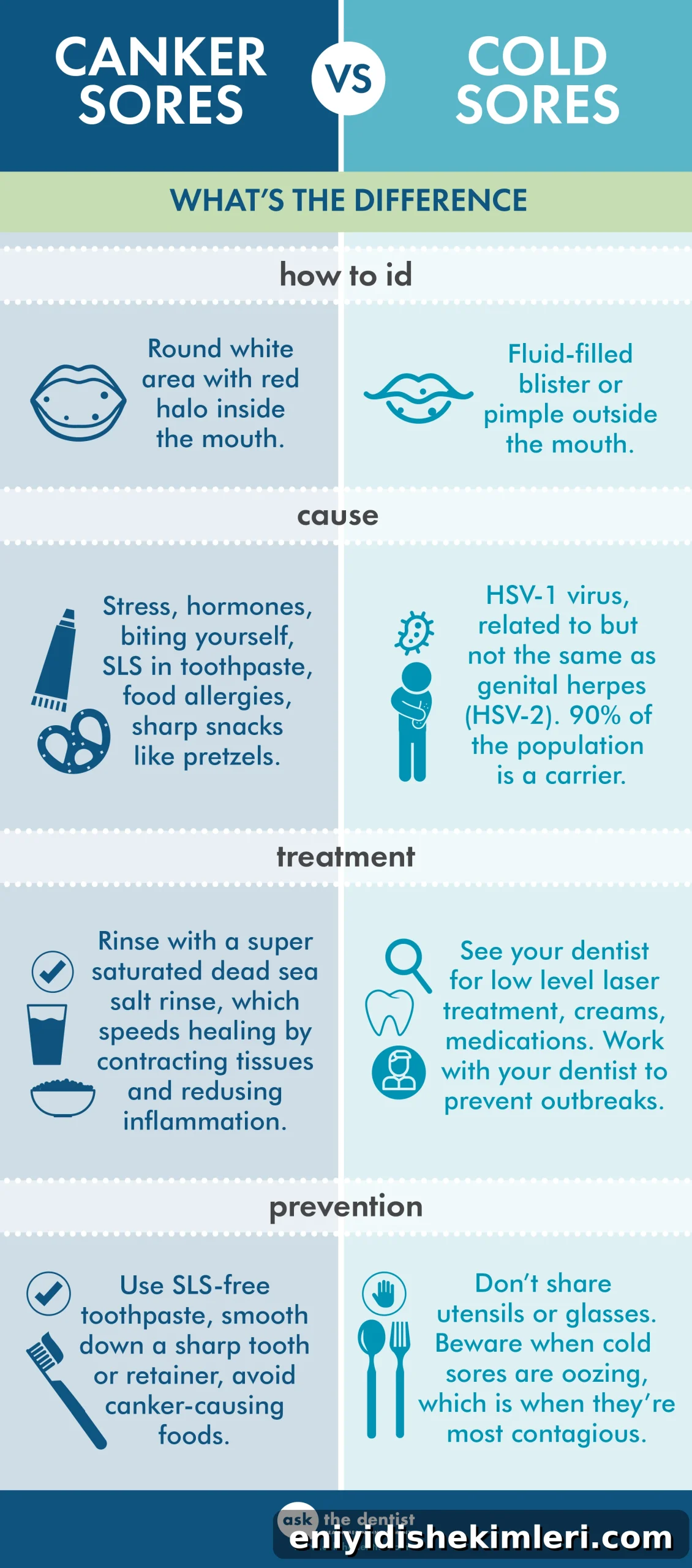
How to Tell the Difference Between a Canker and a Cold Sore
Canker sores and cold sores are distinct conditions and require different care.
Canker sores are small, round or oval ulcers that form inside the mouth. Medically they are called aphthous ulcers. They are not contagious and, while painful, are generally not dangerous.
Cold sores are fluid-filled blisters that form outside the mouth, typically on the lips. They are caused by the herpes simplex virus (HSV-1), are contagious, and can require antiviral treatment. While usually not dangerous for healthy individuals, they can be serious for people with weakened immune systems.
First, let’s look at canker sores.
What do canker sores look like?
Canker sores appear as small white or grayish ulcers with a red halo and are usually a few millimeters across. They occur on the inside of the cheeks, the tongue, or the inner lips. Because they are internal, they do not spread from person to person.
What causes canker sores?
Canker sores often appear when the body is run down or stressed. There isn’t a single known cause, but common contributing factors include:
- Food sensitivities—gluten or wheat sensitivity can play a role.
- Nutritional deficiencies—low levels of vitamin B12, zinc, iron, or folic acid have been associated with canker sores in some studies.
- Stress—outbreaks can coincide with stressful periods.
- Hormonal changes—medication, menstrual cycles, or menopause can increase susceptibility.
- Mechanical trauma—biting the cheek, sharp orthodontic appliances, rough tooth edges, or abrasive foods like pretzels can trigger sores.
- Sodium lauryl sulfate (SLS)—this common toothpaste ingredient can irritate the oral mucosa and has been linked to canker sores for some people.
- Acidic or irritating foods—tomato sauce, citrus, and highly processed or spicy foods may contribute.
How to treat a canker sore
Most canker sores heal on their own within about two weeks. Key steps are identifying and removing possible causes, and using measures to reduce pain and inflammation while the sore heals.
To help relieve symptoms and support healing:
- Salt rinse: Rinse with a strongly saturated salt solution (Himalayan or sea salt). It may sting initially but can reduce inflammation and support healing by increasing local blood flow and acting as an astringent.
- Soothing remedies: Apply a cooled chamomile tea bag to the sore for a few minutes to reduce inflammation. Oil pulling with high-quality coconut oil may also provide soothing relief.
- Gentle oral care: Use a toothbrush designed for sensitive gums and replace it frequently to avoid abrasive bristles.
- Avoid irritating foods: Steer clear of sharp, spicy, acidic, or very hot foods, as well as alcohol and certain beverages until the sore resolves.
- Avoid essential oils and strong topical chemicals: These can cause burning or irritation of the ulcer.
For severe pain, short-term options include
- over-the-counter topical anesthetics (benzocaine) for temporary relief
- topical corticosteroids or dentist-applied treatments
- oral pain relievers for extreme pain—use with caution, as some may reduce blood flow and potentially slow healing
These measures relieve symptoms but do not necessarily speed healing. Consult your dentist if pain is severe or persistent.
What to avoid
- Hydrogen peroxide: It can further irritate the ulcer and increase pain.
- Canker sore cover products: These often cause more discomfort and can delay healing.
- Alcohol-based mouthwashes: They can sting and do not help since canker sores are not caused by bacteria.
How to prevent canker sores
- Use an SLS-free toothpaste to reduce irritation of the oral mucosa.
- Optimize nutrition and check for deficiencies in B12, iron, zinc, or folate if you have recurrent sores.
- Consider oral probiotics to support a healthy balance of oral bacteria.
- Track triggers with a diary to identify foods or habits that precede outbreaks.
What do cold sores look like?
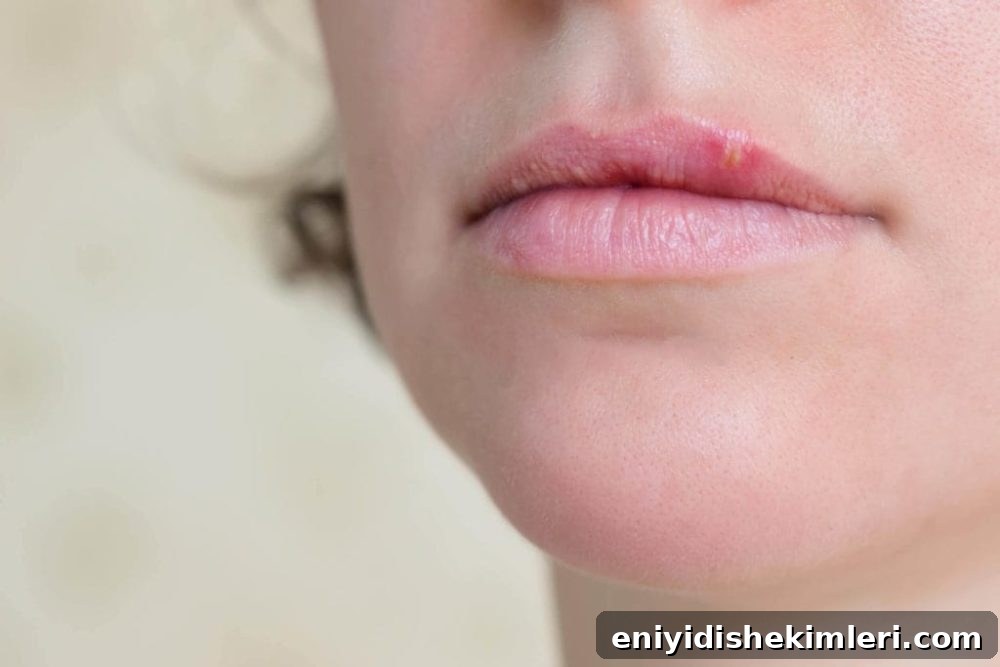
Cold sores begin as small, fluid-filled blisters that eventually break open, ooze, and crust over. They often start with itching, burning, or tingling around the lips before visible blisters appear. Cold sores usually form on the outside of the lips and tend to recur in the same location.
What causes cold sores?
Cold sores are caused by the herpes simplex virus type 1 (HSV-1). The virus spreads through direct contact such as kissing, sharing utensils or cups, or touching a fresh blister and then touching another person.
Many people are exposed to HSV-1 in childhood and carry the virus for life. After the initial infection, the virus remains dormant in nerve tissue and can reactivate later. Reactivation may be triggered by sunlight, wind, hormonal changes, stress, fatigue, a weakened immune system, or other viral infections.
How to treat a cold sore
Cold sores typically heal in 2–3 weeks. Treatments can reduce symptoms and sometimes shorten the outbreak if started early.
- Antiviral creams: Prescription topical antivirals applied frequently during the first days of an outbreak can be effective. Consult your dentist or healthcare provider for options.
- Oral antivirals: Systemic antiviral pills are available and may be prescribed for frequent or severe outbreaks.
- Low-level laser therapy: Offered by some dental practices; evidence is limited but some patients report benefit.
- Ice or cold packs: Apply briefly for symptomatic relief of pain and swelling.
- Avoid cosmetics and irritating products: Makeup, alcohol-based removers, and harsh creams can slow healing.
Avoid treatments that have little evidence of benefit or that irritate the sore, such as lemon balm (which can be acidic and painful), unnecessary moisturizing that prevents natural drying, and products lacking proven antiviral activity.
How to prevent cold sores
- Lip protection: Use lip balm with sun protection to reduce sun-triggered outbreaks.
- Stress management: Reducing stress through exercise, sleep, and relaxation can lower the frequency of outbreaks.
- Avoid spreading the virus: Do not kiss infants, avoid sharing toothbrushes, cups, or utensils, and wash hands frequently—especially during an active outbreak.
- Be cautious around others with active sores: Avoid close contact when blisters are present, as they are most contagious when oozing.
Mark Burhenne DDS
Have more questions about canker or cold sores?
Learn More:How Can I Cure My Frequent Canker Sores?