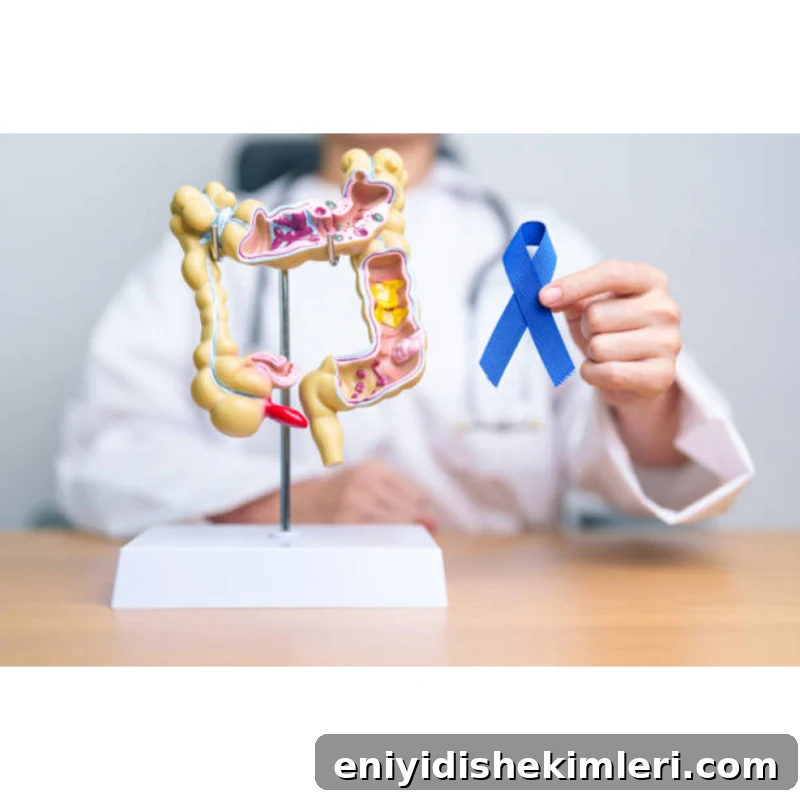
I had a colonoscopy last year. Sitting in the prep room, one thought kept returning: a connection most gastroenterologists rarely discuss.
You see your dentist twice a year. They examine your mouth closely for an hour, chart gum pockets, note bleeding, photograph recession. Dentists often know your mouth better than anyone in healthcare and see you more often than your primary care doctor.
Yet almost none of them realize that what they observe in the mouth can be an early warning sign of colorectal cancer.
In January, the American Cancer Society published three decades of U.S. cancer mortality data in JAMA. The striking finding: colorectal cancer is now the leading cause of cancer death among Americans under 50, as of 2023. It ranked fifth in 1990. Other major cancers in that age group — breast, lung, leukemia, brain — are decreasing. Colorectal cancer is the outlier moving in the wrong direction.
Five signs your mouth may be telling you something important
1. Your gums bleed when you brush or floss. Bleeding gums are the most important signal. They mean the barrier between your oral microbiome and bloodstream is compromised, allowing oral bacteria direct access to the rest of the body every day. Harvard researchers reported that people with periodontal disease have a 17–21% higher risk of precancerous colon polyps. Bleeding is not only a symptom — it’s a pathway.
2. Persistent bad breath that brushing doesn’t fix. The oral bacterium Fusobacterium nucleatum (Fn), which has been found inside colon tumors, produces volatile sulfur compounds that cause chronic halitosis. If brushing helps only briefly and the problem returns, you may have an elevated load of anaerobic bacteria.
3. A persistent white or yellow coating on your tongue. Fn tends to colonize tongue biofilm. Many people skip cleaning their tongue during oral care; that coating acts as a reservoir. You swallow about a liter of saliva daily, so whatever lives on the tongue regularly travels into the digestive tract.
4. Puffy gums or receding gumline. Recession reflects years of periodontal damage. Puffy or tender gums without obvious bleeding indicate early gingival inflammation — mostly asymptomatic, which is why it often goes untreated for years.
5. Tooth loss. Losing four or more teeth, a marker of prolonged untreated periodontal disease, is associated with a roughly 20% higher risk of precancerous colon polyps, according to Harvard and AACR data. Losing even one to three teeth raises the risk of advanced adenomas by about 28%.
None of these signs proves you have cancer. But they indicate an oral microbiome imbalance that may have effects far beyond the mouth.
What the research shows
A 2024 Nature study identified a distinct Fn clade adapted to travel from the mouth to the colon. It survives stomach acid that kills most oral bacteria, traverses the digestive tract, hides inside tumor cells, and in more than 40% of colorectal cancer cases studied the strain found in the tumor matched the strain in that patient’s saliva.
Additional findings:
- Fn has been detected in primary tumors and in distant metastases, suggesting it can travel with the cancer.
- Fn is linked to resistance to certain chemotherapies, indicating oral bacteria may influence both cancer development and treatment outcomes (Yu et al., Cell Host & Microbe, 2017).
- A 2024 meta-analysis covering 16.6 million people across 19 studies found a 21% higher colorectal cancer risk among those with periodontal disease.
- One Harvard study associated gum disease with a 52% higher risk of stomach cancer.
- Colorectal cancer detected early has survival above 90%, yet three out of four people under 50 are diagnosed at an advanced stage because earlier screening wasn’t pursued.
Columbia researchers added mechanistic detail: Fn does not attack healthy colon cells. It accelerates already cancerous cells because those cells produce Annexin A1, a protein Fn binds to. Fn induces more Annexin A1, creating a feedback loop that accelerates tumor progression — a two-hit model where genetic mutations are the first hit and Fn is the second.
My hypothesis
While researchers continue to probe the “why,” here’s a hypothesis worth considering. Colorectal cancer usually evolves slowly; a polyp often takes 10–15 years to become invasive. That means cancers diagnosed in 2025–2026 likely began developing a decade or more earlier. The evidence suggests Fn doesn’t initiate cancer but promotes its progression by accelerating precancerous lesions toward malignancy.
By 2020, roughly 30% of U.S. adults aged 30–44 met clinical criteria for periodontitis, many with Fn in their mouths unknowingly. Then COVID-19 disrupted many behaviors that protect the oral microbiome: increased stress, more processed snacking, disrupted sleep and routines, increased mouth breathing, closed indoor environments, reduced access to fresh food, and delayed dental care. Each of these factors pushes the oral ecosystem toward dysbiosis, favoring Fn both in the mouth and downstream in the gut.
If many precancerous polyps already existed before 2020, a multi-year period of intensified microbial activity could plausibly explain a recent rise in colorectal cancer diagnoses. The timing fits the hypothesis, although it cannot yet be proven; adequate longitudinal data linking COVID-era oral disruption to accelerated cancer progression are lacking. Still, this perspective reframes prevention: we should aim to detect oral dysbiosis earlier with molecular testing rather than waiting for visible periodontal disease. Correcting microbial imbalance before severe periodontitis develops may protect more than gums and teeth.
What else might we be missing?
COVID-19 was a systemic inflammatory event that also altered the oral microbiome for some people. The oral microbiome communicates with the gut, cardiovascular system, brain, and immune system via saliva, the bloodstream, and the gut-oral axis. We have substantial data about COVID’s effects on lungs and some on the heart, but very limited long-term data on its impact on the oral microbiome and the downstream ripple effects. Colorectal cancer may be the first observable signal of broader consequences — likely not the last.
“So why not just get a colonoscopy and skip the flossing?”
A colonoscopy is important and typically done every five to ten years, but oral exposures occur daily. Your mouth can introduce bacteria into your body every day for decades through swallowing and bleeding gums. Oral health operates upstream of colonoscopy in continuous ways that screening cannot address.
Moreover, tumors with elevated Fn are associated with worse chemotherapy response and survival. Oral health may therefore influence both cancer risk and treatment outcomes. It’s not a choice between screenings and oral care — both matter.
Practical steps you can take tonight
Know what’s in your mouth. Tests that quantify Fn in saliva can provide actionable information rather than guessing. Consider improving daily habits that support a balanced oral microbiome:
- Replace antiseptic mouthwash with oil pulling for short periods if you want to avoid indiscriminately killing beneficial bacteria. Complement this with regular tongue scraping to remove biofilm that can act as a reservoir for pathogens.
- Support gum health systemically. Nutrients like CoQ10 are linked to gum tissue function and may be useful as part of a broader strategy for periodontal support.
- Rebuild the oral ecosystem with targeted oral probiotics containing Streptococcus salivarius K12 to favor beneficial species over pathogenic ones.
- Find a dentist who understands the oral-systemic connection and is willing to discuss earlier colorectal screening if you have relevant oral signs.
- Get recommended screenings like colonoscopy. Oral care complements but does not replace screening.
The evidence shows Fn can endure stomach acid, traverse the digestive tract, colonize tumor tissue, and, in many cases, originate from the patient’s own mouth. The mouth is an active participant in systemic health, and unlike many cancer risk factors, it’s a modifiable one you can address with daily routines and informed care. What will you do about it?
See you next week,
Mark

Further Reading & Citations
Siegel RL, Giaquinto AN, Jemal A. Cancer statistics, 2026. CA: A Cancer Journal for Clinicians. 2026 Jan 22.
Zepeda-Rivera M, Minot SS, Bouzek H, et al. A distinct Fusobacterium nucleatum clade dominates the colorectal cancer niche. Nature. 2024;628(8007):424–432. doi:10.1038/s41586-024-07182-w. PMID: 38509359
Yu T, Guo F, Yu Y, et al. Fusobacterium nucleatum promotes chemoresistance to colorectal cancer by modulating autophagy. Cell. 2017;170(3):548–563. PMID: 28753429
Rubinstein MR, Baik JE, Lagana SM, et al. Fusobacterium nucleatum promotes colorectal cancer by inducing Wnt/β-catenin modulator Annexin A1. EMBO Reports. 2019;20(4):e47638. doi:10.15252/embr.201847638. PMID: 30833345
Komiya Y, Shimomura Y, Higurashi T, et al. Patients with colorectal cancer have identical strains of Fusobacterium nucleatum in their colorectal cancer and oral cavity. Gut. 2019;68(7):1335–1337. PMID: 29934439
Lo CH, Nguyen LH, Wu K, et al. Periodontal disease, tooth loss, and risk of serrated polyps and conventional adenomas. Cancer Prevention Research. 2020;13(8):699–706. PMID: 32727821
Lo CH, Kwon S, Wang L, et al. Periodontal disease, tooth loss, and risk of oesophageal and gastric adenocarcinoma: a prospective study. Gut. 2021;70(3):620–621. PMID: 32690603