When you think about anti-aging tips, you likely consider night creams, moisturizers, and diet changes. But have you thought about how you breathe?
How you breathe affects not only your dental health over a lifetime but also how well you age.
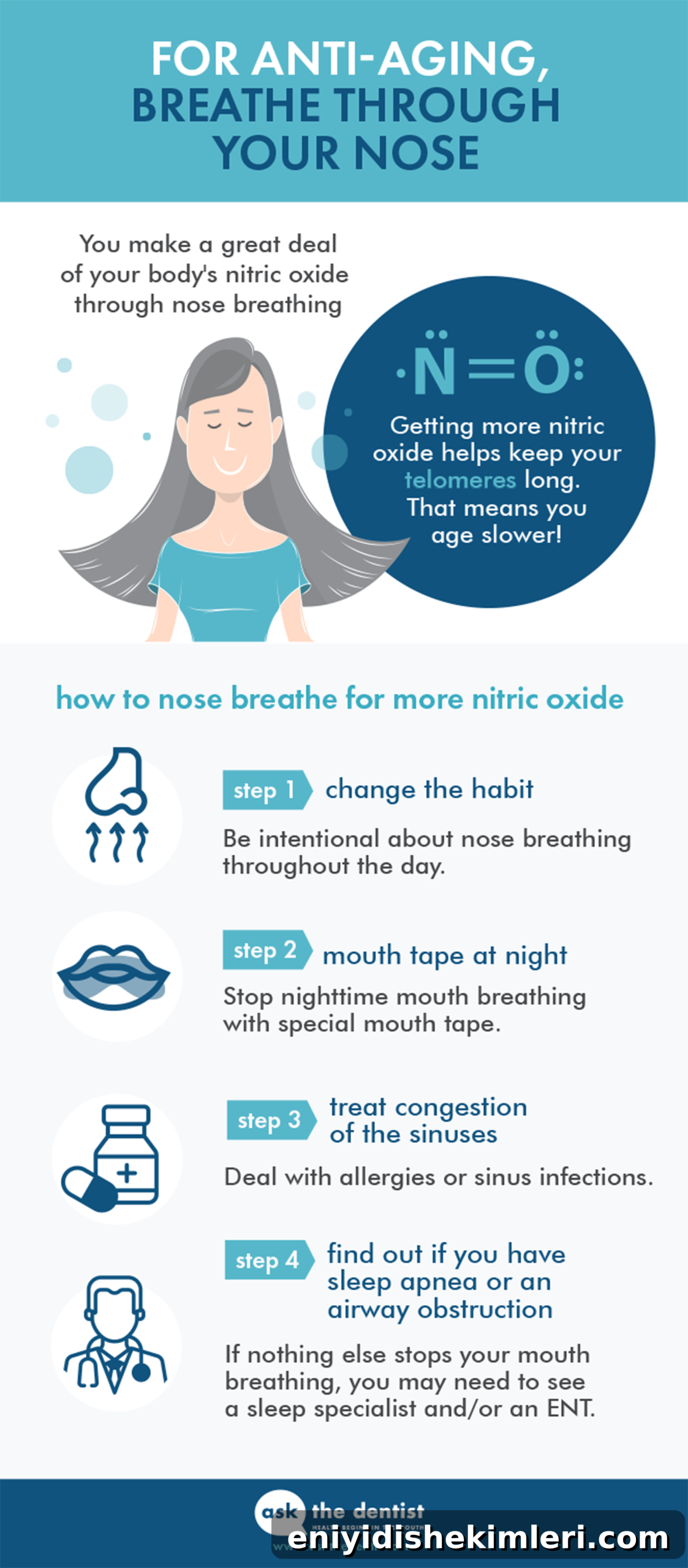
Nose breathing is a primary way your body produces nitric oxide (NO), a gas that helps oxygenate the bloodstream—essential for virtually every bodily function.
One notable benefit is reduced appearance of fine lines and wrinkles, but increasing nitric oxide production supports many other aspects of health.
Could nose breathing be a simple strategy for reducing wrinkles? Let’s explore how nitric oxide influences cellular aging and practical steps to switch from mouth breathing to nose breathing.
Spoiler: You’ll learn about mouth taping, one of the simplest ways to increase nitric oxide.
What is nitric oxide (NO)?
Nitric oxide is a signaling gas produced in many tissues, including the nasal and sinus cavities. In the body it helps oxygenate the blood and acts as a potent vasodilator, regulating blood pressure and supporting healthy circulation.
Beyond heart health, nitric oxide contributes to digestion, immunity, memory, and even behavior. A significant portion of the body’s NO is produced in the nose and paranasal sinuses.
You can also boost NO through diet—especially nitrate-rich vegetables—through exercise, and with certain supplements. Nitric oxide keeps blood vessels flexible and dilated; when NO is low, vessels constrict and blood pressure can rise.
This vascular support is one reason nitric oxide helps slow aging and maintain skin health.
Additional benefits of healthy nitric oxide levels include:
- Improved memory and learning
- Better-regulated blood pressure
- Balanced inflammatory response
- Improved sleep quality
- Enhanced endurance and strength
- Support for weight management
- Improved immune and gut function
- Reduced pain
- Lower risk of heart disease
- Help with anxiety and depression symptoms
Nitric oxide and the aging process
Telomeres—protective caps on the ends of chromosomes—shorten each time a cell divides, and that shortening is a major contributor to aging. Oxidative stress accelerates telomere shortening, while adequate nitric oxide availability helps counteract oxidative stress.
Research indicates low nitric oxide levels are associated with oxidative stress, and increasing NO can help reduce that stress. Because some nitric oxide is produced in the sinus cavity, consistent nose breathing is a simple way to sustain NO production.
The key takeaway: Breathing through your nose is one of the simplest and most effective ways to increase nitric oxide in your body.
As it relates to aging, healthy NO levels support:
- Optimal blood flow
- More vibrant, less wrinkled skin
- Potentially longer, healthier life
But I’m not a mouth breather…right?
Many people who mouth breathe—especially at night—don’t realize it.
Common signs of habitual mouth breathing include:
- Snoring
- Dry mouth
- Bad breath
- Hoarseness
- Waking up tired or irritable
- Chronic fatigue and brain fog
- Dark circles under the eyes
- Drool on the pillowcase
How can I tell if I’m mouth breathing at night?
The quickest check is to ask a bed partner or family member to observe your breathing while you sleep. If that isn’t possible, watch for the symptoms above and these signs:
- Frequent nighttime awakenings, often with the urge to urinate
- Bad breath
- Frequent cavities and gum disease
- Waking up feeling unrested
- Teeth grinding (bruxism)
- Snoring
Persistent mouth breathing can degrade sleep quality; an at-home sleep test can help identify sleep-disordered breathing if you suspect a problem.
How to nose breathe for more nitric oxide
Step 1: change the habit
Daytime mouth breathing is often habitual. Be intentional about breathing through your nose: monitor your breath during the day and consciously inhale and exhale through the nose. If your work requires frequent speaking, you may need to practice more deliberately.
Combine this habit change with general anti-aging practices—balanced diet with vegetables and antioxidant-rich fruits, proper hydration, and quality sleep.
Step 2: mouth tape
If you mouth breathe at night, mouth taping can be a simple, non-invasive solution. A small strip of medical-grade tape placed over the lips helps keep the mouth closed and encourages nose breathing during sleep.
Many people worry about safety if their nose becomes congested while taped. In practice, the body will trigger wakefulness if breathing becomes difficult, and tape should be applied in a way that still allows gentle mouth opening if necessary.
Mouth taping can also diagnose underlying issues: difficulty taping or the tape repeatedly coming off during the night suggests an anatomical or functional barrier to nasal breathing.
Step 3: treat nasal congestion
Nasal congestion is a common cause of mouth breathing. Seasonal or household allergies may respond to over-the-counter antihistamines or nasal sprays. For infections or persistent congestion, saline sprays or medicated nasal treatments can reduce inflammation and open the nasal passages.
If congestion persists despite conservative measures, consult your physician for further evaluation and treatment options.
Step 4: evaluate for sleep apnea or airway obstruction
If habit change, mouth taping, and treating congestion don’t resolve mouth breathing, investigate possible airway obstruction or sleep-disordered breathing such as obstructive sleep apnea or upper airway resistance syndrome. These conditions can force mouth breathing at night and require professional evaluation.
Start with a home sleep test if a full study isn’t immediately available. Wearable devices and smartphone apps can also provide useful preliminary data. If sleep apnea is suspected, an ENT or sleep medicine specialist can identify obstructions and recommend treatment.
Mouth taping for sensitive skin: dos and don’ts
Mouth taping involves placing a specially designed adhesive strip across the lips to promote nasal breathing. Strips are shaped to accommodate facial hair and should sit on the lips in a natural, lightly puckered position.
The goal is to facilitate nasal breathing, not to completely seal the airway; you should be able to open your mouth if needed.
If you have sensitive or aging skin, the adhesive can cause irritation around the lips. To minimize irritation:
- Choose a mild-adhesive product designed for lips—these are gentler on delicate skin.
- Apply the strip while gently puckering; place the center first and smooth outward to reduce tension on the skin.
- Reuse strips only while their adhesive remains effective; higher-quality strips can sometimes be used for several nights.
Final thoughts about nose breathing and anti-aging
Nitric oxide is a powerful molecule for preserving skin health and supporting many bodily functions associated with healthy aging.
Although wrinkles are a natural part of aging, practical steps like optimizing nitric oxide production through nose breathing can support both appearance and overall health. Mouth breathing reduces NO delivery to the bloodstream and can negatively impact oral and systemic health.
Mouth taping—used appropriately—offers a simple, effective way to increase nasal breathing and NO production. With careful selection of products and proper application, even those with sensitive or mature skin can benefit.
Proper nasal breathing is a low-cost, low-risk anti-aging tip that can improve sleep, circulation, skin appearance, and more. Boosting your body’s nitric oxide through nose breathing is worth considering as part of a holistic approach to aging well.