Whether it’s your own child pleading to skip a dental appointment or a friend’s child who is terrified of the dental chair, dental anxiety in kids is a real and common problem.
Left unaddressed, this anxiety can grow over time and make maintaining oral health much harder. The good news is that you can reduce or prevent dental fear in children without medication or sedation.
What is dental anxiety?
Dental anxiety is fear or distress related to seeking or receiving dental care. Many people dislike dental visits, but anxiety goes beyond dislike and moves into fear. Anxiety is a complex, multisystem response to perceived threats that involves bodily reactions, personal history, memory, and the social context.
Humans are particularly prone to anxiety because we can remember past events and imagine future outcomes. Anticipation and recollection of negative experiences can create strong fear reactions—even if the feared outcomes are unlikely or have not happened personally.
It’s important to distinguish normal, situational anxiety from a clinical anxiety disorder. Feeling anxious about the dentist does not automatically mean a psychiatric diagnosis is present. However, dental anxiety can trigger a range of stress responses, from sweating and trembling to full panic attacks. In children, it often shows up as crying, tantrums, refusal to cooperate, or acting out.
Why is my child afraid of the dentist?
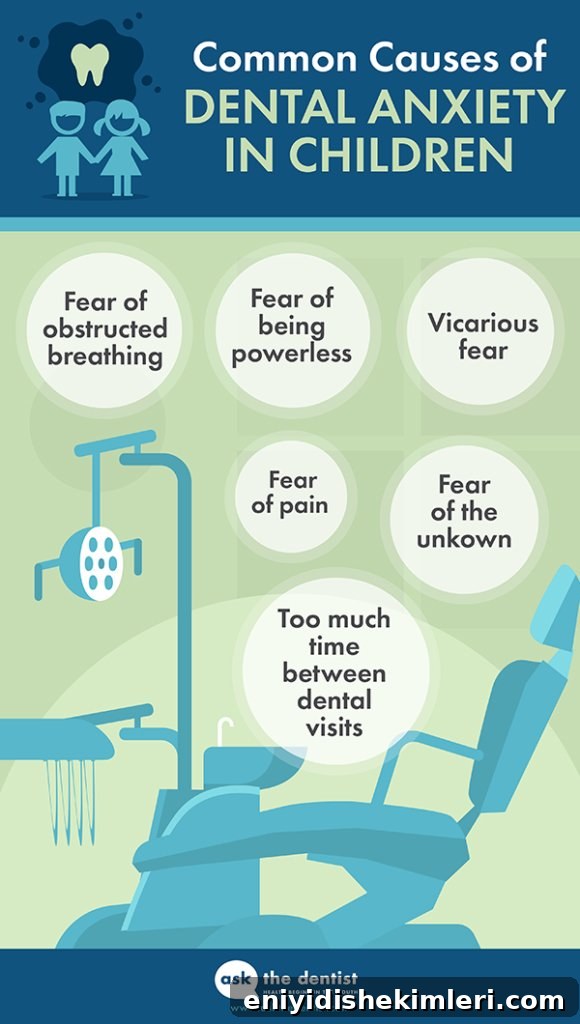
Understanding what causes dental fear helps you respond effectively and reduce your child’s anxiety. Common causes include:
Fear of obstructed breathing
Many children worry about having their airway blocked during dental work. Instruments, rubber dams, cotton rolls, or even the dentist’s hands can feel threatening because they may restrict breathing. Gagging, coughing, and vomiting are protective reflexes to clear the airway, so this fear taps into a primal survival instinct. For children who already breathe through their mouth or have a sensitive gag reflex, dental procedures can feel especially frightening.
Fear of pain
Pain is a common source of dental anxiety. In the past, some dental care underestimated pain in children, which led to negative experiences. If a child has felt pain during dental care, that experience can create lasting fear and avoidance. Adults who had painful childhood dental visits often remain anxious about dental care throughout life, which can harm long-term oral health.
Fear of powerlessness
Children can feel powerless in the dental chair. The presence of a larger person holding sharp instruments may make a child feel out of control. Strategies that restore a sense of control—such as allowing a child to hold a remote, teaching them to raise a hand to pause treatment, or giving them a comforting toy—can significantly reduce anxiety.
Vicarious fear
Children learn from the adults around them. If parents or other important people express fear of the dentist or tell frightening stories, children can adopt that fear even without a direct negative experience. Research shows a child’s risk of anxiety increases when many people in their life are fearful of dental visits.
Too much time between visits
Irregular dental visits increase the chance that a child will associate the dentist with more invasive treatments. When a child finally visits the dentist after a long absence, it’s often because of pain—leading to fillings or extractions—which reinforces anxiety. Frequent, routine visits help normalize care and reduce fear.
Fear of the unknown
Children with little experience of the dental office may imagine it to be scarier than it is. While many young children outgrow early fears, a notable number retain dental anxiety as they grow. Familiarity, gentle preparation, and repeated positive experiences help reduce fear rooted in the unknown.
Consequences of dental anxiety in children
Dental anxiety can lead to avoidance of dental care and deterioration of oral health. If dental fear persists, children may skip needed treatments, which can cause more cavities, missing teeth, and untreated dental problems. Avoidance can create a cycle in which worsening oral health increases anxiety and shame, further reducing care-seeking behavior.
Although cavities are influenced by diet and hygiene as much as dental visits, sporadic or nonexistent dental care raises the risk of developing problems that require more invasive treatment. Dental anxiety can also affect behavior and well-being beyond oral health, causing sleep or eating disturbances, negative emotions, poorer social interactions, and lowered self-esteem.
How to ease your child’s fear of the dentist
Here are practical steps to help your child feel more comfortable about dental visits:
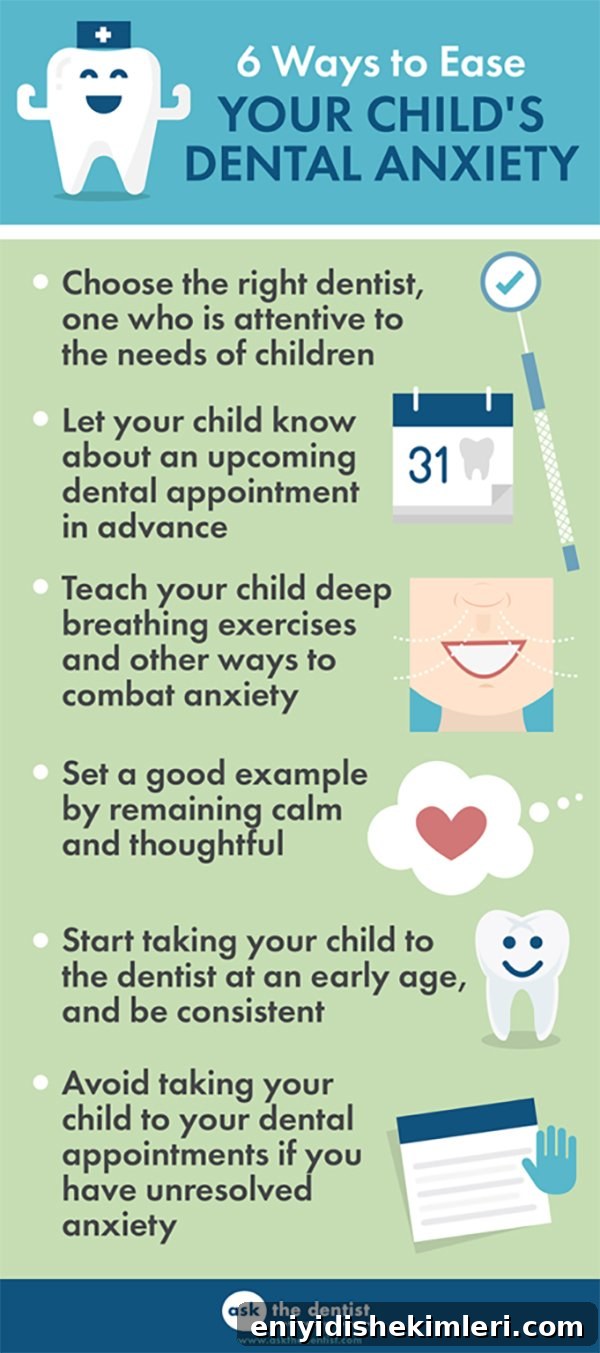
1. Choose the right dentist for your child
Select a dentist who understands children’s needs and prioritizes a calm, pain-free approach. Dentists experienced with pediatric patients are more likely to use strategies that reduce fear and build positive experiences.
2. Don’t keep upcoming visits a secret
Children benefit from predictability. Tell your child about upcoming dental visits in advance, encourage questions, and answer simply and honestly. Focus on the benefits of good oral health rather than scary details.
3. Teach your child how to find calm
Teach simple relaxation techniques like deep breathing to help your child manage physical signs of anxiety. Reinforce positive messages about dental hygiene and the rewards of regular check-ups.
4. Set a good example
Your attitude toward dental care influences your child. Model calm behavior and avoid sharing frightening stories. Avoid using treats as bribes to tolerate dental visits—bribery can suggest there’s something to fear and contradict healthy habits.
5. Start early and be consistent
Early and regular dental visits help normalize the experience. Aim to begin routine visits in infancy or by the first birthday, and keep follow-up appointments consistent. Pretend-play visits, storybooks, and familiarization with the office help reduce anxiety.
6. Be cautious when taking your child to your own appointments
Bringing your child to your own dental visits can backfire if you display anxiety. If you plan to bring your child along, make sure you appear calm and composed so the experience doesn’t increase their fear.
Conclusion
Good oral health starts early. Establishing regular dental visits and positive experiences helps prevent long-term anxiety and supports a lifetime of healthy teeth and gums. To recap, six effective ways to ease your child’s dental anxiety are:
- Choose the right dentist for your child
- Tell your child about upcoming visits in advance
- Teach relaxation and calming techniques
- Model calm behavior and avoid bribery
- Start early and keep visits consistent
- Be careful bringing your child to your own appointments
With patience and thoughtful preparation, dental visits can become a routine, stress-free part of your child’s life.