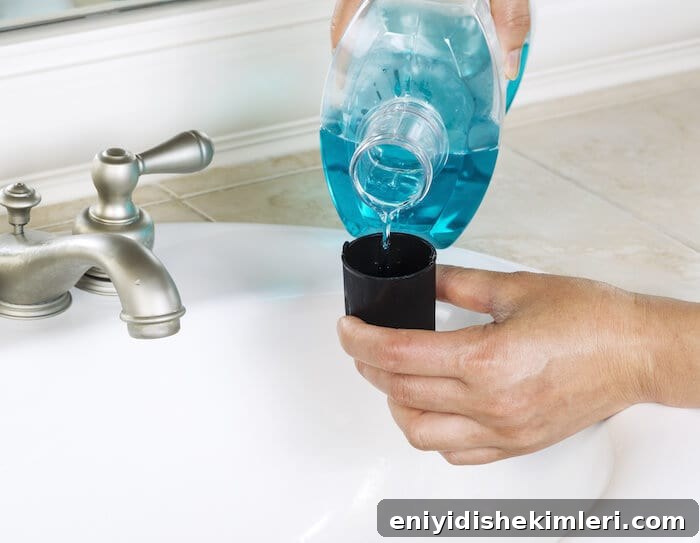
Mouthwash Question: I’ve been using Crest Pro-Health for several months, and each time I use it I notice that the skin on the inside of my mouth sloughs off immediately after I finish brushing. I’m concerned whether this could be harmful.
I checked the Crest website and found I’m not the only person reporting this issue, but I couldn’t determine whether it’s a harmless side effect or something more serious. Any suggestions?
Answer: Many of us remember the DuPont slogan, “Better things for better living…through chemistry.” I’ve never been a big fan of mouthwash.
Mouthwash often occupies bathroom counter space and can take a few minutes out of your routine that might be better spent flossing. Overall, it plays only a small role in maintaining oral health compared with proper brushing and flossing.
There’s a common misconception that mouthwash can substitute for brushing or flossing. Decades ago, marketing and funded studies promoted the idea that a quick rinse could be as effective as flossing. Animated ads suggested mouthwash flowed around teeth and magically removed plaque and debris. After legal challenges, many of those claims were found to be misleading.
Why Mouthwash Can Be Harmful
Your question highlights an important point: mouthwash cleans chemically. It relies on active ingredients to reach and act on the surfaces in your mouth. By contrast, a toothbrush and floss physically contact and dislodge plaque and bacteria without relying on chemicals.
For mouthwash chemicals to act effectively, the tooth and gum surfaces must be exposed. If a layer of plaque remains, the active agents in a rinse can’t reach the areas they’re supposed to clean. That’s why brushing and flossing first is necessary for any mouthwash to have meaningful effect.
However, there’s another issue. Toothpaste formulas commonly contain anionic compounds that remain in the mouth after brushing. Many mouthwashes contain cationic compounds that act as surfactants and can neutralize those anionic toothpaste residues.
The neutralization reaction between toothpaste residues and mouthwash ingredients is likely what’s causing the sloughing you describe. That reaction can dry the mucosal surface inside your cheeks and may contribute to irritation or early ulceration (a breakdown or sore in the tissue).
Given this, I recommend stopping use of mouthwash altogether and switching to a toothpaste without sodium lauryl sulfate (SLS), the common source of those anionic compounds. An SLS-free toothpaste reduces the risk of the cationic/anionic interaction that can dry and irritate the oral tissues.
If you prefer a gentle daily rinse, oil pulling with a neutral carrier such as an MCT-based blend can be an alternative. Oil pulling does not rely on alcohol or cationic antiseptics; instead, it binds debris and can be kinder to the oral microbiome. Use a teaspoon and swish for a few minutes after brushing, then spit and rinse.
Specifically, discontinue use of Crest Pro-Health if it contains cetylpyridinium chloride, a cationic antiseptic that can contribute to the drying and sloughing reaction you described.
The simplest and most reliable approach remains: brush and floss thoroughly and regularly—ideally after meals—to keep teeth and gums healthy. It’s not glamorous marketing, but mechanical removal of plaque is the foundation of oral health.
Mark Burhenne DDS