A new type of toothpaste is gaining attention as an alternative to fluoride. Hydroxyapatite (HAp) promises to protect and strengthen teeth — but how well does it work, is it safe, and should you consider using it?
This article explains how HAp toothpaste works, why I recommend it as a fluoride-free choice for many patients, the benefits (including improved tooth appearance), and which brands currently use high-quality hydroxyapatite.
If you prefer to avoid fluoride and want an effective, biocompatible remineralizing option, hydroxyapatite toothpaste is worth exploring.
(Two quick notes: in the studies cited here, toothpaste is referred to as a “dentifrice” and cavities are called “dental caries.” When I compare HAp and fluoride, I’m referring to topical use only — hydroxyapatite is unstable in water and is not a substitute for water fluoridation.)
IF YOU PURCHASE A PRODUCT USING A LINK BELOW, WE MAY RECEIVE A SMALL COMMISSION AT NO ADDITIONAL COST TO YOU. READ OUR AD POLICY.
What is hydroxyapatite?
Hydroxyapatite (HAp) is a naturally occurring calcium phosphate mineral that forms the bulk of human tooth enamel and dentin. In natural tooth structure, hydroxyapatite makes up the majority of enamel and a large portion of dentin, with the remainder of enamel composed of water, collagen, and proteins.
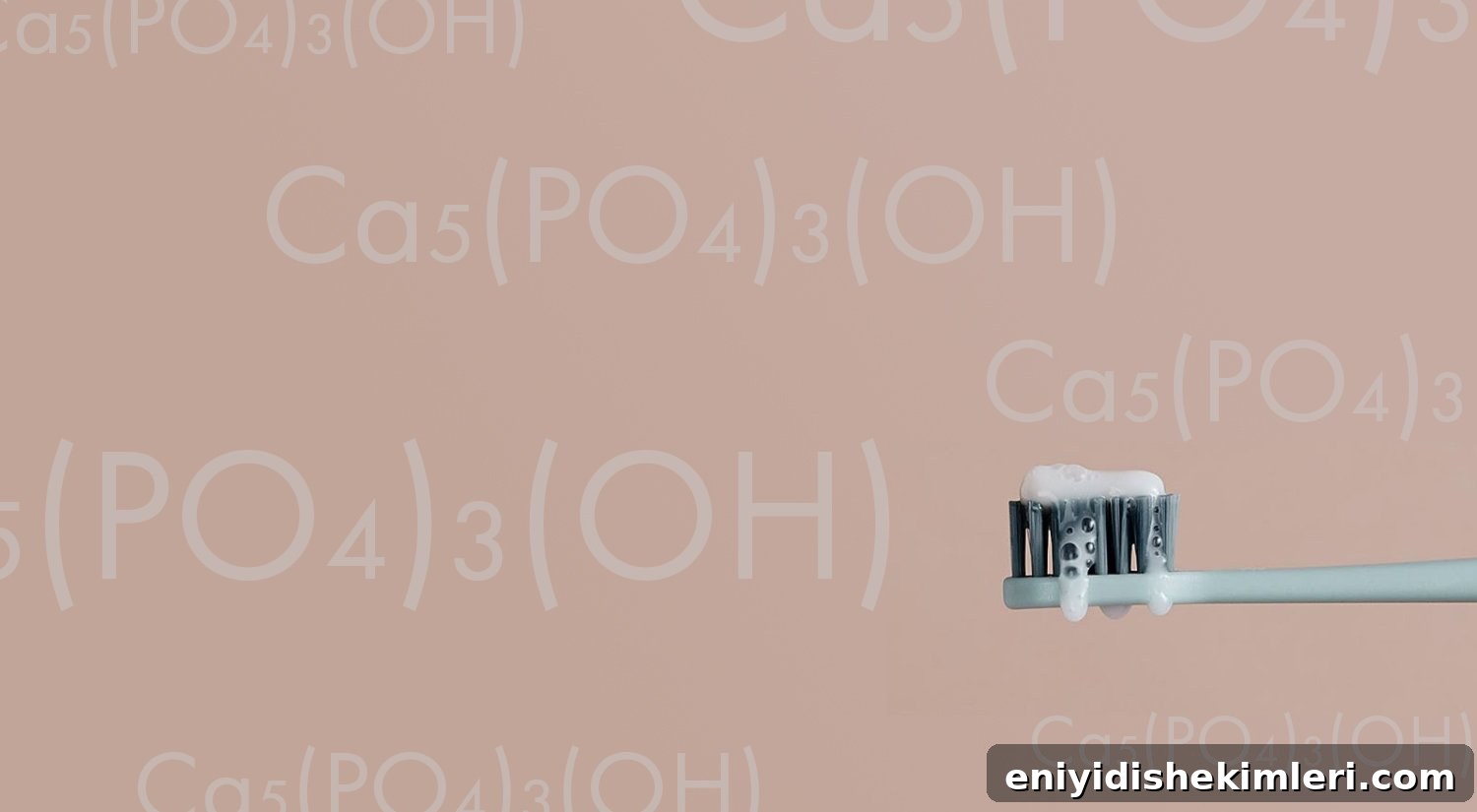
Chemically, hydroxyapatite is Ca5(PO4)3(OH). It’s also a major component of bone and has been used in medical research to strengthen bone tissue and support dental restorations.
Because tooth enamel contains such a high concentration of HAp, it is very strong — and that same mineral, when included in toothpaste, can help repair and protect enamel.
Hydroxyapatite Toothpaste for Tooth Remineralization
The primary advantage of hydroxyapatite in toothpaste is its ability to remineralize enamel — rebuilding tooth structure — without known systemic toxicity. Demineralization and remineralization are ongoing processes in the mouth. When demineralization outpaces remineralization, cavities form. HAp supports remineralization, helping to restore weakened enamel and prevent new lesions.
You can heal early cavities and prevent new ones by promoting remineralization. Hydroxyapatite is an effective, non-toxic way to do that.
Fluoride became widely promoted because it helps rebuild tooth structure and increases resistance to acid. However, fluoride carries toxicity risks at high doses and has documented adverse effects when ingested in excess. Most concerns relate to ingestion from water or excessive swallowing of toothpaste, whereas topical use of fluoride in toothpaste is generally considered safe when used correctly.
Hydroxyapatite is biocompatible — it is essentially the same mineral that makes up teeth — and is non-toxic if swallowed in the amounts found in toothpaste. It is biomimetic, meaning the body recognizes it and integrates it into tooth surfaces.
For the strongest effect, leave hydroxyapatite toothpaste on your teeth after brushing rather than rinsing it away. This allows the HAp coating to remain in contact with enamel and continue to support remineralization.
How does hydroxyapatite toothpaste work?
HAp works by replacing minerals lost during demineralization and filling microscopic fissures and surface defects where bacteria can accumulate.
Because teeth naturally incorporate hydroxyapatite, topical HAp can be taken up into enamel and dentin, helping to rebuild damaged areas. This mineral deposition strengthens teeth, reduces plaque adherence, increases resistance to acid erosion, and can give teeth a smoother, glossier appearance.
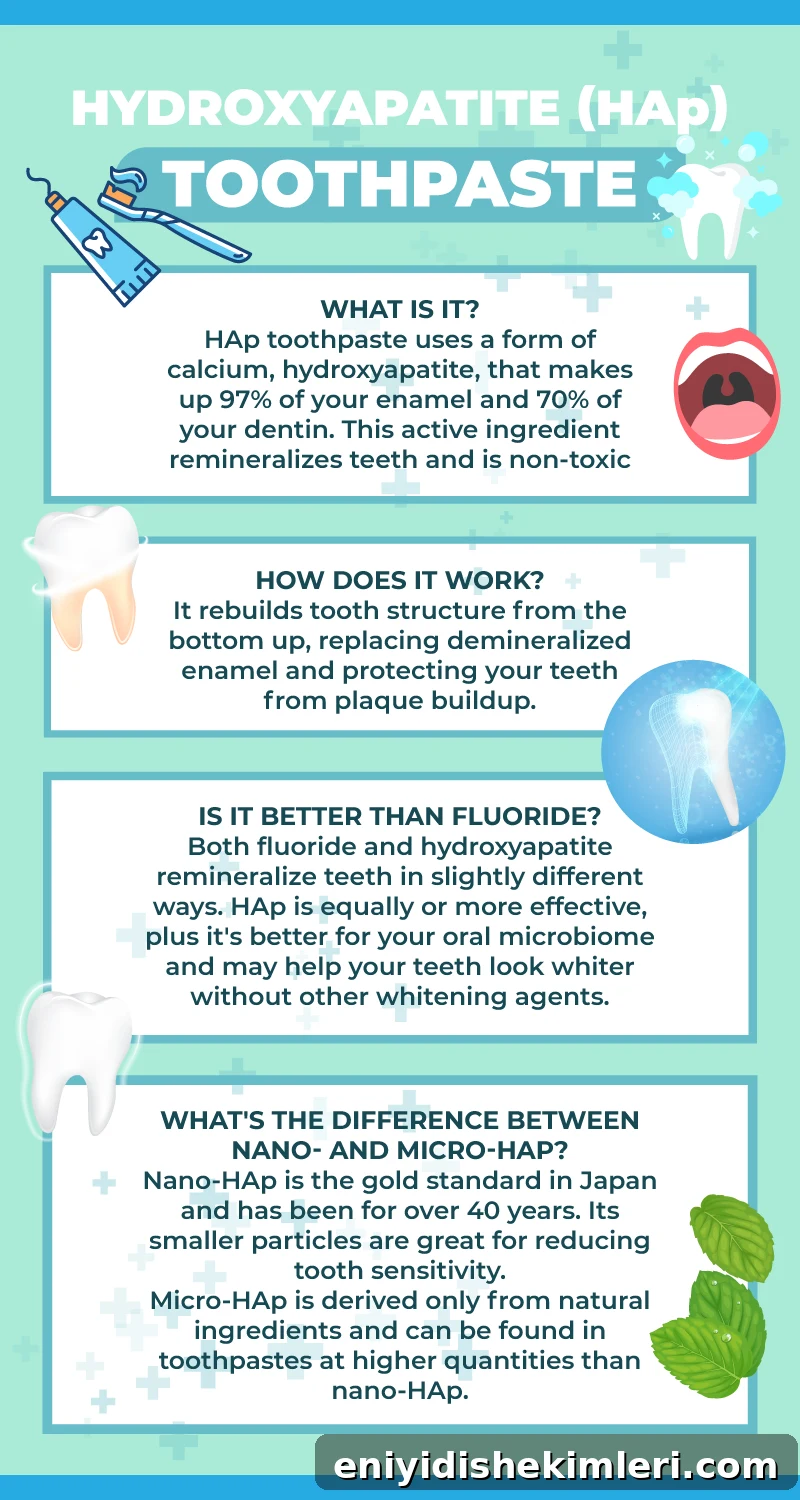
5 Benefits of Hydroxyapatite for Teeth
1. It can prevent and heal cavities.
Compared to fluoride toothpastes, HAp formulations perform as well or better in remineralizing enamel in multiple studies. HAp increases enamel microhardness, reverses early enamel erosion, and has been shown to shrink carious lesions and restore enamel surfaces. In some trials, HAp created a protective coating that was as robust or more so than that formed by fluoride toothpaste. Unlike fluoride, HAp cannot cause fluorosis.
2. It’s non-toxic and biocompatible.
Hydroxyapatite is inherently biocompatible because it mirrors the mineral composition of teeth. There are no known systemic toxicities associated with HAp toothpaste. While some formulations use nano-sized HAp particles produced synthetically, available safety studies have not shown harmful effects. Allergic reactions are rare and usually linked to other ingredients in a toothpaste formula, not to HAp itself.
Hydroxyapatite particles are biomimetic: they mimic the body’s own materials and are unlikely to cause negative reactions.
3. It may help teeth appear whiter.
HAp can improve tooth appearance by filling microscopic surface irregularities and restoring lost enamel structure, which can make teeth look brighter and smoother without added whitening agents. As a polishing agent, toothpaste already contributes to appearance; hydroxyapatite adds a whitening effect through structural repair rather than bleaching.
4. It’s good for the oral microbiome.
Hydroxyapatite reduces bacterial adhesion to enamel and helps prevent acid attacks without being bactericidal. Unlike antiseptics that kill broad groups of bacteria and can disrupt the oral microbiome, HAp blocks bacterial attachment and neutralizes the environment in a way that preserves the beneficial microbial balance in the mouth. Maintaining a healthy, balanced oral microbiome is important for long-term oral health.
5. It’s resistant to acidic pH.
Hydroxyapatite helps teeth resist acid-related demineralization. By reinforcing enamel and supporting remineralization, HAp makes tooth surfaces less vulnerable to low pH conditions that cause erosion and decay.
6. It may improve gum health.
Preliminary studies suggest HAp toothpaste can benefit gum health, improving plaque control, reducing bleeding on probing, and helping with pocket depth in patients with periodontal concerns. More research is ongoing, but results so far are promising.
Micro-Hydroxyapatite vs. Nano-Hydroxyapatite
Hydroxyapatite toothpastes use either nano- or micro-sized particles. Both forms support remineralization, but there are differences in size, concentration, and regulatory limits.
Both nano- and micro-HAp are effective remineralizing agents for teeth.
Nano-Hydroxyapatite Toothpaste
Nano-HAp particles typically measure 20–80 nanometers. Their small size allows them to penetrate microscopic defects and dentinal tubules, which can be particularly useful for treating tooth sensitivity. Nano-HAp has a longer track record in research and was used in early space program formulations. High-quality nano-HAp is usually rod-shaped rather than needle-shaped, and studies indicate these particles dissolve in the stomach if swallowed, minimizing systemic concerns.
A drawback is that regulatory limits often restrict the maximum concentration of nano-HAp in consumer toothpastes, so these products may contain lower amounts of active ingredient compared with micro-HAp formulations.
Micro-Hydroxyapatite Toothpaste
Micro-HAp particles are several microns in length and are larger than most dentinal tubules. Micro-HAp can be sourced from natural materials and is often available at higher concentrations in toothpaste. Studies indicate micro-HAp effectively remineralizes enamel and can also help with sensitivity.
Hydroxyapatite vs. Fluoride
Both fluoride and hydroxyapatite protect teeth, but they act differently. Fluoride promotes the formation of fluorapatite at the tooth surface and encourages uptake of calcium and phosphate via saliva, strengthening enamel. Hydroxyapatite replaces lost mineral directly and can integrate into the enamel structure, filling fissures and rebuilding teeth from within. HAp can reach deeper into lesions where fluoride’s surface action may not penetrate, and it tends to leave teeth smoother and whiter by restoring structure rather than forming an external layer.
Because HAp is non-toxic and biomimetic, it may be a preferable topical alternative for people at higher risk of fluoride exposure, including pregnant people, young children, and those with occupational fluoride contact.
The Best Hydroxyapatite Brands
Hydroxyapatite quality varies widely between brands. Particle size, shape, and manufacturing consistency matter for performance. At this time, products using a hydroxyapatite source called nanoXIM have strong regulatory backing in Europe for safety and efficacy. If you evaluate brands, look for consistent particle quality and reputable sourcing.
For an option for intensive remineralization:
Some high-concentration HAp products are marketed as varnishes or intensive treatments designed to strengthen enamel, reduce sensitivity, and support remineralization during and after orthodontic treatment. These formulations use nano-hydroxyapatite at higher concentrations and are intended for targeted, daily or periodic use.
What such products can do:
- Help reverse early-stage cavities and white spots
- Reduce tooth and root sensitivity, often within days
- Rebuild and strengthen weakened enamel
- Support remineralization during and after orthodontic treatment
Toothpaste Brands That Use nanoXIM
Several toothpaste brands now use nanoXIM hydroxyapatite. Brand formulations and availability may change over time, and product quality varies. When choosing a toothpaste, look for reputable manufacturers and transparent ingredient sourcing.
FAQs
Q
How do you use hydroxyapatite toothpaste?
A
Squeeze a pea-sized amount onto your toothbrush and brush for at least two minutes as you would with any toothpaste. For optimal remineralization, avoid rinsing your mouth after brushing so the hydroxyapatite remains on the teeth.
Q
Does HAp toothpaste have side effects?
A
There are no known systemic side effects from HAp toothpaste. Rare allergic reactions may occur but are typically related to other ingredients in a toothpaste formula rather than hydroxyapatite itself.
Q
How long have people been using this kind of toothpaste?
A
Hydroxyapatite toothpaste has been studied and used for decades. Early work on HAp toothpastes dates back to research in the 1970s, and HAp-based products have been widely used in markets such as Japan for many years. International availability of fluoride-free HAp dentifrices has expanded in recent years.
References
- Overview of calcium phosphates used in biomimetic oral care.
- Nano-hydroxyapatite and its applications in preventive, restorative and regenerative dentistry: a literature review.
- Comparative efficacy of hydroxyapatite and fluoride toothpaste for prevention and remineralization of dental caries in children.
- Addition of hydroxyapatite to toothpaste and its effect on dentin remineralization.
- Enamel remineralization and repair results of biomimetic hydroxyapatite toothpaste on deciduous teeth.
- Polishing and whitening properties of toothpaste containing hydroxyapatite.
- Hydroxyapatite in oral biofilm management.
- Remineralization of early caries by a nano-hydroxyapatite dentifrice.
- Impact of daily use of microcrystalline hydroxyapatite dentifrice on plaque formation and periodontal health.
- Characterization and safety assessment of nano-hydroxyapatite in oral care cosmetics.
- Effectiveness of nano-hydroxyapatite toothpaste in reducing dentin hypersensitivity.
- Microcrystalline hydroxyapatite is not inferior to fluorides in clinical caries prevention.
- Comparative evaluation of hydroxyapatite and other desensitizing agents.
- Effect of nano-hydroxyapatite toothpaste on microhardness of artificial carious lesions.
- Comparison between fluoride and nano-hydroxyapatite in remineralizing initial enamel lesions.