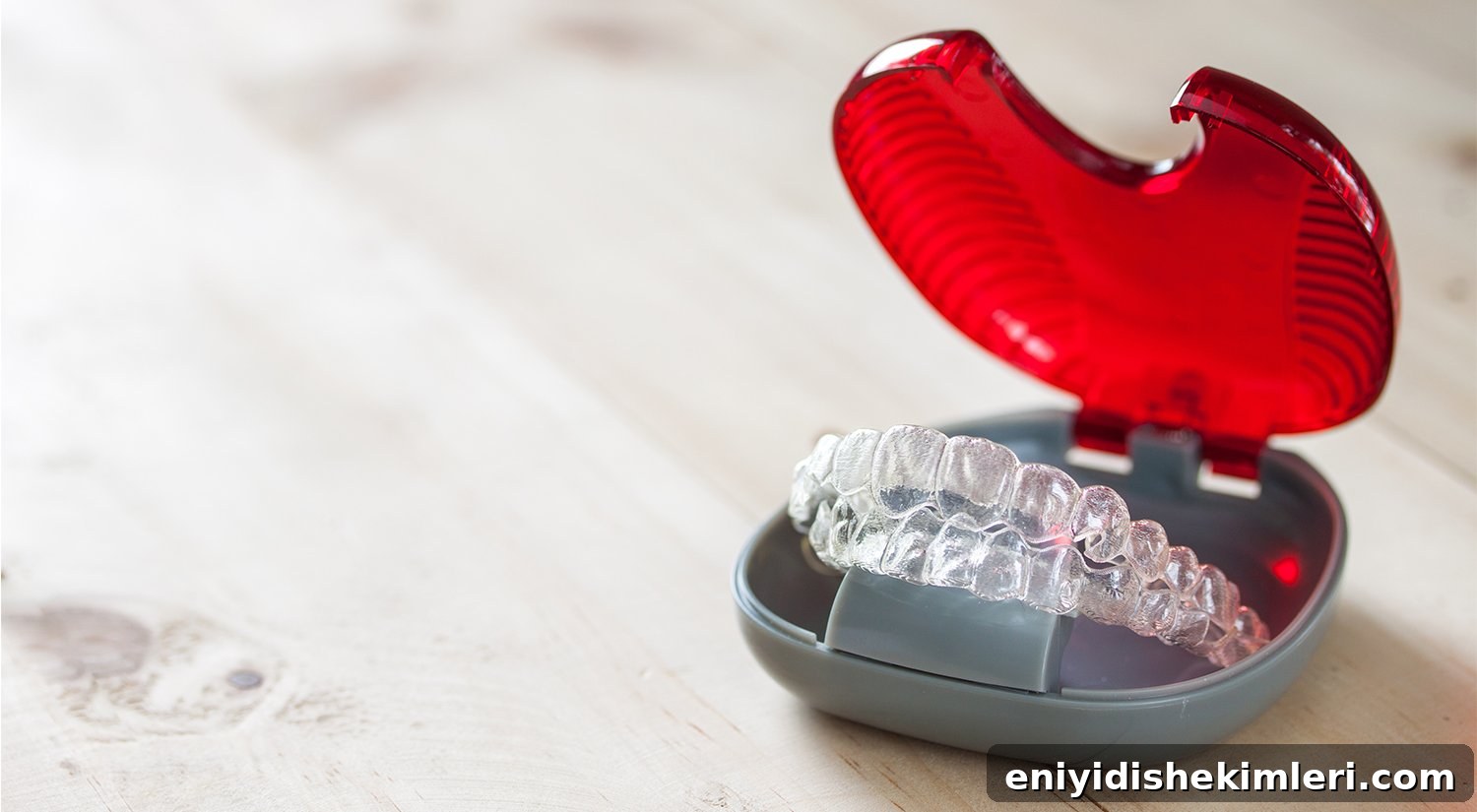
Retainers often collect bacteria, plaque, and tartar, so it’s essential to clean your retainer daily and store it correctly when it’s not in your mouth.
Rinsing with water alone won’t remove all buildup. Safer and effective options include soaking your retainer in a solution of baking soda, white vinegar, and unscented Castile soap to disinfect and deodorize without damaging the material.
An orthodontic retainer holds teeth in position after treatments such as braces or clear aligners. Because teeth naturally tend to shift back toward their original positions, wearing your retainer as instructed helps maintain alignment and retrains the muscles supporting your bite.
Most orthodontists recommend wearing a retainer 22 hours a day for the first 9–12 months after treatment. After that initial period, nightly wear is typically advised — ideally for life — to preserve results.
Types of Dental Retainers
There are three main types of retainers: two removable and one fixed. The material and design of your retainer influence how you should clean and care for it.
- Clear plastic retainers: Also called Essix-style or Vivera retainers, these are thin, removable clear trays commonly used after clear aligner treatment. They are less durable than other options and typically last about two years with careful use.
- Hawley retainers: The classic removable retainer made of acrylic and metal wires. Hawley retainers are durable and can last many years if cleaned and stored properly.
- Fixed (bonded) retainers: These permanent retainers are bonded behind the teeth with a thin wire. They can last indefinitely but require diligent oral hygiene because plaque and tartar build up more easily around the wire.
How to Clean Your Retainer
Cleaning Hawley and clear plastic retainers
- When not in use, store removable retainers in a clean stainless steel container filled with a solution of water and baking soda; you can add a small amount of unscented Castile soap if desired.
- Once a week, soak the retainer for 10–15 minutes in warm water mixed with white vinegar and baking soda to remove buildup and disinfect.
- If visible deposits persist, consider an ultrasonic cleaner designed for dental appliances to remove stubborn buildup safely.
- If you can’t remove heavy buildup at home, take the retainer to your dentist or orthodontist for professional cleaning.
If plaque is visible, you may gently brush the retainer once with a soft toothbrush and water, but avoid regular brushing with abrasive toothpaste as this can scratch and age the material.
Cleaning fixed retainers
- Maintain excellent daily oral hygiene: brush twice a day, floss, and clean your tongue to reduce plaque accumulation around the bonded wire.
- Use a floss threader or interdental cleaner to pass floss beneath the retainer wire and clean thoroughly below the gum line between each tooth.
Retainer Cleaning Tips
1. Never let your retainer dry out
Retainers are designed for a moist environment. If they sit dry on a counter, tartar and biofilm bind and accelerate aging. When not worn, keep removable retainers submerged in the recommended cleaning solution.
2. Avoid denture cleansers containing persulfates
Many denture-cleaning tablets contain persulfates, which can irritate sensitive oral tissues and may be difficult to rinse from porous materials. Choose gentler, persulfate-free methods to protect both your tissues and the retainer.
3. Avoid using mouthwash to soak retainers
Many mouthwashes contain alcohol or sodium lauryl sulfate, which can dry out or degrade retainer materials. Don’t use mouthwash as a soaking solution.
4. Don’t expose retainers to heat
High temperatures can warp and permanently damage retainers. Never use hot or boiling water, dishwashers, washing machines, microwaves, or leave retainers on a car dashboard.
5. Limit soak time in chemical cleaners
If you choose a commercial cleaning tablet or chemical solution, soak for no more than 15–20 minutes. Prolonged exposure can erode retainer materials.
6. Avoid regular brushing of retainers
Frequent brushing, even with a soft brush, can create micro-scratches where bacteria hide. Brush only when absolutely necessary to remove visible plaque, and avoid abrasive toothpaste.
7. Keep the retainer case clean
A dirty case can recontaminate a clean retainer. Clean the case each time you return the retainer to it by rinsing briefly with hot water, scrubbing with dish soap for about 20 seconds, and patting dry. Stainless steel cases can be sanitized in the dishwasher if appropriate.
How to Clean Your Retainer with Baking Soda
Baking soda is an effective, mild cleaner with antibacterial properties that can reduce odors and help maintain a balanced pH. For removable retainers, a simple baking-soda solution offers regular cleaning without harsh chemicals.
- In a clean, dry stainless steel container, dissolve 2 tablespoons of baking soda in about 3/4 cup of warm water.
- Store the retainer in this solution when it’s not being worn.
- Before reinserting, rinse the retainer thoroughly with warm or cold water.
How to Clean Your Retainer with Castile Soap
Unscented Castile soap is a gentle alternative to commercial cleaners and adds a fresh, clean smell without harsh additives. Avoid Castile formulas that contain essential oils, which can be difficult to rinse completely.
- In a clean stainless steel container, combine 3/4 cup of warm water with 2 tablespoons of baking soda.
- Add one or two small squirts of unscented Castile soap and mix gently until dissolved.
- Store the retainer in the solution when not wearing it, and rinse thoroughly before use.
How to Clean Your Retainer with Vinegar and Baking Soda
White vinegar is a mild antimicrobial that helps remove bacteria and fungi. Combined with baking soda, it can effectively clean retainers without harsh chemicals.
- Mix equal parts warm water and white vinegar in a clean stainless steel container.
- Dissolve 2 tablespoons of baking soda in the mixture.
- Soak the retainer for about 15 minutes.
- Rinse the retainer very thoroughly with warm or cold water before wearing.
Methods to Avoid When Cleaning Retainers
The following methods can damage retainers or harm oral health and should be avoided:
- Hydrogen peroxide: Can disrupt the oral microbiome and is not recommended for routine retainer cleaning.
- Toothbrushing with abrasive toothpaste: Can scratch and abrade the surface, creating places for bacteria to hide.
- High heat: Dishwashers, boiling water, microwaves, or hot car surfaces can warp retainers.
- Mouthwash: Alcohol and detergents in mouthwash may dry and degrade retainer materials.
- Persulfate-containing cleansers: These can irritate oral tissues and may be difficult to rinse from porous retainers.
- UV sanitizers, bleach, alcohol, and harsh chemicals: These can damage acrylic and other retainer materials and should be avoided.
Regular, gentle maintenance with baking soda, white vinegar, and unscented Castile soap, combined with proper storage and daily oral hygiene, will keep retainers clean, comfortable, and long-lasting. If you’re ever unsure about cleaning or you notice persistent buildup or damage, consult your dentist or orthodontist for professional guidance.