The tooth fairy is one of my clearest childhood memories — maybe because my father was a dentist. When I was seven, I swallowed a loose tooth during a baseball game and was convinced the tooth fairy wouldn’t be able to find it. My parents sympathized, but that night I found a handwritten note under my pillow explaining that she had flown down my throat to retrieve the tooth. She warned me to be more careful next time because it had been quite an ordeal and she had many other children to visit.
That memory is more than thirty years old now. As I prepare to continue the tradition with my daughter, I wondered what’s changed and what hasn’t. What does playing the tooth fairy look like today? I also wrestled with whether it felt like lying. I remember being crushed at ten when I discovered Santa, the Easter Bunny, and the tooth fairy weren’t literally real, so I understand that concern.
The developmental value of the tooth fairy tradition
The ritual is simple: a child loses a baby tooth and places it under a pillow or on a nightstand. While the child sleeps, the tooth fairy swaps the tooth for a coin, a note, or a small gift. But there’s more to it than that. Though the idea of exchanging a body part for money might seem odd, the tooth fairy actually helps children navigate a potentially frightening milestone.
Across recorded human cultures, people have rituals for disposing of a child’s lost teeth. The myth comforts children during the uncertain period when a tooth is loose and can be scary — especially the first time a child loses a part of their body. Children often protect a loose tooth, fear the pain of it coming out, and worry about what will happen next. The tooth fairy tradition transforms that anxiety into a celebratory, reassuring moment.
Some families use the visit as an opportunity to praise good dental habits: a note from the tooth fairy that celebrates brushing and flossing can motivate children to care for their teeth. And for kids who aren’t fearful, losing a tooth becomes a fun milestone to mark with a little magic.
Stories from parents show how varied and endearing these traditions can be — from a forgetful fairy who occasionally leaves coins but forgets to take a tooth, to cultural alternatives like a mouse who swaps teeth for coins or throwing teeth onto roofs to encourage new growth. Those stories demonstrate how the ritual brings meaning, comfort, and playfulness to a universal childhood experience.
Tooth fairy stories and traditions around the world
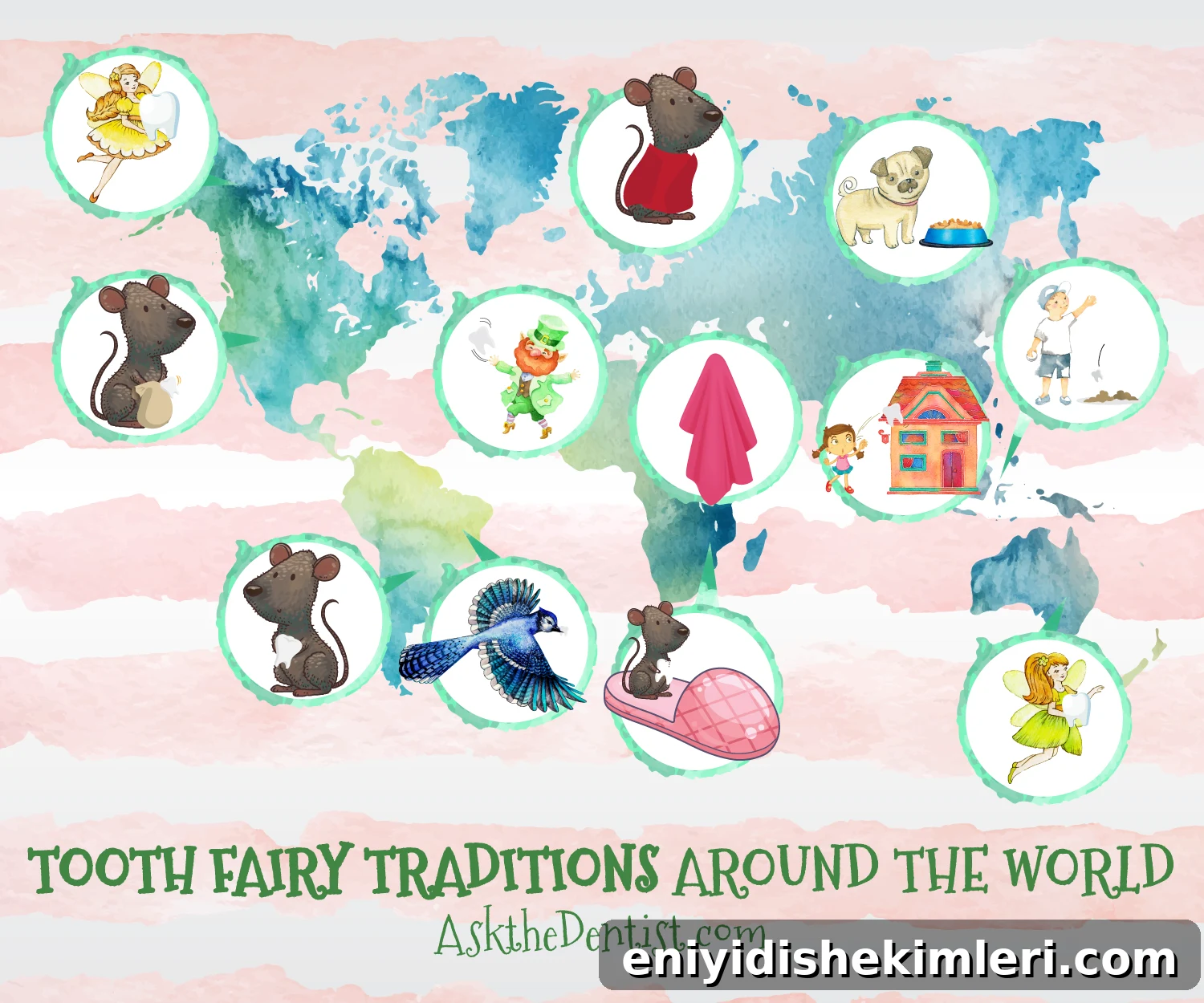
Nearly every culture marks the loss of baby teeth in its own way. In many Spanish-speaking countries, France and Belgium, children leave teeth for a small mouse — similar to the American tooth fairy. In parts of Asia, children throw their tooth onto the roof or bury it, sometimes depending on whether the tooth came from the upper or lower jaw. Other traditions include burying teeth in certain places, giving teeth to animals, or fashioning keepsakes.
Below are examples of how different countries celebrate a lost baby tooth:
North America
United States/Canada: The tooth fairy visits at night, exchanging a lost tooth for money and sometimes a note.
Mexico: El Ratóncito, a magical mouse, collects teeth and leaves money, often more for a front tooth.
Navajo: Teeth are saved and taken to the east and buried by certain plants, tied to beliefs about childhood and growth.
Yellowknife Déné: A tooth may be placed in a tree, and family dances around it to help the new tooth grow straight.
Central America & the Caribbean
Costa Rica: Some families plate a child’s tooth in gold and turn it into an earring.
Dominican Republic: Children throw teeth on the roof so a mouse might take them and leave coins.
El Salvador & Guatemala: Families tell children a rabbit or a mouse will take the tooth and leave a reward.
South America
Argentina: A tooth may be placed in a glass of water for El Ratóncito to drink and exchange for coins or candy.
Brazil: Children toss a tooth outside and recite a rhyme asking birds to bring a new tooth, encouraging brushing and cleanliness.
Colombia, Chile, Venezuela: Many cultures involve mice or family-made charms from teeth as tokens.
Europe
Turkey: Families sometimes bury teeth in places symbolic of future ambitions — a university garden for scholars, a hospital garden for doctors, or a soccer field for athletes.
Denmark, England, France, Sweden: Traditions include the Tand Feen (tooth fairy) or La Petite Souris (the little mouse) taking teeth from under pillows or from a glass of water.
Africa
Cameroon: A child may throw a tooth over the roof, shouting for the bad tooth to be taken away and a new one to arrive.
Egypt, Mali, Nigeria, South Africa: Practices range from throwing the tooth toward the sun to placing teeth in chicken coops, often followed by playful rituals meant to promote healthy new teeth.
Asia
China: Children may put upper teeth at the foot of the bed and lower teeth on the roof to help new teeth grow quickly.
Kazakhstan, Kyrgyzstan, Russia, India, Sri Lanka, Philippines: Traditions include offering teeth to animals, placing them in mouse holes, or hiding them for wishes and future rewards.
Australia & New Zealand
Aboriginal Australians: Some families place teeth inside plant shoots tied to local spirits and growth metaphors.
Australia & New Zealand-Maori: Teeth may be placed under a pillow for a small gift, then returned to a river or other meaningful place as part of a larger cultural practice.
Eight ideas for celebrating lost baby teeth
1. Use foreign currency
Leaving a coin from another country can spark curiosity about travel and geography.
2. Give a toy or book instead of money
Some children might appreciate a small toy or book more than cash, and it’s another chance to make the moment special.
3. Use special coins for whimsy
Collecting a roll of distinctive coins, like Sacagawea dollars, can add a memorable touch to each visit.
4. Send a gift from the tooth fairy
Small pillows or tooth fairy receipt notepads create believable, charming evidence of a visit while avoiding recognizable handwriting.
5. Use a printed tooth chart
A chart helps kids track tooth loss and fosters involvement in their dental health, turning a tradition into a learning opportunity.
6. Record how the tooth fell out
Write the story in a journal or snap a photo for the baby book so your child can one day share the memory with their own kids.
7. Explain the tradition honestly in your own way
Some parents frame it as a shared game — “we pretend the tooth fairy comes” — which keeps the magic without feeling deceptive.
8. Create evidence of the fairy’s visit
Sprinkling a little glitter or leaving a tiny note, coin, or gift can make the experience feel magical and exciting.
Final thoughts on celebrating childhood
The tooth fairy tradition is more than an old custom; it helps mark a meaningful milestone and eases children through a small but real loss. Families adapt the ritual to fit their values: some present it as make-believe, others play it straight, and some skip it entirely. The right choice depends on your child and your family.
For now our daughter is only two, so we haven’t decided exactly how we’ll celebrate her first loose tooth. But I know we’ll create a magical moment — whether with a note, a toy, a tiny door, or a shiny coin. My advice: make the tradition your own, keep expectations simple, and enjoy the memory-making.