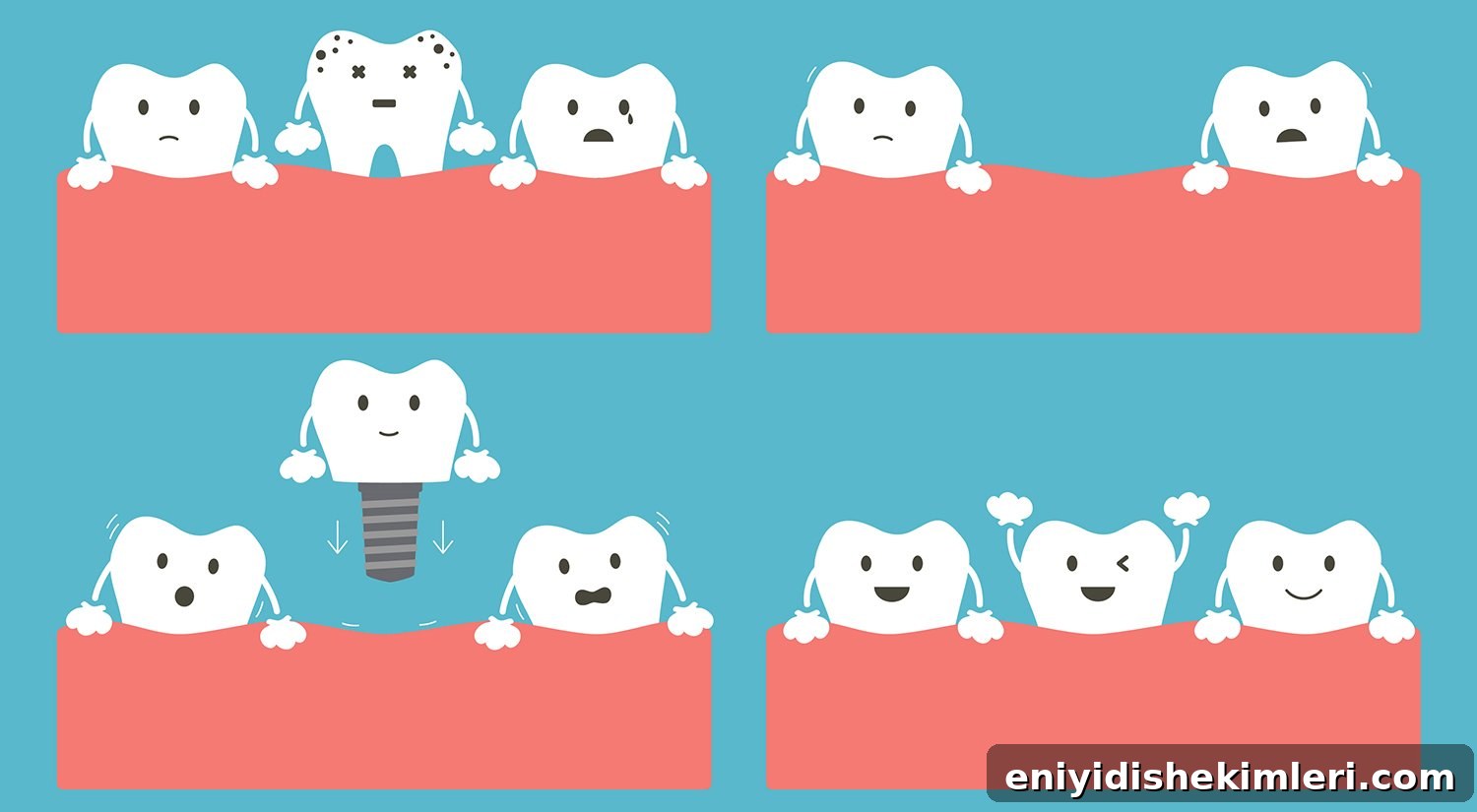
What are dental implants? Dental implants replace a missing tooth with an artificial root, usually a screw-shaped titanium post surgically placed into the jawbone.
After placement, the implant undergoes osseointegration, a natural process where bone fuses to the implant surface, creating a stable foundation for an implant crown that restores the space left by a lost tooth.
Dental implants are increasingly common; a growing portion of adults choose implants to replace missing teeth. They are considered a form of dental surgery requiring multiple steps and are among the most successful long-term tooth replacement options.
How much do dental implants cost? In the United States, the average cost for a single-tooth implant, including implant, abutment, and crown, typically ranges from $3,000 to $4,500. Bone grafting, when needed, can add between $200 and $3,200.
Although the up-front cost is high, implants can be more cost-effective over time than restorations that require frequent replacement.
How can you save money on dental implants? Options to lower costs include using dental insurance where possible, choosing treatment approaches such as All-on-4®, seeking care at dental schools, exploring financing, or considering treatment abroad with careful vetting.
Below is a clear breakdown of typical implant costs, the step-by-step process, and practical ways to reduce expenses while preserving quality and safety.
Dental Implant Cost
Dental implant total costs vary widely. They can be as low as several hundred dollars in limited offers and as high as several thousand per tooth. In the U.S., a common average for a single-tooth implant procedure is $3,000–$4,500.
A full mouth of individual implants can range from roughly $25,000 to $80,000 depending on materials, location, and complexity. In the UK, single implants often cost between £2,000 and £2,500, with full-mouth treatments substantially higher.
Prices may or may not include bone grafting, extractions, temporary prosthetics, or advanced imaging, which are frequently billed separately. Costs vary by region, clinician experience, and the specific components and laboratory work required.
Very low advertised prices sometimes omit essential parts of treatment, such as the crown or abutment, and may use lower-quality materials. Be wary of offers that appear too good to be true and ask for a full written treatment plan and cost breakdown.
Breakdown of Individual Costs During Dental Implant Treatment
Typical fees for parts of the implant process can include:
- Consultation/evaluation: $50–$300
- Panoramic X-ray: $100–$250
- Cone beam CT (CBCT): $150–$750
- Tooth extraction: $150–$700
- Bone grafting:
- Simple (xenograft or synthetic): $200–$300
- Complex (xenograft or synthetic): $1,000–$1,200
- Simple (autograft): $1,800–$2,200
- Complex (autograft): $2,800–$3,200
- Abutment: $300–$600
- Implant crown: $900–$1,500
- Dental implant (fixture): $1,500–$3,000
These amounts are general ranges; exact pricing depends on your provider, location, and treatment needs.
Costs by Dental Implant Type
Different implant types and protocols affect price and suitability. Your dentist will recommend the type best suited to your anatomy and goals.
Mini Dental Implants
Mini implants are narrower than standard implants and are commonly used as temporary anchors or to stabilize dentures when bone is limited. They were originally intended for short-term or limited use, though some patients retain them long-term when appropriate.
Cost: $500–$1,000 per tooth
Standard Dental Implants
Standard implants are usually made from titanium alloy. Crowns can be made from porcelain-fused-to-metal, lithium disilicate (e.max), layered zirconia, full-contour zirconia, high-strength composite, or gold. Material choice affects durability and cost.
Cost: $3,000–$4,500 per tooth
All-on-4® Dental Implants
All-on-4® uses four to six implants to support a full-arch prosthesis. It can be offered as removable (implant-retained) or fixed (screw-retained) prostheses. This approach can be cost-effective for full-arch replacement but is not suitable for every patient.
Cost (removable): $8,000–$17,500 per arch
Cost (fixed): $15,000–$30,000 per arch
Clear Choice and Similar Centers
Some specialty centers provide bundled implant services at a set price per tooth or arch, which may simplify billing and coordination.
Cost: $3,000–$6,000 per tooth (varies by center)
Same-Day (Immediate) Dental Implants
Same-day implants place an implant at the same appointment as extraction and sometimes grafting, often with a temporary restoration. Outcomes can be good in selected cases, but long-term results vary and careful case selection is essential.
Cost: $5,000–$8,000 per tooth
Why are dental implants so expensive?
Dental implants are costly because they are a surgical, multi-step treatment that uses specialized materials and laboratory work and requires trained clinicians. Factors that raise costs include:
- Surgical complexity and anesthesia needs
- Specialized training and credentials of the clinician (oral surgeons, periodontists, and prosthodontists often charge higher fees)
- Laboratory fabrication of custom crowns and prostheses
- High-quality implant materials and components
- Multiple visits and recovery time over several months
The Dental Implant Process (Before, During, and After Surgery)
Before Surgery
The journey begins with an evaluation. Your dentist will review your medical and dental history, take appropriate imaging (panoramic X-ray or CBCT), examine bone and gum health, and develop a treatment plan. Impressions or digital scans are taken to plan restorations and determine if grafting or extractions are necessary. Anesthesia and sedation options are discussed at this stage.
During Surgery
Implant insertion involves preparing the bone and placing the implant fixture. This can sometimes be done at the time of extraction in ideal conditions but often follows a healing period. Local anesthesia and sedation are commonly used. A temporary crown or denture may be placed for esthetics if needed.
After Surgery
After osseointegration, typically two to six months later, an abutment is attached to the implant and a temporary crown may be used while the gum heals. Once soft tissues are stable, the final crown is seated. Conventional implant treatment commonly takes 6–12 months from start to finish; immediate protocols can shorten some timelines but are case-dependent.
Implants & Dental Insurance
Are dental implants covered by dental insurance?
Coverage varies. Many dental plans treat implants as elective or restorative and limit coverage to parts of the process, such as extractions or crowns. Annual maximums often cap reimbursement, so insurance is unlikely to cover the full cost. Confirm coverage details and obtain preauthorization when possible.
Typical coverage rates
Some plans may reimburse portions of treatment roughly along these lines, though actual benefits differ by policy:
- Tooth extraction: often covered at a higher percentage
- Implant fixture and abutment: partial coverage, if any
- Permanent crown: commonly partially covered
Use of flexible spending accounts (FSA) or health savings accounts (HSA) can help pay remaining out-of-pocket costs.
Medical insurance and implants
Medical insurance may cover dental work only when tooth loss results from trauma or a medical condition. Medicare typically does not cover routine dental implants; Medicare Advantage plans vary and fewer dentists accept Medicare-based plans.
How to Financially Prepare for Dental Implants
To prepare financially:
- Obtain and read your full dental plan documents to understand exclusions and annual limits.
- Request a detailed, itemized estimate from your dentist that lists all components (implant, abutment, crown, grafts, imaging, temporaries).
- Ask about in-house payment plans, third-party financing options, or CareCredit-like programs.
- Consider bone grafting at extraction to preserve bone and avoid later, more costly procedures.
- Save in advance, and use HSA/FSA funds where applicable.
How to Save Money on Dental Implants
Practical ways to reduce implant costs while maintaining quality include:
- Travel abroad with caution: Dental tourism can offer savings but requires careful vetting of providers and consideration of travel costs and follow-up care.
- Negotiate with your dentist: Some practices offer discounts for cash payment or package pricing for multiple implants.
- Consider dental schools: Procedures performed under supervision at teaching clinics are often lower cost.
- Choose experienced providers: An experienced, credentialed implant dentist or specialist can reduce complication risk and long-term costs.
- Compare financing: Evaluate multiple lending or in-office plans to minimize interest costs.
- Discuss temporaries: Opting out of a temporary restoration when appropriate can lower immediate expenses.
- Explore alternative treatments: Bridges, partial dentures, or root canal therapy with a crown may be suitable, lower-cost options in some cases.
- Seek charitable assistance or grants: Certain organizations and grant programs may provide financial help in qualifying situations.
- Look for clinical trials: Approved research studies occasionally offer reduced-cost or no-cost treatment in exchange for participation.
Cheap Dental Implants Near Me?
Low-cost implant advertisements are common, but may not include the full scope of treatment, such as abutments, imaging, anesthesia, or crowns. Research any provider thoroughly—read reviews, request a complete treatment plan and fee breakdown, and ask about materials and follow-up care. If a price seems unrealistically low, ask detailed questions before proceeding.
FAQs on Dental Implants
Q
What are the benefits of dental implants?
A
- Implants preserve jawbone and prevent bone loss better than other replacements.
- They closely mimic the look, feel, and function of natural teeth.
- Implants restore chewing efficiency and comfort compared with dentures.
- With proper care, implants can last many years and often outlast bridges or removable options.
- They maintain adjacent natural teeth because restorations do not require grinding down neighboring teeth.
- Oral hygiene is straightforward: routine brushing, flossing, and dental check-ups.
Q
What are the disadvantages of dental implants?
A
- They require surgical procedures and extended healing times.
- High initial cost with limited dental insurance coverage in many plans.
- Mechanical complications can occur, such as screw loosening or crown fracture.
- There is a risk of bone loss or implant failure in certain patients and conditions.
Q
How long do dental implants last?
A
With proper care and suitable materials, implants can last many years—often 10–15 years or longer. Many patients, especially older adults, retain implants for the remainder of their lives.
Q
How does my dentist decide if I need a bone graft for an implant?
A
Bone grafting is recommended when there is insufficient bone volume or quality to securely place an implant. If the socket or ridge can accommodate the implant threads and provide primary stability, a graft may not be necessary. Imaging and clinical examination determine the need.
Q
Who is a good candidate for a dental implant? Who isn’t?
A
Many patients are candidates, particularly when bone grafting can address deficiencies. Certain conditions increase the risk of implant failure or complications, including uncontrolled diabetes, active cancer or leukemia, heavy smoking, recent head or neck radiation, and certain systemic factors. Age alone is not an absolute disqualifier, but skeletal maturity and overall health are important.
Q
What are the options for a temporary tooth?
A
- Dental flipper: removable acrylic partial denture.
- Clear Essix: removable clear retainer with a replacement tooth.
- Snap-on prosthesis: removable appliance for multiple missing teeth.
- Temporary crown: fixed provisional placed on the abutment when esthetics require it.
Q
How do I choose a dentist for my dental implant?
A
Choose a clinician with training and experience in implant surgery and prosthetic restoration—oral and maxillofacial surgeons, periodontists, and prosthodontists are specialists commonly involved in implant care. Many general dentists also receive advanced implant training. Review patient outcomes and testimonials, ask about complication rates, and request before-and-after cases when deciding.
Are dental implants worth it?
Implants carry a high initial cost but offer several advantages that often justify the investment: high success rates, natural appearance and function, preservation of bone, minimal impact on adjacent teeth, and long-term durability. Evaluate your oral health, financial resources, and alternative treatments with your dentist to determine the best path for you.