Now that you’ve decided to get a dental implant after considering the cost, you might feel a bit nervous about what comes next, whether it will hurt, and how long recovery will take. Relax — it’s more straightforward than you might think.
Although dental implant treatment is not trivial, understanding the steps and what to expect will make the process far less stressful.
The main steps of a dental implant:
1. X-rays
Your dentist will order x-rays for evaluation and planning. Panoramic x-rays or a 3D CT scan help assess bone volume, gum condition, and identify any potential issues before proceeding.
2. Impressions
An impression of your mouth creates an accurate replica of your teeth, gums, and surrounding tissues. Your dentist will choose an appropriately sized plastic or metal tray, fill it with a soft material such as alginate or polyvinyl siloxane, and have you bite down. The material sets in a minute or two, forming a rubber-like cast that is sent to a lab for fabrication of any temporary or final restorations.
Keep in mind, most people tolerate impressions well, but they can be uncomfortable for those with an active gag reflex or dental anxiety. Communicate your concerns with your dentist — there are techniques to minimize gagging, such as breathing through the nose, distraction (watching TV, listening to music, counting), and guided conversation from the dental team. If needed, nitrous oxide can be requested to ease anxiety.
3. Tooth extraction
If the existing tooth must be removed, your dentist may extract it at the same visit as the implant placement. Local anesthesia (commonly lidocaine) is typically used to ensure a painless extraction. You may feel pressure and some tugging as the tooth is loosened and removed. After extraction, follow post-op instructions carefully: avoid smoking, using a straw, excessive spitting, or forceful nose blowing for at least 24 hours to reduce the risk of a painful dry socket.
4. Implant placement
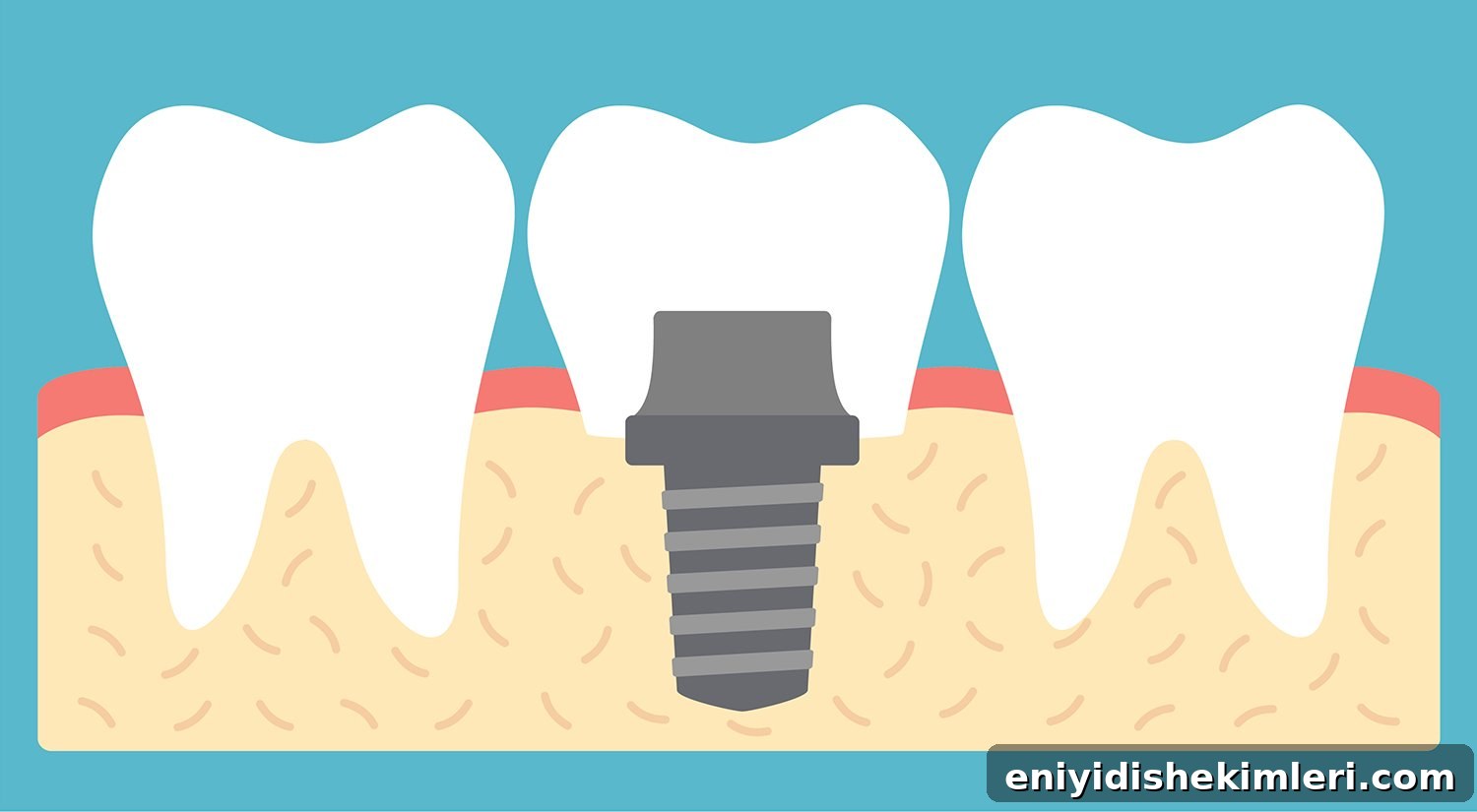
Once the tooth is removed and the site prepared, your dentist will drill a small hole in the jawbone and place the implant, which functions as an artificial tooth root. Sometimes a small gum incision is necessary to expose the bone; if so, sutures may be placed. A bone graft is occasionally required if the jawbone lacks sufficient volume; often this uses synthetic graft material and is a routine part of the process.
This appointment generally takes one to two hours. Afterward you can usually drive home and resume most daily activities, though a soft-food diet is commonly recommended for about a week.
5. Abutment placement
As the jawbone heals and integrates with the implant — a process called osseointegration — it can take several weeks to months. When the implant is stable, an abutment (a connector piece) is attached to the implant to support the crown. The abutment is secured with a dental torque wrench; local anesthesia may be used so you feel only pressure. In some cases the abutment is placed at the time of implant surgery, but since it extends above the gum line it may be visible, so discuss options with your dentist. Alternatively, a healing cap or healing abutment may be used during integration to protect the site.
6. Permanent crown
Once integration is complete and your tissues are healthy, the permanent crown is attached to the abutment and the restoration is complete.
Does a dental implant hurt?
During the procedure you should not feel pain due to local anesthesia. You may experience vibration from the drill, some pressure, and the sensation of the dentist working in the area. After anesthesia wears off, you will likely notice soreness and discomfort, but most patients describe it as manageable rather than intense pain. You can usually go about daily activities after the procedure with appropriate pain control and following aftercare instructions.
The reality is most dental procedures are performed pain-free; anxiety and anticipation are often the hardest parts. Being informed, choosing a dentist you trust, and knowing what to expect makes the experience much easier.
But my dentist didn’t tell me…!
Practitioners should explain the procedure and post-op expectations, but that doesn’t always happen. Do your research before appointments so you can discuss details and make informed decisions with your dentist.
5 tips for avoiding surprises
- Take notes on your phone or in a notebook during consultations so you don’t forget details.
- Ask the office staff if they provide written materials explaining the implant process.
- Do your own research ahead of time to understand common steps and timelines.
- Talk with someone who has undergone the procedure; ask your dentist if a patient is willing to share their experience.
- Prepare your questions in advance and write them down to discuss at the appointment.
6 things you need to know beforehand
- Your jawbone needs time to heal.
Implants are usually a multi-step process that requires waiting for the bone to fuse to the implant. Expect several weeks or months of healing depending on your case. - Cost varies.
Many factors influence final cost. Discuss pricing with your dentist in advance. As a general range (excluding insurance variables), a single implant including the crown often falls between several thousand dollars. - You won’t leave with the permanent crown.
Although the permanent crown isn’t placed immediately, options such as a temporary crown, flipper, or retainer can preserve your appearance while healing occurs. - Stock up on soft foods.
You may be advised to eat soft foods for a week or longer to protect the new implant. Soups and smoothies are good options; avoid high sugar foods that can impede healing. - Expect prescriptions.
You will often receive antibiotics to reduce infection risk and may be given pain medication or recommendations for over-the-counter analgesics. - Don’t schedule major commitments for the rest of the day.
Procedure times and recovery vary, so allow a flexible schedule and plan for rest after surgery.
Dental implants are one of the most significant advances in dentistry and have a high overall success rate when properly planned and placed. While the process takes time and patience, when successful an implant provides a natural-looking, functional tooth that can last for many years.
Assuming everything goes well, a dental implant will leave you with a realistic, long-lasting replacement tooth.
Dr. Mark Burhenne
Got more questions about implants? Ask me a question!