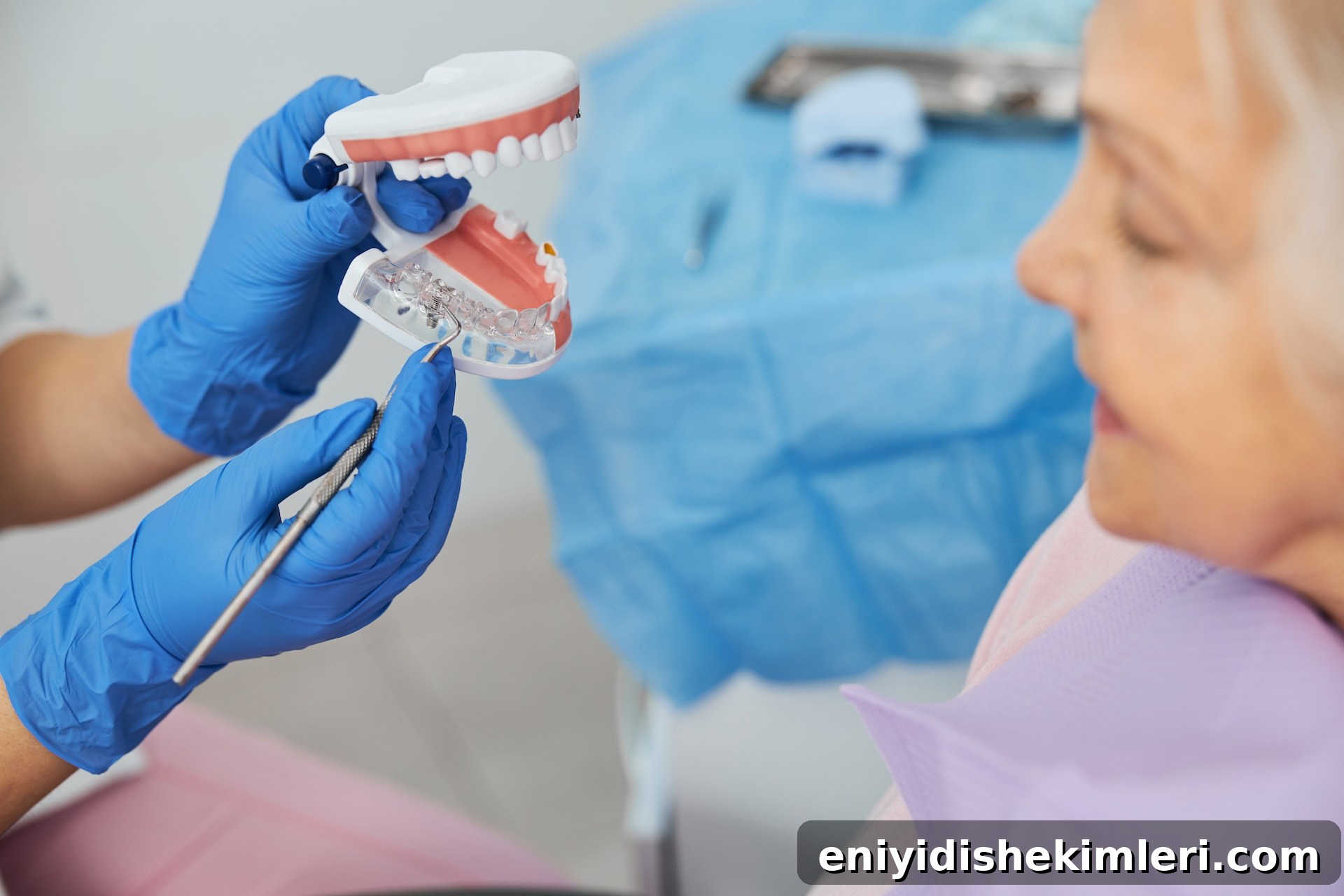
Having dental implants is a reliable and widely used solution for replacing missing teeth. The procedure places a titanium implant into the jawbone to act as an artificial tooth root, which is later restored with a crown, bridge, or denture to recreate a natural appearance and function.
This article explains the typical steps of the dental implant process so you know what to expect from consultation through final restoration.
Step 1: Consultation and Treatment Planning
Every implant treatment begins with a thorough consultation. During this visit, the dentist evaluates your overall oral health, reviews your medical history and medications, and discusses your goals and expectations. Diagnostic imaging—such as dental X-rays or a CBCT scan—may be taken to assess jawbone quantity and anatomy.
Based on this evaluation, the dentist develops a customized treatment plan that specifies how many implants are needed, their intended positions, whether bone grafting or sinus augmentation is required, and the type of final restoration (crown, bridge, or implant-supported denture). Clear planning helps improve outcomes and sets realistic timelines.
Step 2: Preparing the Implant Site
Preparation of the implant site typically involves removing any decayed or nonrestorable teeth and thoroughly cleaning the area. If the jawbone lacks adequate volume or density to support an implant, a bone graft or ridge augmentation may be performed to rebuild the site. In some cases, a staged approach is used so grafts can heal before implant placement.
On the day of implant placement, the area is numbed with local anesthesia. Sedation options are available for patients who experience anxiety or require more extensive treatments. Proper anesthesia and sedation ensure comfort throughout the procedure.
Step 3: Placing the Implant
After the site is prepared and the patient is comfortable, the dentist makes a small incision in the gum to expose the jawbone. Using precise surgical drills, a pilot hole and progressively wider osteotomy are created to match the implant dimensions. The titanium implant screw is then inserted into the prepared site and secured to achieve primary stability.
Once placed, a healing cap or temporary abutment is attached to protect the implant and shape the surrounding soft tissue during healing. Sutures may be used to close the gum tissue around the implant area.
Step 4: Healing and Osseointegration
Following placement, the implant integrates with the jawbone through a process called osseointegration, which typically takes several weeks to a few months. During this period, the bone grows tightly around the implant, creating a stable foundation for the final restoration.
Patients may receive antibiotics and pain medications to manage discomfort and decrease infection risk. Follow-up appointments are scheduled to monitor healing and, when appropriate, take X-rays to confirm successful integration before proceeding to the restorative phase.
Step 5: Final Restoration
When integration is complete and the implant is stable, the healing cap is removed and a permanent abutment is attached. Impressions or digital scans are taken to design a customized crown, bridge, or implant-supported denture that matches the shape, size, and color of your natural teeth.
The final restoration is secured to the abutment, restoring chewing ability, speech, and smile aesthetics. The result is a durable, natural-looking replacement that can last many years with proper oral hygiene and regular dental checkups.
Overall Benefits and Aftercare
Dental implant surgery is a multi-step clinical process, but when planned and executed correctly it provides a long-term solution for tooth loss. Implants help preserve jawbone structure, improve function, and restore self-confidence. After treatment, maintain good oral hygiene, avoid smoking, and attend routine dental visits to maximize the lifespan of your implants.
Our practice provides comprehensive implant care, including detailed planning, surgical placement, and precision restorations. A qualified dental team will evaluate your needs and recommend the best treatment sequence to achieve a natural-looking, functional smile.