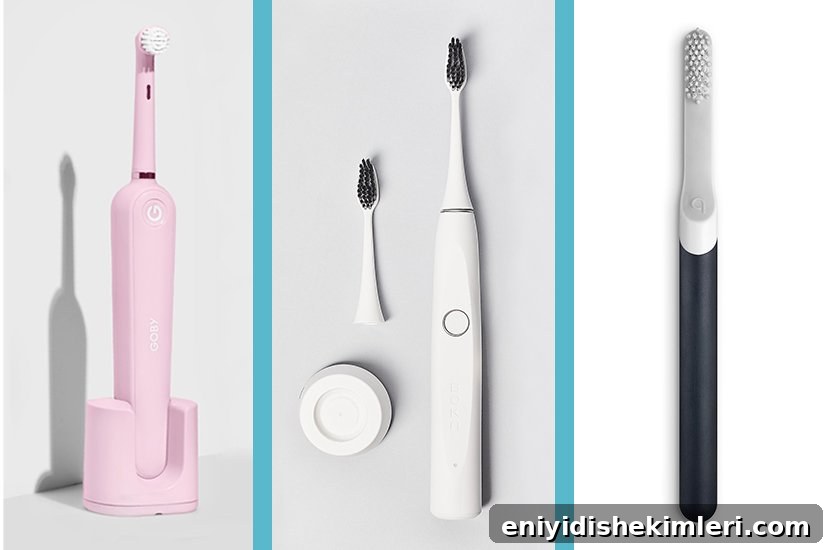
Buying directly online has become a popular way to shop, and electric toothbrushes are no exception. Direct-to-consumer brands like Goby, Boka, and Quip eliminate retail markups and have shaken up the market by offering subscription services, competitive pricing, and modern designs.
Which one should you choose? Each has strengths depending on your age, oral health priorities, and budget. I’ve used all three and will summarize their benefits and drawbacks to help you decide.
Goby uses an oscillatory motion similar to some popular electric models and represents the best overall value for many people. Boka uses sonic vibration and is particularly effective for plaque removal—making it a strong option if you’re over 40 or have a history of buildup. Quip is an inexpensive, travel-friendly choice that suits people who already have good brushing habits and want a simple option.
This article contains affiliate links. If you purchase through some links, the site may earn a small commission at no extra cost to you. Recommendations are based on testing and experience.
The Importance of Good Dental Hygiene
Don’t assume that a particular toothpaste or toothbrush alone will guarantee a healthy mouth. The single most important factor for preventing tooth decay, gum disease, and bad breath is proper brushing technique. In fact, the mechanical action of brushing—rather than the toothpaste—is what disrupts plaque and helps maintain a balanced oral microbiome.
The three core components of effective brushing are time, pressure, and motion:
- Time: Brush for at least two minutes, twice a day—morning and night. If you consume sugary, acidic, or processed foods, wait 30–45 minutes before brushing to avoid damaging softened enamel.
- Pressure: Use a gentle touch. Brushing too hard can wear tooth enamel and create grooves that trap food and bacteria. A light sweep is sufficient to dislodge biofilm.
- Motion: Avoid aggressive back-and-forth sawing. Small, circular motions or the motions provided by an electric brush are more effective and less damaging.
Electric or Manual Toothbrush?
I recommend an electric toothbrush primarily because most people have imperfect brushing habits—too much pressure, incorrect motion, or insufficient time. Electric brushes can guide proper technique by doing most of the motion for you, reducing the chance of overbrushing and usually including a two-minute timer.
Two situations that make an electric toothbrush particularly beneficial are:
1. Excess Plaque
Plaque and calculus accumulation tend to increase with age and poorer diets. If you’re over 40 or frequently consume sugary or acidic foods, an electric toothbrush helps manage buildup more effectively than a manual brush.
2. Staining Concerns
While toothbrushes don’t whiten teeth chemically, a powerful brush can remove surface stains from coffee, tea, and wine. If surface staining is your main concern—especially for those under 40—choose a brush optimized for stain removal.
Quip Toothbrush Review
Quip is known for its minimalist design and subscription model. It’s affordable, compact, and geared toward users who prefer simplicity and convenience.
Quip Pros:
Sleek design: Minimalist look, includes a suction cup for mirror mounting and a built-in timer.
Low cost: One of the least expensive electric options, with affordable refill heads and optional toothpaste in subscriptions.
Travel-friendly: Lightweight and runs on replaceable batteries—no charger needed.
Quip Cons:
Lower power: Quip’s vibration is milder than many electric brushes. It’s fine if you already have good technique, but it may not correct poor habits or provide a deep clean comparable to stronger models.
Not rechargeable: Uses replaceable batteries, which is less convenient and less eco-friendly than rechargeable models.
Quality concerns: Some users report variable build quality and occasional off tastes from new brush heads.
Quip is a solid choice for young adults or anyone seeking a simple, affordable electric brush with a subscription option.
Boka Toothbrush Review
Boka offers a subscription service and is notable for its nano-hydroxyapatite toothpaste, which supports remineralization without fluoride. Their electric brush uses sonic vibration technology similar to other high-performing models and pairs well with their oral care products.
Boka Pros:
Plaque removal: Sonic vibrations are effective at disrupting plaque and preventing calculus formation, making Boka a good pick for people over 40.
Charcoal bristles: Activated charcoal in the bristles helps reduce bacterial growth and keeps the brush fresher between uses.
Multiple speeds: Low, medium, and high settings let you tailor intensity for daily maintenance or more intensive cleaning as needed, plus a built-in timer.
Comprehensive oral care plan: Subscriptions can include remineralizing toothpaste and natural floss alongside replacement heads.
Boka Cons:
Less effective on surface stains: If stain removal is your priority and you’re under 40, an oscillatory brush like Goby may perform better.
Boka is an excellent choice for plaque control, cavity remineralization plans, and users looking for a full oral care subscription.
Goby Toothbrush Review
Goby is a strong value option that uses oscillatory motion similar to popular oscillating heads aimed at surface stain removal. It’s my top recommendation for many people, particularly those under 40.
Goby Pros:
Stain removal: Oscillatory motion is effective at removing surface discoloration from coffee, tea, and wine.
Simple operation: One mode that covers most users’ needs without unnecessary extras or complicated features.
Affordable replacements: Replacement heads are competitively priced, lowering long-term costs compared with some competitors.
Customer-focused: Goby’s communications and support emphasize user education and good customer experience.
Goby Cons:
There aren’t major downsides for most users. If plaque and calculus control are your primary concerns, a sonic brush like Boka may be more appropriate, but Goby offers excellent value for stain removal and everyday cleaning.
Which Electric Toothbrush Is Best?
Choosing the best electric toothbrush depends on your age and oral health needs. For plaque control and a comprehensive oral care plan—especially if you’re over 40—Boka is a leading option. For stain removal, simplicity, and value—particularly if you’re under 40—Goby is a top pick. Quip is a budget-friendly, travel-ready choice for those with good brushing habits who want minimal fuss.
If budget is the primary constraint, basic rechargeable or entry-level electric brushes from established brands also offer good performance at lower prices. Ultimately, the best brush is the one you use correctly and consistently: two minutes per session, gentle pressure, and proper motion will make the biggest difference in oral health.