
Invisalign has been one of the most important advances in orthodontics in my 30-year dental career. Like any effective treatment, it has details that matter. If you’re considering Invisalign or researching treatment options, this guide explains what Invisalign is, how it works, its benefits and limitations, costs, and what to expect during and after treatment.
What is Invisalign?
Invisalign is a method of straightening teeth using a series of clear, removable aligners. While not literally invisible, the transparent aligners are far less conspicuous than traditional metal braces. They provide a more aesthetic option for many patients, allowing teeth to be moved incrementally without wires and brackets.
How does Invisalign work?
Treatment begins with impressions or digital scans of your teeth. Those records are used to create a digital model and a treatment plan called a ClinCheck. The ClinCheck is a step-by-step simulation showing how your teeth will move during treatment, typically planning tooth movements in small increments. The treating dentist reviews and can modify the ClinCheck to align with clinical goals and patient preferences. Once approved, a series of custom aligners is fabricated to guide each stage of movement.
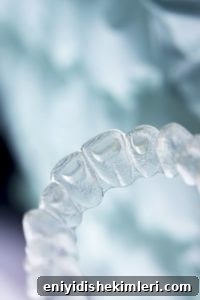
Some cases require small tooth-colored composite attachments bonded to specific teeth. These attachments help certain movements—such as rotations or extrusions—stay on track and match the ClinCheck outcome. Attachments can make aligners slightly more noticeable and may cause some irritation initially, but they often improve efficiency and predictability. Ask your dentist to review the ClinCheck with you so expectations and preferences are clear before fabrication.
Why choose Invisalign?
Many patients choose Invisalign for lifestyle reasons: it offers aesthetic and hygiene advantages over conventional braces while delivering effective tooth movement for many condition types.
Benefits of Invisalign
- Aesthetics: Clear aligners are much less visible than metal braces.
- Speed: Some cases can be completed faster than with traditional braces, depending on the treatment plan.
- Comfort: No wires or sharp brackets means fewer irritations to lips and cheeks.
- Versatility: Invisalign can achieve movements that are difficult with braces in certain cases.
- Lower risk of root damage: Invisalign uses controlled forces that reduce the risk of excessive root resorption.
- Fewer visits: Treatment often requires fewer in-office adjustments.
- Improved oral hygiene: Aligners are removable, so you can brush and floss normally, reducing the risk of plaque buildup, gingivitis, and gum overgrowth associated with fixed appliances.
- TMD relief: Wearing aligners for sufficient hours can act like an occlusal splint and may relieve myofascial or TMD symptoms for some patients.
- Dual-purpose aligners: Aligners can be used as whitening trays or as a mouth guard during and after treatment.
Downsides of Invisalign
Invisalign has relatively few downsides compared with braces, but there are considerations:
- Speech adjustment: A short-term lisp is common for the first few days as you adapt.
- Initial discomfort: Aligners can irritate soft tissues until you become accustomed to them.
- Rare allergies: Allergic reactions to aligner materials are very uncommon; manufacturers offer refunds if they occur.
- Cost: Treatment cost is generally similar to braces, though some providers charge more for Invisalign.
- Need to remove for eating: Aligners must be removed for meals and stored properly. Early in treatment, removal can be harder when teeth are crowded.
- Possible weight change: Some patients alter snacking habits and lose weight, which can be an unintended effect.
Some complex skeletal or developmental cases may be better treated with traditional braces; discuss your specific case with your provider.
What will Invisalign cost?
Costs vary by location, provider, case complexity, and insurance. Typical ranges are roughly $1,500 to $8,000. Insurance plans that cover orthodontics often apply the same benefits to Invisalign. Many plans have lifetime maximums, so verify coverage details. Cheaper products such as short-course options (e.g., Express) use fewer aligners and may be appropriate only for very minor corrections; many cases require significantly more aligners to complete treatment.
How to choose a provider
Both general dentists and orthodontists can prescribe Invisalign. Choose an experienced provider who treats many Invisalign patients annually. Invisalign classifies providers by case volume: Preferred, Premier, and Premier Elite. Higher volume usually means more practical experience with a wider range of cases. Ask about provider experience, request to see before-and-after cases or patient references, and verify that the provider will involve you in treatment planning.
During the appointment
Your initial appointment includes impressions or digital scans. Conventional impressions can be uncomfortable for some patients. Scans or impressions are used to create the ClinCheck and fabricate aligners. Before starting, ask your dentist to show the ClinCheck, explain the estimated treatment length, and clarify the policy and cost for lost or broken aligners.
1. Ask to see the ClinCheck.
The ClinCheck shows projected tooth movement and final outcomes. Reviewing it helps you understand the plan, set realistic expectations, and request changes before production.
2. Ask how long the treatment will be.
Treatment length depends on case complexity. Typical durations range from about 10 to 24 months, with many cases averaging just over a year. ClinCheck reveals the number of aligners and estimated timeline.
3. Ask how much a replacement will be.
Lost or damaged aligners can be replaced; costs vary but commonly range from $75 to $300 depending on your provider. Sometimes you may be able to move to the next aligner instead of replacing a missing one.
4. Ask what to expect after you go home.
Know that aligners are noticeable at conversation distance for some observers, though much less than braces. Expect initial soreness, slight speech changes for a few days, and an adaptation period for inserting and removing aligners.
How often do I wear my aligners?
For best results wear aligners about 20 hours per day, allowing roughly four hours daily for meals and oral hygiene. Some patients do well at 18 hours depending on the case; accelerated protocols may require stricter wear times. Consistent wear is especially important as you age because tooth movement depends on bone remodeling, which slows over time. Follow your dentist’s instructions and do not shorten prescribed wear time to try to speed treatment.
What does Invisalign feel like?
Most patients report mild soreness initially rather than the pronounced pain associated with brackets and wires. Aligners cause less gum inflammation and generally less soft-tissue trauma. Start treatment on a quieter day if possible to adapt comfortably to the new sensation.
How do I care for my aligners?
Keep aligners clean and moist when not in use. Rinse them and store them in a case with soft water or distilled water; occasional gentle brushing without toothpaste is fine. Avoid scrubbing with abrasive toothpaste, which can dull the aligner surface and make them more noticeable.
How often do I change aligners?
Standard protocol is changing aligners every two weeks. Teeth require time for bone to remodel around their new positions, and two-week intervals support stable bone changes. As treatment nears completion, consistent wear is even more important to avoid relapse.
After Invisalign
After the main series of aligners, refinements may be needed to perfect the result and will require additional aligners. Once satisfied with alignment, you’ll transition to retainers to maintain the outcome.
How long will I have to wear my retainer?
Retention is typically lifelong. Many practitioners recommend wearing a retainer indefinitely to prevent natural tooth shifting that occurs with aging. Over time you may reduce daytime wear but nighttime retention is commonly advised long term.
How often will I need to replace the retainer?
Retainers are durable and often last five to ten years. Replacement costs commonly fall between $75 and $300. Digital records allow easy replacement without new impressions in most cases.
Can Invisalign address my bite?
Yes. Invisalign can address many bite issues and can act as a splint to reduce occlusal interferences and related muscle pain. Complex skeletal discrepancies may still require alternative approaches or combined treatment.
Will Invisalign correct diastema, underbite, overbite, crossbite, midline, or open bite?
Invisalign can treat many common orthodontic issues when the provider plans appropriately. Skeletal problems are the main situations where traditional orthodontics or surgical approaches might be more suitable.
What if I forgot to change my aligners?
If you miss a scheduled change, resume wearing your current or next aligner when possible. Falling behind may slow progress but typically won’t cause harm. Do not try to skip ahead before the planned interval to accelerate treatment.
Can I eat and kiss with Invisalign?
Remove aligners for eating. For kissing, aligners generally aren’t a problem, though you may remove them temporarily if preferred. After eating, brush or rinse thoroughly before reinserting aligners to avoid trapping food against teeth.
Will my brushing need to be different?
Brush and floss more consistently since aligners make it easier and more important to maintain good hygiene. Many patients find cleaning improves as teeth align.
Can I whiten my teeth with aligners?
Yes. Aligners double as precise whitening trays, allowing safe, effective at-home whitening if recommended by your dentist.
Is there an age requirement for Invisalign?
No. Teen and adult treatment options are available. Teen programs typically start around age 12; Invisalign can also be appropriate for older adults.
Is Invisalign safe for pregnant women?
Yes. Pregnancy-related hormonal changes can increase ligament laxity, which in some cases may help tooth movement, but treatment timing should be discussed with your provider.
Could I be allergic to the trays?
Allergic reactions are extremely rare. If a reaction occurs, manufacturers provide options including refunds; discuss any material sensitivities with your dentist beforehand.
What if I have missing teeth?
Invisalign remains an option when teeth are missing or extractions are planned. Aligning teeth prior to restorative work such as implants or crowns can improve the final result—coordinate treatment planning with your dentist or specialist.
Will Invisalign affect my speech?
A mild lisp is common for a few days as your tongue adapts. Most patients adjust quickly; starting on a weekend can help. For important presentations, you can remove aligners briefly if needed.
Can I treat only the top or bottom arch?
Treatment typically involves both arches because the teeth must meet and occlusion is interdependent. Correcting only one arch alone is rarely appropriate.
Will Invisalign cause bad breath?
Aligners can increase dry mouth and saliva pooling, which may affect breath. Maintain frequent brushing, flossing, water intake, and clean aligners regularly to minimize odors.
How often do I see my Invisalign provider?
Visits are usually scheduled every four to six weeks to monitor progress and receive the next sets of aligners. Your provider will adjust the schedule as needed based on your case.
That covers the essential information you should know before starting Invisalign.
Dr. Mark Burhenne
Got more questions about Invisalign? Ask your dentist or submit any specific concerns during your consultation.