
Since the introduction of antibiotics beginning with penicillin in 1928, medicine has made enormous progress against infectious disease. Yet a major unintended consequence of widespread antibiotic use is the rise of drug-resistant pathogens. These microbes no longer respond to many standard treatments, and the problem continues to grow.
According to the Centers for Disease Control and Prevention, roughly two million people contract antibiotic-resistant infections each year in the United States, and about 23,000 die as a result. Alarmingly, hospitals—places people go for treatment—are becoming common sites for these so-called superbugs.
Hospital environments can promote the spread of antibiotic-resistant bacteria. Patients often arrive already ill and may become exposed to additional pathogens during their stay. One infection that has become particularly troubling in hospitals is pneumonia, especially nonventilator hospital-acquired pneumonia (NV-HAP), which is a leading hospital-acquired infection.
Pneumonia Is Dangerous and Costly
Pneumonia remains a serious, potentially fatal illness. Key points to consider:
- Some strains of bacteria that cause pneumonia are resistant to nearly all available antibiotics.
- Pneumonia carries a mortality rate estimated in the mid-teens to 20 percent range, depending on the population and setting.
- Patients who develop pneumonia while hospitalized face a substantially higher risk of death compared with those who do not.
- Susceptibility is not limited to the very old or very young—people in their 40s and 50s can also be affected.
- Treatment costs can be high, sometimes reaching tens of thousands of dollars per patient.
- Pneumonia has been among the most expensive conditions treated in recent years, costing billions annually across the health system.
These realities underscore that pneumonia should not be taken lightly. Fortunately, simple, low-cost preventive measures can significantly reduce risk.
Brushing and Flossing Reduce Pneumonia Risk
Recent reporting and hospital programs have highlighted that basic oral hygiene—regular toothbrushing and flossing—can lower the incidence of hospital-acquired pneumonia. The oral microbiome reflects overall health, and maintaining a balanced oral environment helps prevent harmful bacteria from thriving.
Several factors raise pneumonia risk during hospital stays, many of which are common in inpatient settings. These include:
- Exposure to pneumonia-causing pathogens such as Streptococcus pneumoniae
- Prolonged periods of lying down
- Limited mobility and inadequate deep breathing
- Frequent or unnecessary antibiotic use
- Poor hand hygiene
- Poor dental hygiene
Mitigating these risks includes encouraging movement when possible, practicing deep breathing, avoiding unnecessary antibiotics, and maintaining strict hand hygiene. Among these measures, frequent toothbrushing and flossing stand out as particularly effective.
Good oral care prevents the buildup of plaque, the sticky film that forms on teeth and serves as a reservoir for harmful bacteria. When plaque accumulates, bacteria—including those inhaled from the surrounding air—can multiply in the mouth. In a hospital setting where airborne bacterial exposure is common, allowing bacterial growth in the mouth increases the chance of aspirating those organisms into the lungs, which raises pneumonia risk.
Chronic activation of the immune system due to persistent oral and respiratory pathogens can promote prolonged inflammation, weaken defenses, and contribute to poorer overall recovery. Preventing bacterial buildup in the mouth helps lower that ongoing immune burden.
The practical solution is straightforward: when hospitalized for illness or surgery, practice oral hygiene more frequently than usual. Brushing and flossing several times a day can reduce the oral bacterial load and therefore the likelihood that harmful organisms will be aspirated into the lungs.
How Hospitals Are Applying Oral Care
While additional research could refine specific guidelines, several hospitals have implemented toothbrushing programs and reported large reductions in pneumonia cases:
- A Veterans Affairs medical center in Salem, Virginia, reported a 92 percent decline in nonventilator hospital-acquired pneumonia after instituting twice-daily toothbrushing for patients.
- Sutter Medical Center in Sacramento observed a roughly 70 percent drop in pneumonia cases after encouraging patients to brush several times per day.
- New York University Langone Health established a toothbrushing protocol that includes brushing before anesthesia to help reduce postoperative pneumonia risk.
These examples reinforce the connection between oral health and systemic infection risk. Encouraging routine brushing and flossing in hospitalized patients is a low-cost, low-risk intervention with demonstrable benefits.
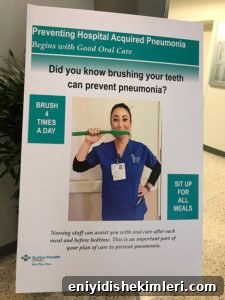 Many hospitals are also using oral care as part of broader patient education and rehabilitation programs, improving outcomes while keeping costs down.
Next time you or a loved one is in the hospital, consider brushing and flossing at least three times a day in addition to following staff guidance on mobility and hand hygiene. With antibiotic resistance on the rise, prevention through simple measures is one of the best tools we have.
Remember: oral health affects the whole body.
Learn More:Can Poor Dental Health Cause Dementia?
References
References for the statistics and hospital programs are available from public health agencies, peer-reviewed literature, and hospital reports documenting efforts to reduce hospital-acquired pneumonia through improved oral care and infection prevention practices.