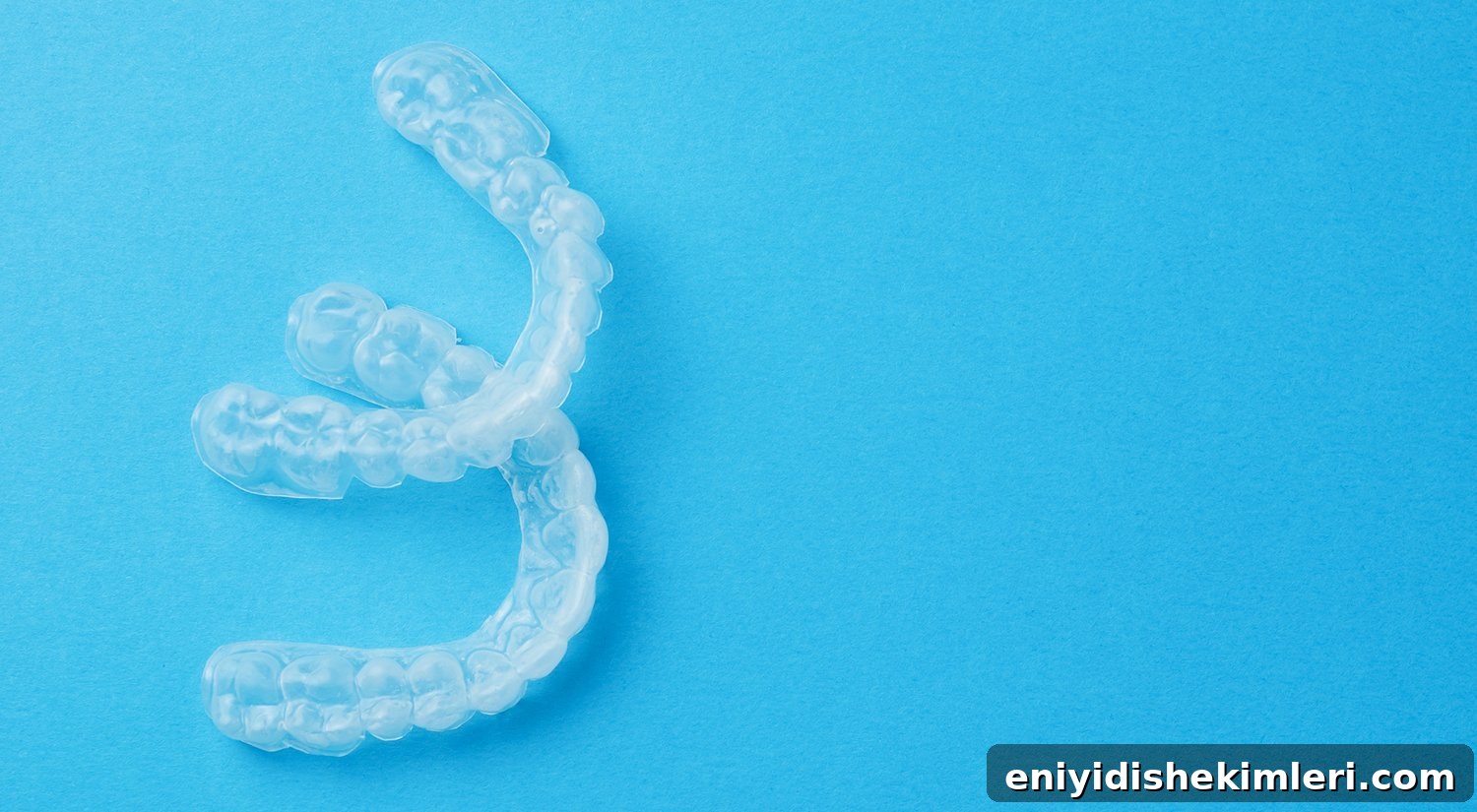
Teeth grinding (bruxism) is a common condition that affects roughly 8–16% of adults and 14–20% of children. When grinding occurs during sleep, dentists often recommend a night guard to protect teeth and jaw from damage, reduce pain, and limit sensitivity and decay.
A dental night guard for sleep is different from a sports mouthguard. Sleep night guards are occlusal appliances custom fitted to protect teeth from the forces of grinding and clenching that occur at night.
Although night guards protect teeth from wear, they are not always the complete solution. Current evidence shows bruxism is multifactorial: stress can play a role, but so can sleep-disordered breathing (including sleep apnea), medications, neurological conditions, and other factors. Identifying and treating the underlying cause improves long-term outcomes.
What is a night guard?
An occlusal or night guard is a dental appliance worn during sleep to shield teeth from the forces of grinding and clenching. Dentists may also prescribe one for patients with TMJ-related soreness triggered by clenching.
Night guards are available as over-the-counter (stock or boil-and-bite) options and as professionally made custom devices from your dentist. Quality varies widely: the best results come from a properly fitted guard that brings all teeth into contact with the appliance.
Sleep night guards are typically thinner and less intrusive than other sleep-related dental devices such as mandibular advancement appliances used for obstructive sleep apnea.
Teeth Grinding (Bruxism): Causes & Dangers
Bruxism refers to repetitive jaw-muscle activity involving clenching or grinding of the teeth. It often occurs during sleep and frequently goes unnoticed by the person experiencing it.
Teeth are not designed to withstand repeated high forces and abrasion; bruxing can exert hundreds of pounds of pressure on tooth surfaces, accelerating wear and increasing the risk of fractures.
What causes teeth grinding?
Bruxism is usually multifactorial. Common contributors include:
- Disordered sleep breathing, including obstructive sleep apnea
- ADHD in children and teens
- Anxiety and depression
- High stress or poor stress coping
- Poor occlusion or bite problems
- Trauma to the mouth or jaw
- Genetic predisposition
- Neurotransmitter imbalances or neurodegenerative disease
- Certain medications (antidepressants, antipsychotics, stimulants)
- Nicotine, alcohol, or excessive caffeine use
Dangers of Teeth Grinding
Long-term teeth grinding can lead to:
- Tooth pain and sensitivity
- Tooth decay and cavities due to enamel breakdown
- Facial and jaw pain
- Fractured or worn teeth
- Yellowing of teeth and gum recession
- Temporomandibular joint disorder (TMD)
- Frequent headaches or migraines
Untreated bruxism accelerates dental aging and can significantly compromise oral health. Bruxism is also associated with conditions such as restless leg syndrome, depression, gastroesophageal reflux disease (GERD), and other sleep-disordered breathing problems. In children, it may correlate with behavioral issues.
Why a Night Guard is Prescribed for Teeth Grinding (Bruxism)
Night guards protect tooth enamel from excessive wear and help preserve molars that are especially vulnerable to attrition. For patients with jaw soreness from clenching, a properly made guard can ease muscle tension and reduce discomfort.
Types of Night Guards
There are five main categories of night guards. Dentists generally recommend over-the-counter guards only as short-term solutions, while professionally made devices are intended for longer use. The types are:
- Stock mouth guards (over-the-counter)
- Boil-and-bite guards (over-the-counter)
- Soft night guards (professional fit)
- Dual-laminate or bilaminar guards (professional fit)
- Hard acrylic night guards (professional fit)
1. Stock Mouth Guards (Over-the-Counter)
These are one-size-fits-all devices with no customization. They are inexpensive but bulky, often uncomfortable, not durable, and generally not recommended for long-term use.
2. Boil-and-Bite Night Guards (Over-the-Counter)
Boil-and-bite guards soften in hot water so you can mold them to your teeth. They offer a better fit than stock guards and are affordable, but they do not match the precision or longevity of professionally manufactured appliances.
3. Soft Night Guard (Professional Fit)
Soft guards are common for mild bruxism. A dentist takes impressions and a lab fabricates the appliance. Soft guards are comfortable and BPA-free but less durable than dual-laminate or hard acrylic options; they typically last under a year depending on use.
4. Dual Laminate Night Guard (Professional Fit)
Dual-laminate (bilaminar) guards have a soft inner layer and a harder outer layer. They are effective for severe grinding, comfortable, durable, and can be adjusted. Lifespan ranges from months to several years depending on grinding severity.
5. Hard Acrylic Night Guard
Hard acrylic guards are the most durable and are used for extreme bruxism and certain TMJ issues. They can be adjusted to modify the bite but are thicker, more expensive, and can feel less comfortable to some patients.
How to Fit Your Night Guard
Boil-and-bite guards come with instructions to heat, mold, and trim the device for a better fit. Professionally made guards require impressions (physical or digital) taken by a dentist and are fabricated to match your bite precisely. Stock guards cannot be custom fit.
Best Night Guards for Grinding
For most people with moderate to severe bruxism, a custom dual-laminate night guard fitted by a dentist offers the best combination of protection, comfort, and durability. Soft professional guards can be a reasonable, lower-cost option for mild grinding. Short-term high-quality boil-and-bite products may be useful while awaiting a custom device.
Whatever you choose, ensure the guard covers all tooth surfaces rather than only partial arches; partial coverage can create bite problems over time.
How to Adjust to Sleeping with a Night Guard
Adapting to a night guard can take time. Tips to improve comfort and tolerance:
- Wear the device during the day for short periods to get used to the feel.
- Ask your dentist about thinner materials or minor adjustments.
- If the guard causes soreness or sharp edges, request a refit.
- Try wearing only the upper or lower portion initially.
- Give a new appliance up to 30 days to adapt before deciding it won’t work.
A poorly fitted, overly thick guard can interfere with breathing and worsen sleep for people with sleep apnea. In such cases, treating the airway disorder is the priority.
How to Take Care of Your Night Guard
Proper care keeps your night guard sanitary and extends its life. Recommended practices:
- Rinse the guard each morning with warm water for about 20 seconds.
- Store it moist when not in use; a solution of water and baking soda is effective.
- Weekly, soak briefly in a mixture of water, baking soda, and white vinegar to reduce bacteria.
- Avoid brushing the guard with a toothbrush, which can create micro-abrasions that trap bacteria.
- Consider using an ultrasonic cleaner for deeper cleaning.
- Clean the storage case weekly with soap and water or in the dishwasher if safe for the case.
Avoid frequent use of effervescent denture cleaners if you experience irritation, and follow your dentist’s guidance for maintenance and replacement intervals.
Sleep Apnea and Bruxism
Obstructive sleep apnea (OSA) is a common contributor to sleep bruxism; in many cases, grinding episodes occur in response to airway obstruction. The brain may trigger jaw clenching to reopen the airway. When sleep apnea is the cause, a night guard alone is unlikely to resolve the problem and may even interfere with protective mechanisms.
If you suspect sleep apnea—signs include loud snoring, choking or gasping during sleep, daytime sleepiness, and poor sleep quality—talk with your healthcare team about evaluation and appropriate treatment, which may include positive airway pressure therapy, positional therapy, oral appliances designed for OSA, lifestyle changes, myofunctional therapy, or surgery in select cases.
Alternative Treatments for Teeth Clenching/Grinding
Treatment depends on the cause and timing of grinding (sleep vs awake). Options include:
- Oral appliance therapy such as mandibular advancement devices or tongue-retaining devices to reposition the airway or jaw
- Sleep apnea treatments (CPAP/APAP, positional therapy, weight loss, reduced alcohol/tobacco/caffeine intake, myofunctional therapy)
- Dental correction of the bite with restorations, orthodontics, or implants
- Medication review and adjustment if drugs contribute to bruxism
- Stress-reduction techniques—yoga, mindfulness, breathwork—for daytime clenching
- Biofeedback or psychotherapy for awake bruxism in selected cases
- Targeted dental restorations or, in severe neurologic cases, interventions such as botulinum toxin to relax overactive muscles
Key Takeaways: Night Guard for Grinding
Night guards protect teeth from wear and are a valuable part of bruxism management, but they do not always address the underlying causes. Before long-term use, dentists should evaluate for sleep-disordered breathing and other contributors. Ideally, a night guard serves as a protective measure while you and your healthcare team identify and treat the root cause of grinding. Bruxism is complex—be patient with treatments and work with professionals to find the safest, most effective strategy for your situation.