
Burning mouth syndrome, also known as glossodynia or stomatodynia, can feel alarming and hard to understand. It affects a relatively small portion of the population, but certain life stages, medical conditions, and habits increase the risk.
How can you reduce the chance of developing this condition, and what can you do if you already have symptoms? Below we cover the key facts about burning mouth syndrome (BMS), its causes, risk factors, symptoms, and practical approaches to prevention and relief.
What is burning mouth syndrome?
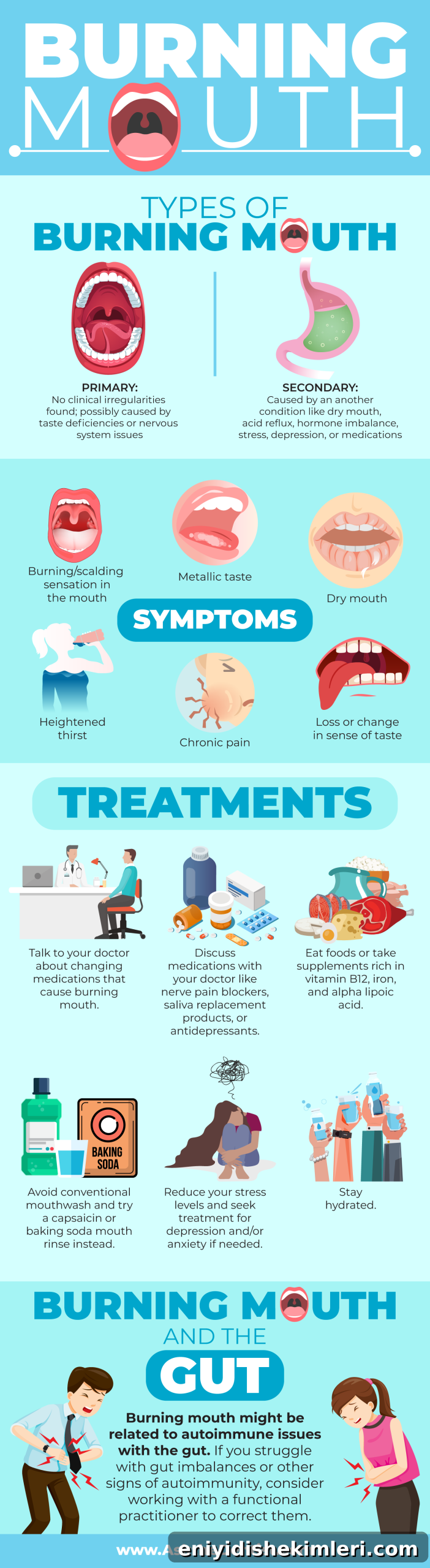
Burning mouth syndrome is characterized by a persistent burning, scalding, or tingling sensation in the mouth. Other common features include dry mouth and altered taste. Symptoms can range from mild discomfort to constant, severe pain and may persist for days, months, or even years.
Clinicians distinguish two main types of BMS. Primary BMS is diagnosed when clinical examination and laboratory tests show no clear abnormality; it is often attributed to dysfunction in the taste system or in the peripheral and central nervous systems. Secondary BMS occurs when an underlying condition or identifiable cause—such as dry mouth, acid reflux, hormonal changes, psychological stress or depression, certain medications, nutritional deficiencies, or oral habits—explains the symptoms.
Behaviors like tongue thrusting, tongue biting, and tooth grinding (bruxism) can contribute to symptoms, and nutritional deficits are a recognized cause of secondary BMS.
Prevalence is relatively low. Studies suggest the condition is rare in younger adults and becomes more common with age, particularly among women. Postmenopausal women show a notably higher incidence, and older women are several times more likely than men to be affected.
Symptoms of Burning Mouth Syndrome
Symptoms vary between individuals, but commonly include:
- Burning or scalding sensation in the mouth
- Metallic or altered taste
- Dry mouth
- Increased thirst
- Chronic oral pain
- Loss or changes in sense of taste
The burning sensation can be localized to one area of the mouth or involve the entire oral cavity. Patterns differ: symptoms may worsen through the day, come and go, or be present from the moment of waking. Some patients have a geographic tongue alongside BMS, though that condition itself typically does not cause these burning sensations.
Diagnosis usually involves ruling out other causes. Your healthcare provider may order blood tests, oral swabs, allergy tests, salivary assessments, or imaging depending on your symptoms and medical history.
Causes & Risk Factors
Many medical conditions and circumstances can produce oral burning sensations. Possible contributors include autoimmune conditions such as Sjogren’s syndrome, side effects from cancer treatments like chemotherapy or radiation, certain blood pressure medications, deficiencies in B vitamins or iron, diabetes, acid reflux, thyroid disorders, oral fungal infections, ill-fitting dentures, and allergic reactions.
Distinguishing primary from secondary BMS requires excluding these other causes. Primary BMS is more common in women—especially after menopause—and in people over fifty. Stressful life events, chronic dry mouth, anxiety, and undiagnosed depression are additional risk factors. Certain neurological disorders and autoimmune conditions that affect the nervous system—such as fibromyalgia, Parkinson’s disease, and peripheral neuropathy—may also be associated with BMS.
Evidence suggests nervous system dysfunction—either peripheral or central—or damage to the taste pathways plays an important role in primary BMS. In secondary cases, correcting the underlying medical issue can resolve the oral symptoms.
Potential Complications
BMS can go beyond oral discomfort. Persistent pain and taste changes often interfere with eating, which can lead to weight loss and poorer nutrition. Sleep disturbances are common, and the chronic nature of the condition may contribute to anxiety, depression, and reduced quality of life.
Although the syndrome can be challenging, many patients find symptoms improve with appropriate treatment and lifestyle changes.
How to Prevent Burning Mouth
Prevention often focuses on avoiding known triggers and maintaining good oral and overall health. Practical steps include:
- Stop smoking and limit alcohol—both can dry the mouth and irritate oral tissues.
- Avoid alcohol-containing mouthwashes and potentially irritating toothpaste ingredients for a period to see if symptoms improve; some people find switching to plain water brushing helpful for several weeks.
- Address mouth breathing, especially at night. Simple measures that promote nasal breathing can reduce dry mouth; some people find mouth taping helpful under guidance.
- Use saliva substitutes or moisturizing gels when saliva production is insufficient.
- Avoid spicy foods, acidic foods, and carbonated beverages if they trigger symptoms.
- Review medications with your clinician—certain drugs (for example some ACE inhibitors and angiotensin receptor blockers, and some antiretrovirals) have been linked to oral burning and can sometimes be adjusted.
Traditional & Home Treatment
Treatments aim to address underlying causes for secondary BMS and to manage symptoms in primary BMS. Clinicians may recommend medications that target nerve pain, saliva replacement products, specific rinses, tricyclic antidepressants, certain sedatives, or anticonvulsants. These can be effective but may carry side effects, and some can worsen dry mouth.
Many patients also benefit from nonprescription measures. According to clinical sources, a majority of patients experience at least partial improvement within a few months when appropriate treatments are used.
Foods and Supplements
Addressing nutritional deficiencies can be helpful. Vitamin B12 supplementation has been shown to reduce symptoms in some patients and can be obtained through supplements or B12-rich foods. Iron repletion is important when deficiency is present. Some patients report improvement with alpha-lipoic acid supplements; foods containing this nutrient include broccoli, Brussels sprouts, tomatoes, peas, and beets. Any supplementation should be discussed with a healthcare provider.
Rinses
Certain topical rinses may relieve symptoms. Capsaicin rinses (derived from chili) have shown benefit for some patients by modulating peripheral nerve pain. A simple baking soda rinse (a small amount of baking soda mixed with water) can be an inexpensive, soothing option for some people.
Lifestyle Changes
Stress reduction is often helpful: practices such as yoga, mindfulness, cognitive behavioral therapy, and regular relaxation activities can lower symptom severity for those whose symptoms worsen with stress. Staying well hydrated, sipping water regularly, sucking ice chips, and chewing sugar-free gum to stimulate saliva can all reduce discomfort.
Burning Mouth: A Gut Connection?
The mouth often reflects broader health issues. Imbalances in the gut and conditions that affect nutrient absorption or immune responses in the stomach can be linked with oral symptoms like burning, dry mouth, and tongue discomfort. In some patients, detecting these oral symptoms has led clinicians to investigate gastric autoimmune issues and other digestive conditions that impair vitamin and mineral absorption.
When gastrointestinal causes are suspected, addressing those underlying problems can be an important part of resolving BMS symptoms.
Living with Burning Mouth
Relief is possible for many people. Combining targeted medical care with lifestyle changes, nutritional support, topical or rinsing therapies, and stress reduction strategies can improve symptoms. Some patients find complementary approaches such as topical or systemic natural remedies helpful for pain relief and sleep, but all therapies should be discussed with a healthcare provider to evaluate safety and effectiveness.
FAQs
Q
Is there a cure for burning mouth syndrome?
A
There is no single universal cure. However, many people experience significant improvement or resolution over time with appropriate evaluation, treatment of underlying causes, and symptom management strategies.
Q
How long does burning mouth last?
A
Duration varies widely. Some cases resolve in days or weeks; others persist for months or longer. The timeline often depends on whether an underlying cause can be identified and treated.
Q
Is burning mouth syndrome contagious?
A
No. BMS is not contagious; it is typically related to individual nervous system function, medical conditions, medications, or local oral factors.
Q
What other oral conditions can contribute to BMS?
A
Oral fungal overgrowth (thrush), oral lichen planus, and mechanical behaviors such as grinding, tongue thrusting, or tongue biting can contribute to burning sensations and should be evaluated as potential causes.
Key Takeaways: Burning Mouth Syndrome
Burning mouth syndrome causes persistent oral burning, altered taste, and dry mouth for many patients. Primary BMS is often linked to nervous system or taste dysfunction, while secondary BMS results from identifiable medical conditions, medications, or oral factors.
Women—particularly postmenopausal women—people under chronic stress, and those taking certain medications are at higher risk. Fortunately, a combination of medical evaluation, targeted treatment of underlying causes, lifestyle adjustments, dietary changes, topical rinses, and stress management can reduce symptoms and improve quality of life for many sufferers.
References
- Puhakka A., Forssell H., Soinila S., et al. Peripheral nervous system involvement in primary burning mouth syndrome—results of a pilot study.
- Bergdahl M., Bergdahl J. Burning mouth syndrome: prevalence and associated factors.
- Grushka M., Epstein J. B., Gorsky M. Burning mouth syndrome. American Family Physician.
- Aggarwal A., Panat S. R. Burning mouth syndrome: A diagnostic and therapeutic dilemma.
- Netto F. O. G., Diniz I. M. A., Grossmann S. M. C., et al. Risk factors in burning mouth syndrome: a case–control study.
- Femiano F. Damage to taste system and oral pain: burning mouth syndrome.
- Castells X., Rodoreda I., Pedrós C., et al. Dysgeusia and burning mouth syndrome by eprosartan.
- Triantos D., Kanakis P. Stomatodynia (burning mouth) as a complication of enalapril therapy.
- Savino L. B., Haushalter N. M. Lisinopril-induced “scalded mouth syndrome”.
- Grushka M., Epstein J. B., Gorsky M. Burning mouth syndrome. American Family Physician.
- Sun A., Lin H. P., Wang Y. P., et al. Vitamin supplementation and oral symptoms in burning mouth syndrome.
- Bergdahl J., Anneroth G. Burning mouth syndrome: literature review and model for research and management.
- Palacios-Sánchez B., Moreno-López L. A., Cerero-Lapiedra R., et al. Alpha lipoic acid efficacy in burning mouth syndrome.
- Silvestre F. J., Silvestre-Rangil J., Tamarit-Santafé C., Bautista D. Application of a capsaicin rinse in the treatment of burning mouth syndrome.
- Miziara I., Chagury A., Vargas C., et al. Therapeutic options in idiopathic burning mouth syndrome: literature review.
- Sun A., Chang J. Y. F., Wang Y. P., et al. Effective vitamin B12 treatment and oral mucosal disease.
- Bookout G. P., Short R. E. Burning Mouth Syndrome. In StatPearls.