Digging the Root Canal: Root canals have long carried a reputation for pain and discomfort. Cultural references—from Dustin Hoffman’s harrowing dental scene in Marathon Man to comic jabs by Johnny Carson and movie lines in Little Shop of Horrors—have amplified fear and misunderstanding. Yet despite the jokes and dramatizations, most people don’t fully understand what a root canal is, why it’s performed, or how it can save a natural tooth.
Historically, root canal treatment signaled advanced dental care. Ancient societies that practiced it reserved the procedure for elites—pharaohs, kings, queens, and dignitaries—while extractions were common for the general population. Over time, practitioners discovered that removing the inflamed or infected inner tissue of a tooth could eliminate severe pain and preserve the tooth, avoiding extraction.
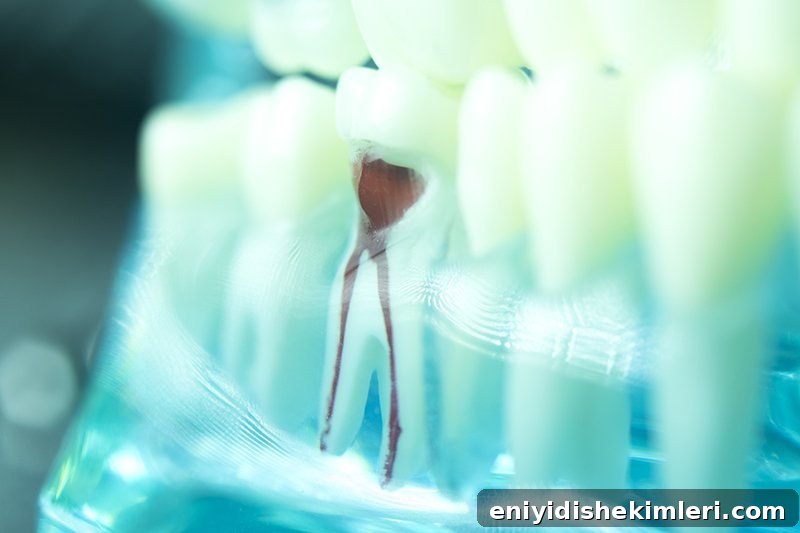
To appreciate why a root canal is necessary, it helps to know a bit about tooth anatomy. Teeth develop from embryonic tissue called a bud, which forms the calcified outer structures such as enamel and the underlying dentin. Inside each tooth is the pulp: a soft tissue made up of blood vessels, nerves, and cells that produce dentin. The pulp extends from a chamber in the center of the crown down through narrow root canals to the tip of each root.
When decay progresses toward the pulp chamber, bacteria and their acids irritate the pulp. Enclosed in a rigid chamber with limited ability to swell, the inflamed pulp quickly becomes painful. If the inflammation is not reversed, the pulp can die. Dead pulp tissue releases toxins that travel out the root tip into the surrounding bone, potentially causing infection, bone loss, and damage to the support of the tooth and adjacent teeth.
At that “point of no return,” removing the infected pulp is necessary to save the tooth and protect adjacent structures. During root canal treatment, a dentist or endodontist removes the diseased pulp, thoroughly cleans and shapes the root canal system using specialized instruments, and disinfects the space to eliminate bacteria and toxins.
Accurate cleaning requires determining the exact length of the root canals. This is typically confirmed with a series of x-rays that show the position of a file relative to the root tip. After establishing the correct length, the canals are prepared to receive a permanent seal. Once dried, the canals are filled with inert materials—commonly gutta-percha cones combined with a sealing paste—creating a complete seal to prevent reinfection. Because a non-vital (root canal–treated) tooth can be more brittle over time, a crown is often placed afterward to restore strength and function.
So why does the idea of a root canal evoke such fear? Much of it stems from the fear of the unknown, cultural portrayals that exaggerate discomfort, and the intense pain patients experience before treatment when the pulp is inflamed. In reality, modern root canal therapy is performed with effective anesthesia and techniques designed to minimize discomfort and preserve the natural tooth.
Understanding how cavities progress and what a root canal entails can reduce anxiety. Preventive care—regular dental visits every six months, good oral hygiene, and early treatment of decay—greatly lessens the likelihood of needing root canal treatment in the first place.
Mark Burhenne DDS
This article originally appeared in Silicon Valley Insider in 1996 and on Dr. Burhenne’s first website, Virtual Dentist.
Learn More:Know Before You Go: Root Canals