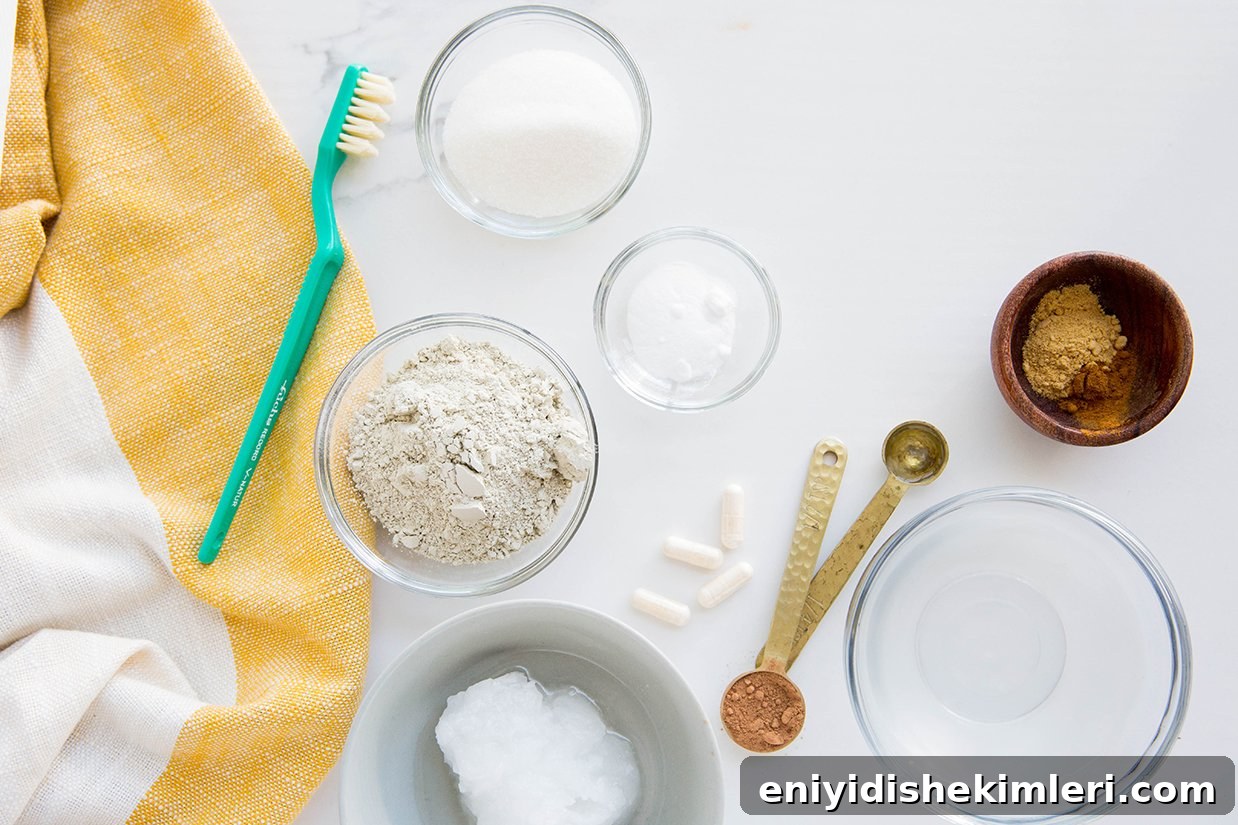
Making your own toothpaste can be rewarding and healthier than many commercial options. Store-bought toothpastes often include ingredients that may be unnecessary or potentially harmful, and fluoride — commonly added to many brands — can be toxic in large amounts. This guide covers safe, effective ingredients to use in DIY toothpaste and which ingredients to avoid.
Below you’ll find practical information on beneficial ingredients, problematic additives, frequently asked questions, and two full DIY toothpaste recipes you can try at home.
Many people carefully choose organic skin and body care but overlook what they use in their mouths. A homemade paste can be excellent for oral health when it’s formulated thoughtfully; however, some DIY recipes can damage enamel or disrupt the oral microbiome if they include overly abrasive or overly antibacterial ingredients.
This article explains how to select ingredients that promote remineralization, protect enamel, and support a balanced oral microbiome.
Why Make DIY Toothpaste?
Many commercial toothpastes contain ingredients you may want to avoid, such as:
- Triclosan — a pesticide and possible hormone disruptor.
- Sodium lauryl sulfate (SLS) — can trigger canker sores for some people.
- Artificial colorings — unnecessary and linked to behavioral concerns in children.
- Fluoride — can be toxic if swallowed in excess and is not mandatory in a home toothpaste.
- Titanium dioxide — used to whiten paste but adds no dental benefit.
- Highly abrasive ingredients — can erode enamel, increase sensitivity, and contribute to gum recession.
Glycerin often raises questions. Current evidence does not support the idea that glycerin prevents remineralization. Glycerin is water-soluble and any transient coating it forms is quickly removed by saliva or rinsing, allowing minerals to reach enamel.
The Best Ingredients to Use in DIY Toothpaste
- Coconut oil — may help maintain a healthy oral microbiome and can deter oral yeast. It’s supportive but should not replace flossing, brushing technique, or tongue cleaning.
- Trace mineral drops — useful if your water source (such as reverse osmosis) lacks minerals that support overall health.
- Crushed cacao nibs — cacao contains compounds that may support remineralization; finely ground nibs can act as a mild abrasive when appropriately sized.
- Bentonite clay — a gentle, mineral-rich polisher that’s mildly alkaline and less abrasive than many commercial options.
- Xylitol — helps reduce cavity-causing bacteria; use in moderation to avoid excessive sweetness.
- Baking soda — alkaline and low in abrasion, baking soda helps neutralize acids that attack enamel.
Leave it Out: Ingredients to Avoid
- Anything acidic — aim for a paste pH of neutral (7) or higher. Acids can demineralize enamel over time. Use pH strips to test homemade formulas if unsure.
- Hydrogen peroxide — effective for whitening when used properly (in trays or strips) but inappropriate for routine toothpaste because it can damage soft tissues and produce free radicals.
- Essential oils — many are antibacterial and can disrupt the delicate oral microbiome; most should not be used regularly in the mouth. There are exceptions (for example, anise oil in small amounts), but use caution.
FAQ
Q
Can I just use baking soda?
A
Baking soda is a safe, economical option for DIY toothpaste. It raises mouth pH to neutralize acids and has a low abrasion score, making it gentle on enamel when used correctly.
Q
Do I need to use toothpaste at all? What about brushing with just water?
A
Brushing with just water is acceptable. Toothpaste mainly adds a mild abrasive polishing action that helps remove biofilm. Dry brushing or brushing with water can work in a pinch, but a gentle paste improves the effectiveness of the brushing motion.
Two DIY Toothpaste Recipes to Try Today
Below are two practical recipes: a probiotic, cacao-based paste for adults and a milder paste tailored for children. Both use ingredients that support oral health while avoiding harsh additives.
DIY Probiotic Toothpaste
This recipe uses cacao nibs and includes prebiotics and probiotics to support the oral microbiome while supplying gentle polishing agents and minerals that encourage remineralization.
Here’s how to make it:
Ingredients
- 4 tablespoons cold-pressed organic coconut oil
- 4 tablespoons food-grade bentonite clay
- 1/2 teaspoon baking soda
- 2 tablespoons xylitol
- 1/2 teaspoon prebiotic powder
- 2 crushed probiotic capsules (dental probiotic)
- 1/2 teaspoon cacao powder
- 1 1/2 teaspoons ginger powder
- 1/2 teaspoon cinnamon
- 1/2 teaspoon vitamin E oil
- 4 tablespoons distilled or filtered water (divided)
Instructions
- In a small saucepan, warm the coconut oil over low heat until melted, about 1–2 minutes.
- Combine bentonite clay, baking soda, xylitol, prebiotic, probiotic, cacao, ginger, and cinnamon in a food processor or high-speed blender. Blend 10–15 seconds until powders are evenly mixed.
- Let powders settle briefly, then add one tablespoon of melted coconut oil to the blender and blend 10–15 seconds. The mixture will be crumbly; use a small spoon or spatula to scrape the sides to fully combine.
- Add the remaining coconut oil and vitamin E, then blend another 10–15 seconds until the mixture becomes runny and smooth. Scrape sides as needed.
- With the blender running, slowly add the water and blend at least 30 seconds until thoroughly combined and creamy.
- Transfer the paste to a glass jar with a lid or a nontoxic refillable squeeze tube.
Notes — Storage & Use
Use a clean spoon to apply toothpaste to your brush. Store half of the batch at room temperature and use within 7–10 days; refrigerate the remainder for up to four weeks. For convenience, fill a refillable squeeze tube and apply about 1/4 teaspoon to the toothbrush twice daily. Refrigeration extends freshness.
DIY Kids’ Toothpaste

Commercial children’s toothpastes are often formulated to appeal to kids rather than optimize dental health. This simple recipe provides a gentle, lower-risk alternative for young children.
Here’s how to make it:
Ingredients
- 4 tablespoons calcium carbonate
- 1/2 teaspoon baking soda
- 1 teaspoon melted cold-pressed organic coconut oil
- 2.5 teaspoons distilled water
- 1–2 drops anise essential oil (optional; anise is one of the milder options)
- 1 crushed children’s probiotic capsule (optional)
- 2 tablespoons xylitol plus 1 additional teaspoon
Instructions
- Mix calcium carbonate, xylitol, baking soda, and optional probiotic in a bowl with a fork until combined.
- Add distilled water slowly and stir to form a paste, ensuring there are no dry lumps.
- While stirring vigorously, slowly incorporate the melted coconut oil until the paste becomes smooth.
- Add the anise essential oil if using and mix until evenly distributed.
- Adjust texture as needed; a food processor can help achieve a smooth consistency similar to commercial toothpaste.
Notes — Storage & Use
Store in a glass jar or refillable squeeze tube. Keep only what you will use within 5–7 days at room temperature; refrigerate the rest for up to two weeks. When transitioning children away from commercial paste, mix a small amount of DIY paste with their familiar paste and gradually increase the DIY portion.
Be mindful that coconut oil can leave a residue; dispose of excess used paste in the trash rather than rinsing large amounts down the sink to avoid potential clogging.
Choosing the right toothpaste matters for both oral and overall health. Thoughtful DIY formulas can support enamel, balance oral bacteria, and avoid unnecessary chemicals found in many commercial products.
Mark Burhenne DDS