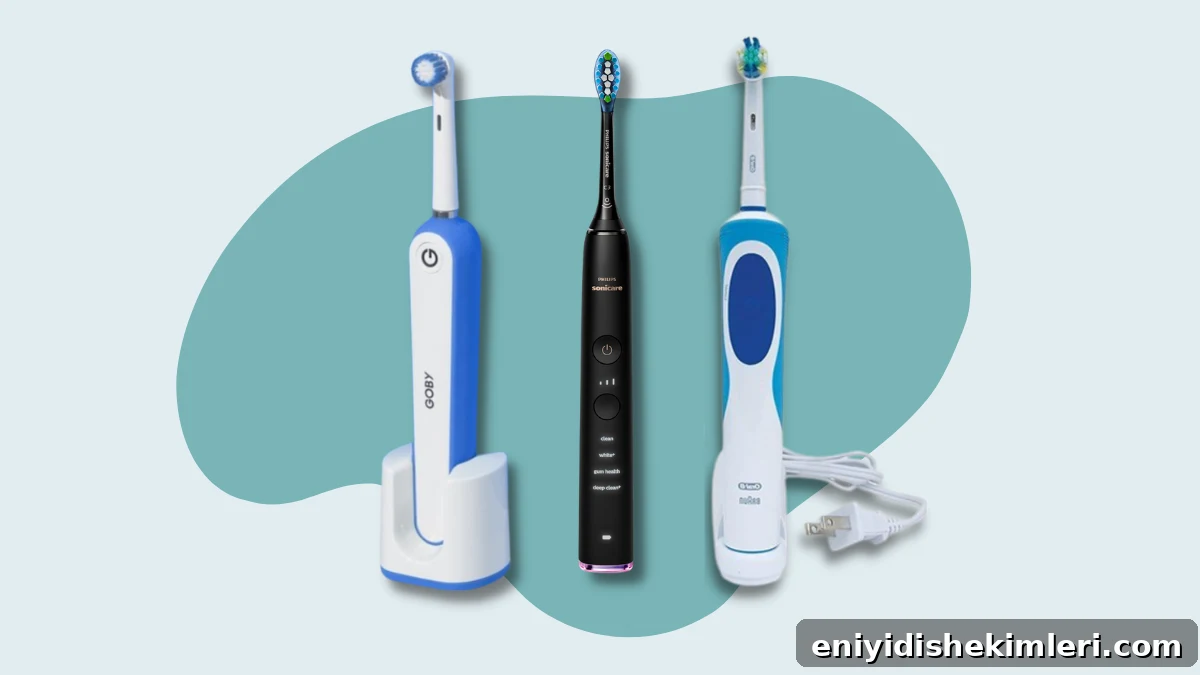
“What toothbrush do you recommend?” is one of the most common questions I get on Instagram and on my podcast. After more than 30 years in private practice and thousands of hours reviewing studies and testing products, I’ve narrowed my recommendations to a few clear choices that work reliably for most people.
Why trust my picks?
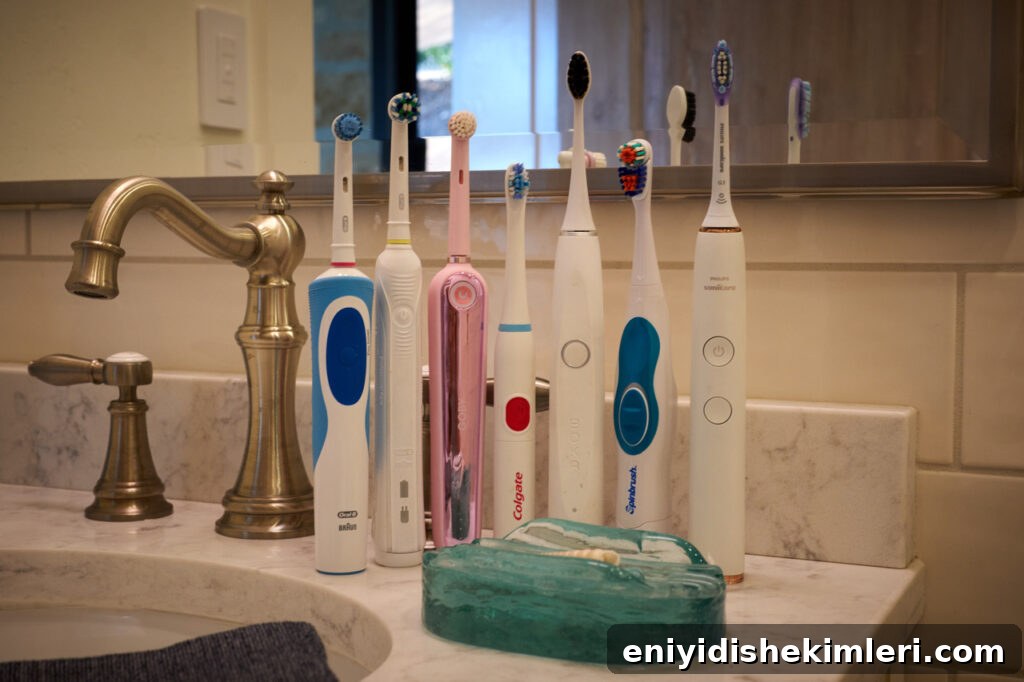
I read the research closely and have spent decades watching how different brushes perform in real mouths. In dental school I earned the nickname “Mr. Consumer Reports” because I love digging into product details. The variety of electric brushes on our bathroom counter is just proof that I test widely to find what actually works.
My two top picks reflect roughly 2,000 hours of research combined with clinical experience treating patients with a wide range of needs. They represent simple, effective options at accessible price points.
My 2 Top Picks
Best for the Under 40 Crowd
The Oral-B Vitality (budget models retail around $30) is an excellent choice for most people under 40. It delivers the same oscillating cleaning action found in higher-end Oral-B models without extra features you may not need. Oscillatory motion is particularly effective at removing surface stains and disrupting the sticky biofilm that forms on teeth, which is often a priority for younger patients focused on whitening.
Best for Age 40+
The Philips Sonicare 1100 (an affordable sonic option) is my recommendation for people age 40 and older, or anyone with gum recession or sensitivity. Sonic vibration can be more effective at agitating debris and bacteria in the exposed spaces that appear with recession, and this simple Sonicare model provides the core sonic motion of pricier versions without unnecessary extras.
Make sure your electric toothbrush has:
Research and dental guidelines point to a few essential features an electric toothbrush should have:
- A sufficiently powerful motor. Avoid cheap battery-powered models with weak motors that can’t move plaque effectively.
- A two-minute timer to ensure adequate brushing time, as recommended by dental professionals.
I also recommend a third essential:
3. Quality bristles. Poor-quality bristles can wear unevenly or become sharp, increasing the risk of sensitivity or enamel abrasion.
Other features—multiple cleaning modes, UV sanitizers, or Bluetooth—are conveniences rather than necessities. They often raise the price without substantially improving cleaning performance.
Do dentists recommend Sonicare or Oral-B?
It depends on the need. For people under 40 who want stain removal and whitening, oscillating-head brushes like the Oral-B Vitality tend to be very effective at breaking up surface stains and the pellicle layer. For those over 40 or with gum recession, sonic brushes such as the Philips Sonicare 1100 may better reduce gingival inflammation and reach food particles and bacteria in spaces exposed by recession.
The difference between Sonicare and Oral-B, in a nutshell:
Oscillatory (Oral-B) brushes are slightly better at removing plaque and surface stains, making teeth look whiter. Sonic (Philips Sonicare) brushes offer an advantage for reducing gingival inflammation and moving fluid into gaps between teeth and gums, similar to the effect of floss. Both styles are supported by systematic reviews comparing powered and manual brushes.
Do You Really Need an Electric Toothbrush?
Not everyone needs one. With excellent technique, a manual toothbrush can clean teeth well. However, many people struggle to consistently use proper technique, miss hard-to-reach spots, or brush too aggressively. An electric toothbrush can compensate for these limitations by providing consistent motion and timing.
Evidence shows powered toothbrushes generally reduce plaque and gingivitis more than manual brushes when used properly. For people who have limited dexterity, persistent plaque despite regular brushing, staining from coffee or tobacco, or a tendency to brush too hard, an electric brush can be a meaningful improvement.
An electric toothbrush can help:
- People who brush twice daily but still have persistent plaque in certain areas
- People with limited hand or wrist mobility who struggle to reach back teeth
- Those with noticeable staining
- People who brush too hard and risk enamel abrasion
The “Nice-to-haves”
Manufacturers market many high-end features—multiple modes, UV lights, or smartphone connectivity—but evidence that these extras improve oral health is limited. The most important factor remains technique: proper brushing frequency, correct motion, and gentle pressure. Even the best electric toothbrush can cause harm if used improperly.
If a particular feature helps you brush better and more consistently, it’s worth considering. Otherwise, focus on the fundamentals.
What to avoid when choosing an electric toothbrush
Avoid cheap knock-off replacement heads sold to mimic brand-name bristles. Low-quality aftermarket bristles can develop sharp, jagged edges that scratch enamel and irritate gums. Use genuine heads from reputable manufacturers and replace heads regularly.
What Makes a Quality Electric Toothbrush
Over decades of clinical practice I’ve observed how brushes perform in the mouth. The primary job of any toothbrush is to remove plaque reliably from all surfaces. A quality electric toothbrush achieves consistent plaque control and leaves the mouth feeling clean.
Consider these factors:
Battery life: Rechargeable brushes should last at least two weeks between charges for typical travel convenience. Replaceable battery models should similarly provide consistent power for weeks at a time.
Head shape and size: A smaller head accesses molars and the back of the mouth more easily. Choose a head shape that matches your mouth’s needs.
Quality of bristles: Good bristles maintain a softer, rounded profile and resist fraying. Replace brush heads at least every three months; monthly replacement may be preferable if bristles show wear.
Type of motion: Sonic or oscillatory motion has different advantages depending on age and gum health. Choose the motion that best addresses your primary concerns—whitening or periodontal sensitivity.
Remember: Over-brushing or aggressive pressure with any brush can damage gums and enamel. Be gentle regardless of the tool you use.
Final Notes on Electric Toothbrushes
Many electric toothbrushes give immediate satisfaction by removing the pellicle and leaving a smooth feeling after the first use. While that sensation is positive, long-term oral health depends on consistent technique, regular head replacement, and gentle brushing habits.
The best electric toothbrush is the one you enjoy using regularly and that supports proper technique. Extravagant features aren’t necessary for effective cleaning, and in some cases may distract from good habits. Whether you need a replacement or are buying your first electric brush, a simple reliable model like the Oral-B Vitality or a basic Sonicare often delivers the best balance of performance and value.
Got more questions about electric toothbrushes? Ask me and I’ll answer on the next episode of my podcast.
References
- Yaacob, M., Worthington, H. V., Deacon, S. A., Deery, C., Walmsley, A. D., Robinson, P. G., & Glenny, A. M. (2014). Powered versus manual toothbrushing for oral health. Cochrane Database of Systematic Reviews, (6).
- Deery, C., Heanue, M., Deacon, S., Robinson, P. G., Walmsley, A. D., Worthington, H., … & Glenny, A. M. (2004). The effectiveness of manual versus powered toothbrushes for dental health: a systematic review. Journal of Dentistry, 32(3), 197-211.
- Carter, K., Landini, G., & Walmsley, A. D. (2007). Influence of compressive and deflective force on powered toothbrush filaments. Quintessence International, 38(5).