Before we dive in — someone on Instagram left a comment this week that stuck with me:
“One of the only newsletters I actually read.”

I know inboxes are overflowing, so the fact you open and read this means a lot. Thank you for being here.
Now let’s talk about something likely happening in your body right now.
It’s late March. Trees are blooming. Your eyes itch.
Medication-induced dry mouth is one of the most overlooked problems in dentistry and medicine.
Millions of Americans reached for an antihistamine this morning without a second thought.
Claritin. Zyrtec. Allegra. Benadryl at night. A generic from the drugstore. You take a pill, your sinuses calm, and you carry on. But over time many people build tolerance, increase doses or switch products, chasing relief rather than addressing root causes.
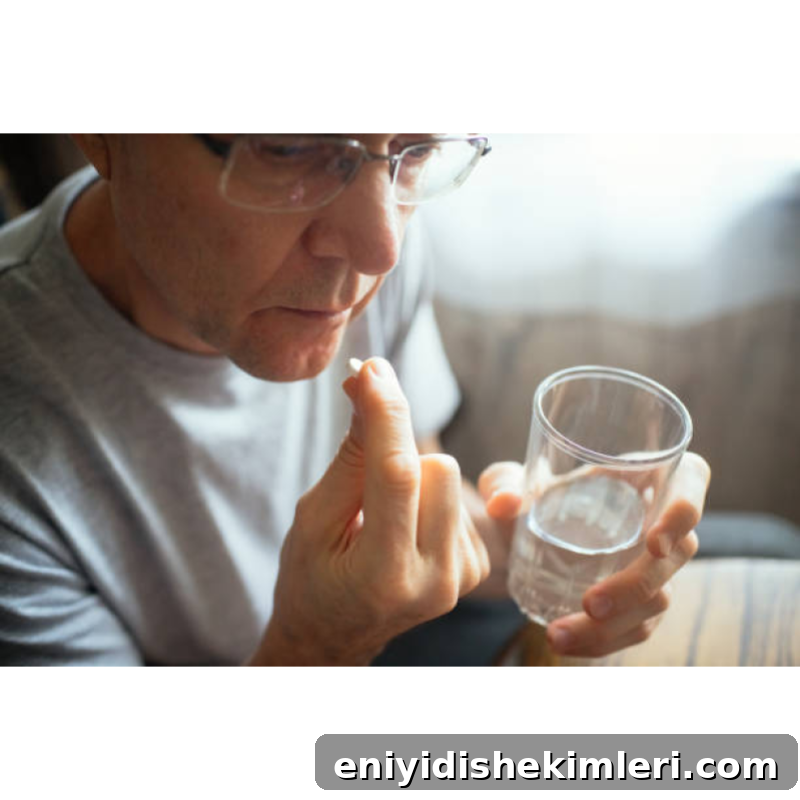
Here’s what too few clinicians notice: that little pill is quietly damaging your mouth. At the same time, your allergies attack your oral health from a different angle.
Allergists and dentists rarely coordinate on this. I’m most concerned about people taking sedating antihistamines like Benadryl at night. Saliva flow already drops to near zero while you sleep — add an antihistamine and your teeth sit vulnerable for seven or eight hours straight.
The pill problem
Every antihistamine — prescription or over-the-counter — can dry the mouth. That’s serious.
Saliva is your mouth’s defense: it remineralizes enamel, neutralizes acid, flushes bacteria, and keeps the oral ecosystem balanced. When medications suppress saliva, that balance collapses.
How much does saliva drop? Studies have shown reductions in salivary flow of 30–75% with common antihistamines and similar drugs. Others have shown that medications with drying effects reduce absorption of key minerals.
The number that should make you pause: people with medication-induced dry mouth have about 2.9 times the risk of cavities on tooth surfaces and 3.3 times the risk of root cavities. A clinical review summarized the reality bluntly — chronic medication-related dry mouth “often results in rampant caries.”
In a dry mouth, decay accelerates. Skip one cleaning and a tiny spot can progress to the nerve, resulting in a root canal — not because of poor hygiene, but because a pill altered the protective environment inside your mouth.
So you take a pill to breathe better in spring and by summer you’re in a dental chair wondering where cavities came from. I’ve seen it many times: patients who brush, floss, and eat well but still develop decay because nobody asked about their medications.
The allergy problem (even without the pill)
Even if you never take an antihistamine, allergic rhinitis harms oral health through a commonly overlooked mechanism: mouth breathing.
When your nose is congested, you breathe through your mouth. It feels harmless, but it isn’t.
Recent research found that a significantly higher proportion of allergic patients are habitual mouth breathers, and those mouth breathers have markedly more plaque and gum inflammation compared with people without allergies.
Other studies report roughly 20% higher tooth decay rates in people with allergies, with mouth breathing adding another 15% on top of that.
Mouth breathing dries oral tissues, shifts pH toward acidity, and creates conditions that favor pathogenic bacteria while suppressing beneficial species. It’s the same destructive cascade caused by medication-induced dry mouth — just via a different pathway.
If you have seasonal allergies, you can be hit from both sides: congestion drives mouth breathing, and the medication you take dries your mouth further. It’s a double whammy for your teeth.
Here’s what I do instead
I still get seasonal allergies living in Northern California, but before reaching for Claritin I reach for green tea.
This isn’t folk medicine — it’s supported by immunology research.
EGCG, the primary catechin in green tea, is a natural mast cell stabilizer. Mast cells release histamine when they encounter allergens; EGCG reduces that release at the cellular level.
Multiple studies have shown EGCG inhibits mast cell degranulation, blocks calcium influx into those immune cells, and suppresses histamine release. Other research confirmed EGCG inhibits signaling pathways and downregulates the IgE receptor that triggers the allergic cascade.
Crucially, unlike antihistamines, green tea supports oral health while calming allergies. EGCG helps maintain saliva production, supports a healthy oral pH, and selectively inhibits harmful bacteria such as S. mutans without destroying the entire oral microbiome.
So instead of taking a pill that eases symptoms but dries your mouth, you can sip something that addresses the allergic response at its source and simultaneously protects your teeth.
The green tea I drink every day
I’m selective about tea. Tea can be contaminated with pesticides, heavy metals, or mold because leaves are dried rather than washed. I choose products with thorough screening for contaminants and a concentrated EGCG extract to get meaningful amounts without additives or sugar.
I drink it hot in the morning and iced in the afternoon. On high-pollen days I’ll have two or three cups. It’s one of those rare comforts that also provides tangible health benefits.
One more thing — for the long game
If you struggle with allergies, inflammation, or immune reactivity beyond the spring season, consider cellular support year-round. There’s growing research on an odd-chain fatty acid called C15:0 (pentadecanoic acid). Unlike most even-chain saturated fats, C15:0 has been associated with metabolic and immune benefits.
Large pooled analyses have linked higher C15:0 levels with lower type 2 diabetes risk, and research shows gut bacteria can produce this fatty acid from fiber with protective effects on the liver. Mechanistically, C15:0 supports cell membranes, mitochondrial function, and activates receptors that help regulate inflammation and immunity.
I use concentrated C15:0 as a daily supplement for baseline cellular resilience while using green tea during allergy season to calm acute histamine responses.
So if you’re taking antihistamines every spring and wondering why new dental problems keep appearing, now you know why: allergies promote mouth breathing and the medications often dry your mouth. Both processes undermine the environment your teeth need to stay healthy.
Green tea gives you a way to address histamine release without sacrificing oral health, and supporting cellular health year-round can add resilience.
As always — hit reply and tell me how you handle allergy season. I read every email and appreciate every reader.
— Mark

STUDIES CITED & FURTHER READING
Antihistamines, Dry Mouth & Dental Damage:
Wolff A, Zuk-Paz L, Kaplan I. “Salivary gland output, composition and flow rate as related to the use of antihistamines.” International Dental Journal / Gerodontology. 2008;25(1):89-96.
Papas AS, Joshi A, MacDonald SL, et al. “Caries prevalence in xerostomic individuals.” Journal of the Canadian Dental Association. 1993;59(2):171-179.
Christensen CM, Navazesh M, Brightman VJ. “Effects of pharmacologic reductions in salivary flow on taste thresholds in man.” Archives of Oral Biology. 1984;29(1):17-23.
Quilici D, Zech J. “Medication-Induced Xerostomia and Its Implications for Dental Caries.” General Dentistry. 2019;67(6):48-52.
Allergic Rhinitis, Mouth Breathing & Oral Health:
Vitale MC, Defabianis P, Rosti G, et al. “Allergic rhinitis as a risk factor for oral diseases in children: mouth breathing, dental caries and periodontal disease.” Journal of Clinical Pediatric Dentistry. 2023;47(6):74-82.
Bakhshaee M, Ashtiani SJ, Hossainzadeh M, et al. “Allergic rhinitis and dental caries in preschool children.” Dental Research Journal. 2017;14(6):376-381.
Green Tea (EGCG) & Histamine Inhibition:
Li GZ, Chai OH, Lee MS, et al. “Inhibition of phorbol ester-stimulated mast cell activation by epigallocatechin-3-gallate.” Experimental and Molecular Medicine. 2005;37(3):159-164.
Yamashita K, Kumazawa T, Hatano Y, et al. “Epigallocatechin gallate inhibits histamine release from rat basophilic leukemia (RBL-2H3) cells.” Biochemical and Biophysical Research Communications. 2000;274(1):159-165.
Fujimura Y, Tachibana H, Maeda-Yamamoto M, et al. “Antiallergic tea catechin, (-)-epigallocatechin-3-O-(3-O-methyl)-gallate, suppresses FcεRI expression in human basophilic KU812 cells.” Journal of Agricultural and Food Chemistry. 2002;50(20):5714-5718.
C15:0 (Pentadecanoic Acid / fatty15):
Imamura F, Fretts A, Marber M, et al. “Fatty acid biomarkers of dairy fat consumption and incidence of type 2 diabetes: A pooled analysis of prospective cohort studies.” PLoS Medicine. 2018;15(10):e1002670.
Wei M, Huang F, Zhao L, et al. “A dysbiotic gut microbiome in fatty liver disease is associated with altered short-chain and branched-chain amino acid and pentadecanoic acid pathways.” Nature Microbiology. 2023;8(8):1583-1596.
Venn-Watson S, Lumpkin R, Dennis EA. “C15:0, an essential fatty acid, is broadly associated with improved health: A cell-based, preclinical, and human clinical study.” Scientific Reports. 2020;10:8161.
Further reading on Ask the Dentist:
→ What I wish more people knew about green tea + your teeth — a deep dive into EGCG’s effects on the oral microbiome, cavity prevention, and how to drink green tea without damaging enamel.
→ If Alzheimer’s runs in your family, read this — an exploration of the oral-brain connection, green tea’s role, and a nightly routine for neuroprotection.