
Ever dreamed of chipping, cracking, or losing a tooth? You’re not alone — worries about damaged teeth are among the most common unsettling dreams worldwide. In fact, nearly 40% of people surveyed reported experiencing dreams about losing teeth, and when a tooth is actually damaged in real life, it can be genuinely upsetting.
Fortunately, a chipped or cracked tooth is usually treatable. With timely care, appropriate home measures, and professional dental treatments, most damaged teeth can be restored or saved. Read on for practical, clear guidance about causes, signs, immediate steps, treatment options, costs, prevention, and recovery.
How do teeth get chipped?
In my years of clinical experience, teeth can chip in surprisingly common ways. High-impact trauma, accidental falls, sports injuries, or a blow to the face are obvious causes, but more unexpected actions can also damage enamel — for example, biting down on hard candy, chewing ice, grinding teeth, or an enthusiastic greeting from a pet. Even seemingly minor stresses like sudden shivering or repeatedly opening packages with your teeth can lead to a chip or crack.
Tooth enamel is the hardest substance in the body, but it has limits. When an external force exceeds what enamel can tolerate, a chip or crack occurs. Existing tooth decay, weakened enamel, or long-term wear from grinding (bruxism) further increase vulnerability.
In adolescents, falls or sports-related trauma are the leading causes of chipped or fractured teeth.
Symptoms of chipping or cracking
Some symptoms make a cracked or chipped tooth easy to notice, especially when it’s in the front of the mouth. Typical signs include:
- A rough, jagged, or uneven edge felt with the tongue
- An irritated or sore tongue from rubbing against a sharp surface
- Localized gum irritation near the affected tooth
- Pain or discomfort when biting or applying pressure
- Sudden sensitivity to cold or hot foods and drinks
If you experience any of these symptoms, contact your dentist promptly to prevent further damage or infection.
Difference between a chipped and a cracked tooth
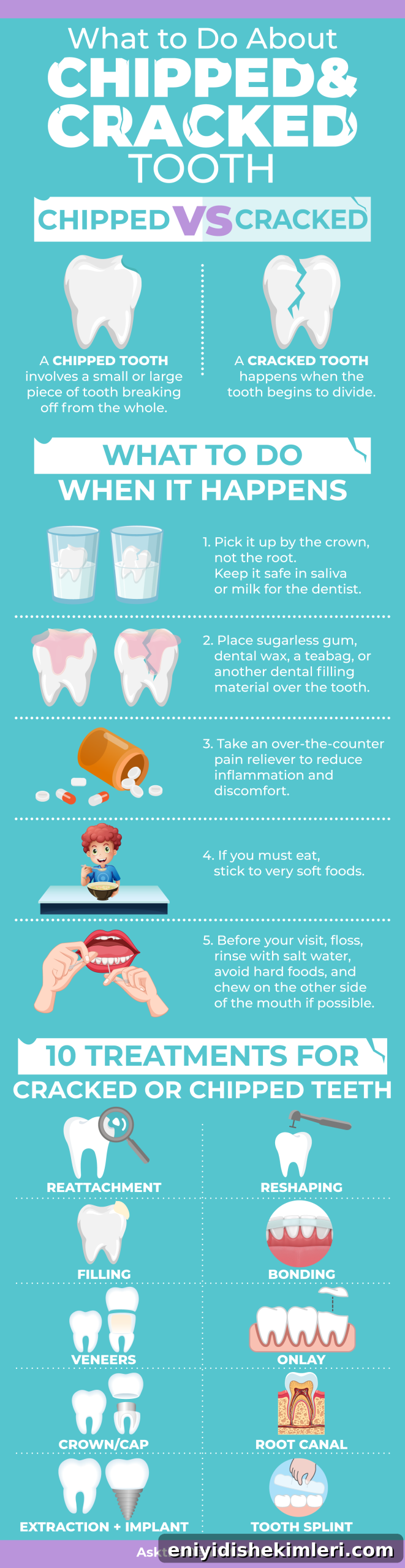
Although people often use the terms interchangeably, a chipped tooth and a cracked tooth are different. A chipped tooth means a fragment of enamel has broken off — sometimes a small piece, sometimes large enough to expose deeper layers of the tooth.
A cracked tooth refers to a fracture that splits part of the tooth structure but doesn’t necessarily remove a fragment. Cracks range from hairline fissures to splits that extend toward the root. Early cracks may not hurt much, but left untreated they can deepen and lead to infection or tooth loss.
What to do when you chip a tooth
If a tooth chips or cracks, act quickly but calmly. Immediate steps can reduce complications and preserve treatment options:
- If you find a broken piece of your tooth, handle it by the crown (not the root) and keep it moist in saliva or milk. Bring it to your dentist.
- Cover sharp edges with sugarless gum, dental wax, or a clean teabag to protect your cheek, tongue, or gums.
- Take an over-the-counter pain reliever if needed to reduce pain and swelling.
- Eat only soft foods and avoid chewing on the affected side.
- For minor chips, you can delay a day or two but maintain good oral hygiene: gently floss, rinse with warm salt water, avoid hard foods, and chew on the opposite side.
Always call your dentist — a chipped or cracked tooth is a dental emergency that deserves prompt evaluation.
Treatment options for a chipped or cracked tooth
The right treatment depends on the size, location, and depth of the damage. Your dentist will examine the tooth and may take x-rays to determine whether the pulp or root is affected. Common treatment options include:
1. Reattachment
When a clean fragment is available and fits well, the dentist may be able to cement it back onto the tooth. This conservative solution is cost-effective and can be durable, though it isn’t always possible.
2. Reshaping
Small chips can often be corrected by smoothing and polishing the tooth surface. This quick, painless procedure typically requires a single visit.
3. Filling
Moderate damage is commonly repaired with a filling material that restores shape and function. This is a routine and generally comfortable procedure.
4. Bonding
Composite resin bonding fills and sculpts the missing area of a tooth. The resin is matched to tooth color, hardened with a curing light, and can last many years with proper care.
5. Veneers
For larger chips on front teeth, a porcelain veneer can restore appearance and function. The tooth is prepared, an impression is taken, and a temporary veneer is used while the permanent one is fabricated.
6. Onlay
Onlays restore larger portions of back teeth and are made in a lab from porcelain or other durable materials. They’re an intermediate solution between fillings and crowns.
7. Crown (cap)
When a substantial portion of a tooth is lost, a crown covers and protects the remaining structure. Crowns restore strength and appearance and are commonly used after root canal therapy.
8. Root canal therapy
If damage reaches the pulp or root, root canal treatment may be necessary to remove infected tissue and save the tooth. A crown usually follows to protect the restored tooth.
9. Extraction and dental implant
If the tooth is beyond repair, extraction followed by an implant is a long-term replacement option that restores function and aesthetics.
10. Tooth splint
For cracked but salvageable teeth, bonding the damaged tooth to adjacent teeth (splinting) can stabilize it while supporting healing of surrounding tissues.
Risk factors that weaken teeth
Back teeth — molars and premolars — are most often affected by chips and cracks, particularly lower second molars. Factors that increase risk include:
- Bruxism (teeth grinding)
- Biting hard foods or objects
- Untreated decay
- Weakened or eroded enamel
- Acid reflux or frequent heartburn
- Poor oral hygiene and gum disease
- Age-related enamel wear (people over 50 are more vulnerable)
- Contact sports, falls, or rough play
Costs of repair
Costs vary by procedure and location. Typical ranges include:
- Reattachments, fillings, and reshaping: usually under $300
- Bonding: roughly $100–$1,000
- Veneers: approximately $500–$2,000
- Root canal plus crown: about $1,000–$3,000
- Extraction with implant: often $2,000–$4,000
Insurance coverage varies by policy and procedure, so check with your provider and dentist about estimates and benefits.
Recovery: what to expect
Recovery depends on the treatment. Repairs like bonding, reshaping, or fillings typically offer immediate return to normal activities. More extensive work — crowns, root canals, extractions, and implants — can cause tenderness and require multiple visits. Follow your dentist’s aftercare instructions and maintain good oral hygiene to support healing.
How to avoid chipping or cracking teeth
To reduce risk:
- Address teeth grinding and treat sleep apnea if present
- Remineralize and strengthen enamel through diet and dental products
- Practice excellent oral hygiene to prevent decay
- Avoid chewing ice, popcorn kernels, hard candy, or using teeth as tools
- Wear a protective mouthguard during sports
- Correct bite alignment with orthodontics if needed
FAQs
Q
Is repair of a chipped or cracked tooth covered by insurance?
A
Insurance often covers at least part of an emergency dental visit, but coverage for specific repairs varies widely. Check your policy and consult your dental office for cost estimates and coverage details.
Q
Is a cracked or chipped tooth a dental emergency?
A
Yes — while usually not life-threatening, a chipped or cracked tooth should be evaluated promptly to limit damage, reduce pain, and expand treatment options.
Q
Why do my teeth keep chipping?
A
Repeated chipping commonly stems from weakened enamel, bruxism (teeth grinding), an uneven bite, or habitual chewing of hard objects. Many of these causes can be treated or prevented, so consult your dentist for diagnosis and a tailored plan.
Key takeaways
A chipped or cracked tooth is alarming but usually manageable. Quick action, preserving any broken fragments, and getting professional dental care are essential. Most damaged teeth can be repaired, from simple reshaping and bonding to crowns, root canals, or implants when necessary. Good prevention — protective mouthguards, avoiding hard items, treating grinding, and maintaining oral health — reduces the chance of future damage.
If you have questions about this topic or need personalized advice, contact your dental professional for an evaluation.