A quiet transformation is underway in dentistry, and it’s already changing how patients are treated and how dentists work.
This article explains why more dental offices are being purchased by private equity–backed organizations, how that shift affects the care you receive, and what practical steps you can take to protect your oral health and your wallet.
Across the country, practices that appear to be independently owned are increasingly being absorbed—often without prominent public notice—by Dental Service Organizations (DSOs), many funded by private equity investors.
From the patient’s perspective the change can be subtle: the sign out front still reads “Family Dentistry,” and the same hygienist may greet you by name. But behind the scenes a meaningful change in priorities can take place, with important implications for care quality, patient trust, and the profession as a whole.
DSOs promote benefits such as standardized processes, economies of scale, and improved outcomes. In practice, however, these organizations are typically controlled by business executives and investors whose primary obligation is financial performance.
When profit becomes the main metric, incentives shift toward higher procedure volume, faster patient turnover, and shorter appointment times—actions that deliver measurable revenue but don’t always align with the best clinical judgment.
You may notice hygiene visits shortened, or stronger recommendations for restorative work—crowns, extractions, or root canals—sometimes offered more aggressively than strictly necessary. The result can be more treatment, not necessarily better care.
Traditionally, dentistry has been a relationship-driven field: dentists built long-term trust with patients, emphasized prevention, and tailored care to each family. Education and prevention were core aspects of each visit rather than afterthoughts.
In the early 2000s, private equity identified an opportunity as many established dentists retired and newer graduates faced heavy student debt. Corporate offers—steady salaries, predictable schedules, and debt relief—became an attractive alternative to starting or buying a private practice.
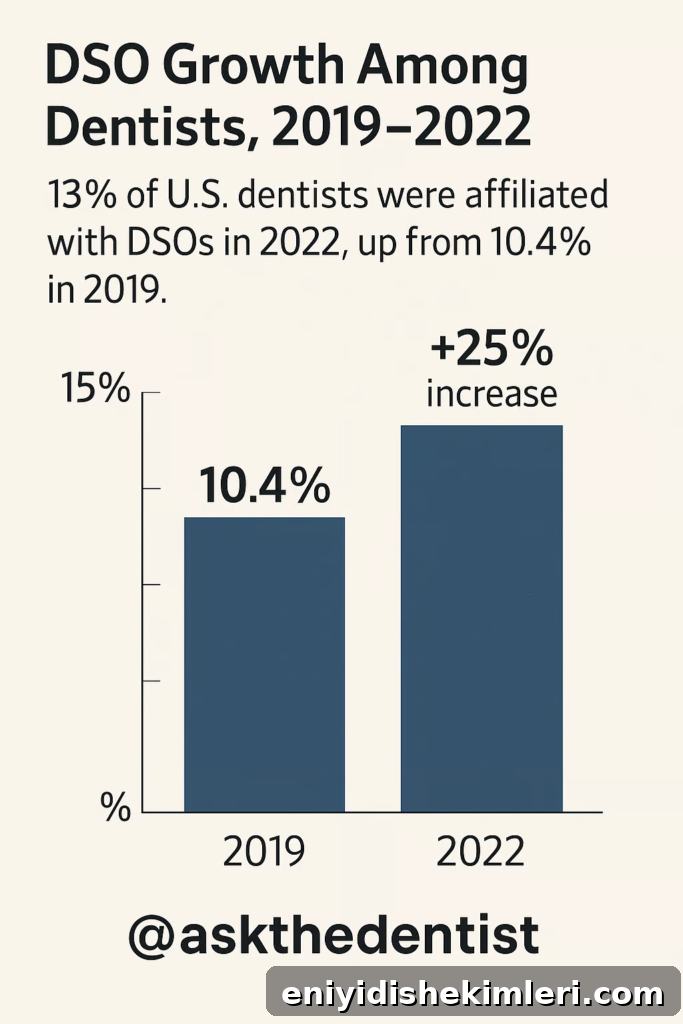
That shift accelerated the growth of DSOs. According to the American Dental Association’s Health Policy Institute, 13% of dentists were affiliated with DSOs in 2022, up from 10.4% in 2019 and 8.8% in 2017. The model is particularly common among early-career dentists: 27% of dentists who graduated within the past five years and 18% who graduated six to ten years ago reported DSO affiliation.
Common issues associated with this model include:
- Overtreatment: increased rates of crowns, extractions, and root canals that may not always be clinically necessary
- Clinician burnout: dentists working under productivity quotas with limited time to challenge directives
- Reduced trust: patients feeling like numbers rather than individuals
- Widening inequity: financially vulnerable communities targeted for revenue-generating services
Dentists who raise concerns about these practices can face pressure, retaliation, or dismissal.
What can you do?
If you’re reading this, you likely already approach your health decisions thoughtfully. It’s important to recognize that when systems are primarily profit-driven, prevention and individualized care can receive less emphasis. DSOs profit from procedures; prevention often reduces the number of billable interventions. That creates a natural misalignment between patient interests and corporate incentives.
While not every DSO operates in the same way, one clear principle applies: you have a right to know who is making clinical and financial decisions about your dental care.
How to protect yourself
- Ask directly: “Are you affiliated with a DSO or corporate group?” A transparent dentist will answer openly.
- Watch for red flags: high staff turnover, frequent pressure for immediate procedures, and very short appointment windows.
- Value relationships: look for practices that emphasize prevention and take time to explain options and risks.
- Support independent practitioners: consider choosing practices focused on long-term health and root-cause care rather than maximizing procedure volume.
This issue extends beyond dental offices. It highlights a broader problem in healthcare: systems that favor short-term financial returns over transparency, professional autonomy, and long-term wellness. Encouraging critical thinking and informed decision-making helps protect patients from incentives that do not align with their best interests.
Informed patients make better choices, and patient advocacy can influence how care is delivered. Asking questions, seeking second opinions when recommended treatments seem urgent or aggressive, and choosing providers who prioritize prevention are practical steps you can take today.

P.S. If you’ve had a positive or negative experience with a DSO, or felt pressured into treatment, sharing your story matters. Reply and tell me about it.