Q
My dog is 8 months old and his teeth get brushed once a day. But do I need to worry about flossing and brushing twice a day to keep his teeth clean? He eats dry dog food every day.
A
Many people wonder how a soft-bristled toothbrush can remove that brown, hardened calculus from a dog’s teeth. The truth is, once tartar has formed it’s difficult to remove at home. The goal of daily brushing is to remove the soft plaque before it mineralizes into hard calculus.
Frequent anesthetic dental cleanings are stressful for your pet and can be costly. Regular at-home brushing can often prevent the need for repeated professional cleanings.
Dogs are widely used as models for human gum disease in research because their oral health issues mirror ours in many ways. Plaque buildup, tartar formation, gum inflammation, and bleeding occur in both species when oral hygiene is neglected.
Canine teeth serve many functions: canines for gripping and puncturing, incisors for grooming and nibbling, premolars for tearing, and molars for crushing. Regardless of their purpose, these teeth benefit from routine care to prevent disease.
If soft plaque is allowed to harden, it becomes tartar that usually requires veterinary intervention under anesthesia to remove. Tartar buildup contributes to periodontal disease, which can shorten a dog’s quality and length of life.
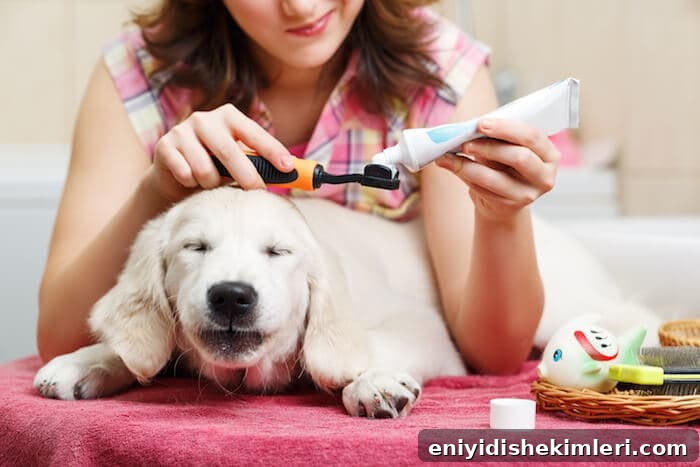
An electric toothbrush (for example, an oscillating model) is often more effective and faster than a manual brush. Use a toothpaste formulated for dogs with an appealing flavor to make the process easier and more pleasant for your pet.
Flossing between a dog’s teeth is not always necessary for cavity prevention, but it can help remove plaque below the gumline. Starting oral care when the animal is a puppy makes training simpler, but older dogs can learn to accept brushing and related care with patience and tasty rewards.
Dry kibble tends to be better for dental health than canned food. Diet plays a role in oral hygiene; limiting refined carbohydrates, wheat, sugary treats, and human junk food helps reduce plaque-promoting residues on teeth.
The same principles promoted by dentists and hygienists for human oral health generally apply to dogs. Regular brushing, appropriate diet, and periodic veterinary dental checks support a dog’s overall health. Owners who commit to daily brushing often appreciate the connection between oral care and general well-being for both themselves and their pets.
So to sum things up…
Brush your dog’s teeth daily with an electric toothbrush.
If daily brushing isn’t feasible, or your dog won’t tolerate it, make sure your dog receives professional dental cleanings at the veterinarian on a schedule recommended by your vet.
Use toothpaste made for dogs without fluoride.
Replace the toothbrush head every three months.
Floss and tongue-scrape if you are able to do so safely.
Avoid refined carbs, wheat products, sugary treats, and human junk food.
Prefer dry kibble as part of a balanced diet.
Sanitize your dog’s toothbrush as you would your own, and do not share brushes between human and pet.
Mark Burhenne DDS
Learn More:Afraid of the Dentist? You’ll Love This Natural (and Adorable) Solution