
If your teeth or jaw are misaligned, orthodontic treatment can correct your bite and improve oral health and appearance. Whether through traditional braces, clear aligners like Invisalign, or oral appliances such as mouthguards, orthodontic devices align teeth and help maintain their position.
Orthodontics is a specialized branch of dentistry that requires extra training beyond general dental school. When appropriate, a well-planned orthodontic course can improve function, reduce pain, and boost your confidence by creating a healthier, more attractive smile.
What treatments does an orthodontist offer?
This article outlines common orthodontic treatments, how to care for appliances, tips for choosing an orthodontist, and when to begin care.
Why You Need Orthodontic Care and When to Start
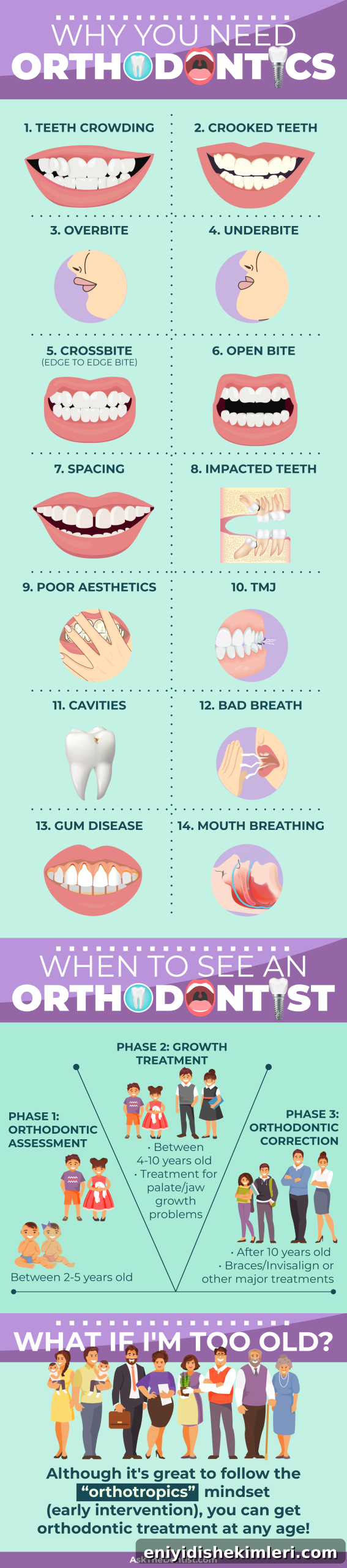
Orthodontic care is not only for children; many adults benefit as well. Dentists and orthodontists look for several signs that indicate the need for treatment:
- Teeth crowding: When there isn’t enough room on the dental ridge for all teeth to fit properly.
- Crooked or rotated teeth: Teeth that are tilted, turned, or not aligned with the arch.
- Overbite: Upper teeth protrude over the lower teeth (often called “buck teeth”).
- Underbite: Lower teeth extend beyond the upper teeth (sometimes called “prognathism”).
- Crossbite: Upper teeth do not sit slightly in front of lower teeth when biting edge to edge.
- Open bite: Back teeth meet while front or side teeth leave gaps when the mouth closes.
- Spacing: Excessive gaps between teeth in adults, or loss of space when baby teeth are lost too early for children.
- Impacted teeth: Teeth that don’t fully erupt from the bone.
- Poor aesthetics: Irregular tooth positions that affect self-esteem.
- TMJ problems: Improper bite relationships that can cause chronic jaw pain and TMD.
- Higher risk of decay and gum disease: Crowded or misaligned teeth are harder to clean, increasing risk of cavities, bad breath, and periodontal disease.
- Mouth breathing and airway issues: A misaligned bite can reduce airway size, contributing to mouth breathing and related problems.
These conditions occur in both children and adults. Early evaluation and intervention often simplify treatment and improve outcomes.
When Should You First See an Orthodontist?
Ideally, children receive an orthodontic assessment between ages 2 and 5 to identify growth-related problems early. Early treatment focuses on guiding jaw and palate development to create adequate space for permanent teeth.
Between ages 4 and 10, growth can be monitored and corrected when necessary. Early correction of growth issues can reduce or eliminate the need for later comprehensive treatments like braces or aligners. After age 10, minor corrections can often be addressed with shorter courses of clear aligners.
This early approach is commonly referred to as Phase 1 and Phase 2 treatment. The sooner growth issues are identified, the less complex and costly later treatment is likely to be.
Orthotropics is an early-intervention philosophy that emphasizes correcting jaw and facial growth without extractions. When applied appropriately, orthotropic methods can support proper facial development and reduce the need for extensive orthodontics later.
It’s never too late to seek orthodontic care. Adults can benefit from modern options that address alignment and bite problems with effective results.
Benefits of Orthodontic Treatment
Straightening teeth provides more than cosmetic benefits. Key advantages include:
- Improved self-confidence from a healthy smile
- Easier oral hygiene, simplifying brushing and flossing
- Clearer speech in some cases
- Reduced jaw pain and TMJ symptoms
- Lower risk of sleep-related bruxism
- Decreased risk of tooth decay, halitosis, and gum disease
Common Orthodontic Treatment Options
Although braces are commonly associated with orthodontics, many different appliances and approaches exist. Below are mainstream options and what they do.
1. Clear Aligners (Invisalign and similar)
Clear aligners are removable, nearly invisible appliances that move teeth gradually using a series of custom-made trays. Digital scans map the planned tooth movements and each aligner advances the teeth slightly toward the final position.
Pros of clear aligners:
- Removable for eating and cleaning
- More aesthetic and discreet than metal braces
- Less likelihood of white spot lesions when compliance is good
- Typically cause less soft-tissue irritation and discomfort
- Capable of treating many cases that previously required braces
Some aligner systems require dental oversight and can be costly. Direct-to-consumer options are less expensive but may not be appropriate for cases needing interproximal reduction (IPR) or attachments to rotate severely tipped teeth. A dental exam and cleaning before starting aligners is essential.
2. Metal Braces
Metal braces use brackets and wires to move teeth and remain fixed in the mouth throughout treatment. They are effective for large, complex movements and space closure after extractions. Metal braces are still widely used but have downsides such as increased plaque buildup difficulty, soft-tissue irritation, and potential for white spot lesions after removal. In many cases, clear aligners are preferred when feasible.
3. Retainers
Retainers maintain tooth position after active treatment. Teeth tend to revert toward their original positions, so retainers are critical to preserving results. The first year after treatment usually requires near full-time wear, then nightly wear thereafter. Options include removable retainers and fixed (bonded) retainers attached to the back of teeth.
4. Headgear
Headgear or a face bow is a removable device that helps control upper jaw growth and prevent severe overbites by restricting forward movement of the upper teeth while allowing the lower jaw to grow.
5. Space Maintainers
When baby teeth are lost prematurely, space maintainers keep the gap open so permanent teeth can erupt in the correct position. They can be fixed or removable and prevent future crowding.
6. Expanders
Palatal expanders widen the upper jaw when the palate is too narrow. Most expansion is done in children and teens; adult expansion may require surgical assistance. Expanders prevent future crowding and can improve airway space, though they may cause temporary discomfort and speech changes.
7. Lip and Cheek Bumpers
These devices reduce pressure from the lips and cheeks on the teeth and can help preserve space and shape the dental arch, especially while baby teeth are still present.
8. Archwires
Archwires, used with braces, follow the shape of the dental arch and guide tooth movement. Discuss materials with your orthodontist, including coatings and biocompatibility, to address any concerns you may have.
9. Mouthguards
Custom-fitted mouthguards protect teeth during sports and reduce the risk of dental trauma. They also can help limit clenching during physical exertion, potentially reducing TMJ strain.
10. Special Fixed Appliances
Fixed appliances can discourage harmful habits like thumb sucking or tongue thrusting in young children. While sometimes uncomfortable, they can prevent more extensive orthodontic problems later.
11. Oral Splints
Oral splints can help relieve TMJ pain by repositioning the jaw and reducing muscle strain. These devices resemble night guards but are designed to correct jaw relationships.
12. Sleep Apnea Oral Devices
Custom mandibular advancement devices (MADs), tongue-retaining devices, and night guards support airway patency in sleep apnea. They are often used alongside CPAP therapy when needed.
13. Serial Extraction
In severe early crowding, sequential removal of primary teeth can create space for proper eruption of permanent teeth. Serial extraction is a specialized approach with advantages and limitations and is best considered early in growth.
14. Orthognathic Surgery
For major jaw discrepancies or when growth is complete and orthodontics alone cannot correct the problem, orthognathic surgery performed by an oral and maxillofacial surgeon may be required. Surgery is followed by additional orthodontic treatment to finalize alignment.
How to Choose an Orthodontist
Selecting an orthodontist involves practical and professional considerations: their training, office hours, insurance and financing options, proximity to home, and whether the specialist or assistants will supervise your treatment. For complex cases, a board-certified orthodontist’s extra training is valuable. Seek recommendations, read reviews, and choose a provider who listens and explains treatment options clearly.
Oral Hygiene During Orthodontic Treatment
Good oral hygiene is essential during orthodontic treatment to minimize decay and gum disease. Best practices include:
- Avoid or limit sugary and starchy foods that promote decay.
- Eat nutrient-dense foods that support tooth and gum health.
- Brush in the morning, before bed, and 30–45 minutes after decay-promoting meals.
- Floss daily, making time to clean thoroughly around appliances.
- Avoid abrasive whitening toothpastes while appliances are in place.
- Use remineralizing toothpaste when appropriate and recommended by your dentist.
- Avoid alcohol-based mouthwashes that can dry the mouth and encourage bacterial overgrowth.
Caring for Orthodontic Appliances
Proper care protects both your appliances and your oral health. Tips for removable devices:
- Keep appliances moist when not in use to avoid warping.
- Avoid brushing plastic appliances with abrasive toothpaste to prevent microabrasions that harbor bacteria.
- Skip denture cleansers containing harsh persulfates; they can irritate oral tissues.
- Soak appliances in baking soda solution for routine cleaning and use a short vinegar soak once weekly for deeper cleaning, then rinse thoroughly.
- Consult your dentist or orthodontist for professional cleaning if buildup persists.
Brief History of Orthodontics
Attempts at straightening teeth date back to ancient civilizations. Modern orthodontics began to formalize in the late 19th and early 20th centuries, evolving from tooth-by-tooth straightening to a focus on jaw and facial growth. Today’s orthodontic methods reflect decades of scientific progress and clinical refinement.
Frequently Asked Questions
Q
When are you too old for braces?
A
There’s no strict age limit. Many adults undergo orthodontic care, though treatment may take longer and certain skeletal changes might require surgery. A dentist or orthodontist can evaluate your situation and recommend appropriate options.
Q
What’s the difference between an orthodontist and a dentist?
A
Orthodontists are dentists who complete an additional two to three years of specialty training focused on tooth movement and jaw alignment. General dentists provide broad dental care but typically refer complex alignment cases to orthodontists.
Q
Are metal braces better than clear aligners?
A
Both have advantages. Metal braces are effective for aggressive tooth movements and space closure, while clear aligners are preferred in many cases for comfort, aesthetics, and hygiene. Your provider will recommend the best option for your needs.
Q
How can I reduce my child’s need for orthodontics?
A
Early preventive steps can support proper jaw and dental development: good prenatal and childhood nutrition, limiting prolonged pacifier and sippy cup use, encouraging breastfeeding when possible, introducing chewable foods at the right age, and addressing tongue ties or harmful oral habits early.
Q
How long does orthodontic treatment take?
A
Treatment length varies by case and method but commonly ranges from one to five years. Age, severity of the problem, and the chosen appliance affect duration.
Q
Do I still need follow-up after braces?
A
Yes. Your orthodontist will provide a retainer and monitor your transition off active treatment. After the initial follow-ups, routine dental checkups and cleanings help maintain a healthy, stable result.