Teeth Yellowing Question: What are some things I can do to prevent needing to whiten my teeth? Answer: You may know how to whiten teeth, but what if you could prevent the need for whitening altogether?
By slowing premature aging of your teeth, you can maintain a naturally bright smile for years to come.
This article explains why teeth yellow (it’s not only surface staining) and outlines practical steps to reduce irreversible yellowing.
What Causes Teeth to Yellow?
When people say that wine, coffee, and tobacco stain teeth, they are usually referring to the outer, non-living layer of the tooth: the enamel.
The enamel can often be lightened with whitening products and treatments because it is the outermost, crystalline surface that reflects light.
More challenging to address is the inner portion of the tooth. Beneath the enamel is dentin — living tissue that naturally changes with age. Dentin becomes darker and more yellow over time, and that color shows through the translucent enamel.
Because dentin is living tissue, it ages the way skin and other body tissues do. When it ages, its natural color deepens. This internal change is difficult, and sometimes impossible, to reverse with current dental procedures — there is no “facelift” for dentin.
Enamel acts like a clear window; whatever color the dentin becomes will influence the overall tooth shade. While enamel stains can often be removed or lightened, changes within the dentin are largely permanent, so the best approach is prevention.
How Do Teeth Age Prematurely?
Many people assume teeth yellow simply because of repeated exposure to staining foods and drinks over time. That belief overlooks the primary role of dentin in tooth color.
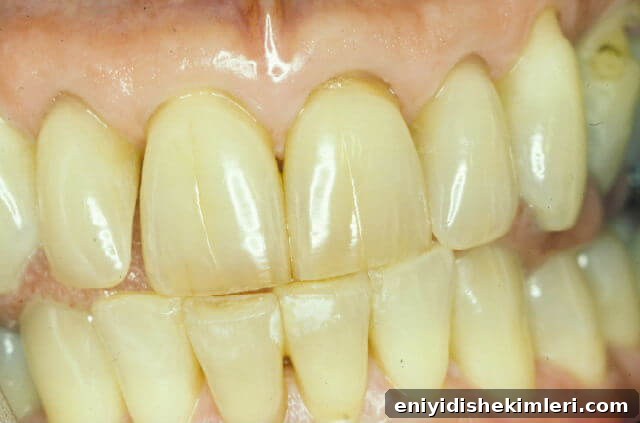
It is the dentin — the inner, living tissue — that ages and becomes more yellow, and this discoloration is transmitted through the enamel.
Think of skin aging from lack of sun protection: teeth can also age prematurely due to specific stresses and conditions.
- Grinding (bruxism): Clenching and grinding apply intense vertical forces to teeth. Nighttime grinders can exert hundreds of pounds of pressure per square inch — enough to damage tooth structure. This mechanical stress accelerates the shrinkage and aging of the tooth’s living tissues and can ultimately lead to discoloration or even tooth death.
- Trauma: A single tooth that is forcefully impacted in childhood or later can age faster than its neighbors and become noticeably darker. A tooth that has experienced severe trauma often yellows more quickly because the internal tissues are compromised.
- Poor nutrition and systemic health: General health affects all living tissues, including dentin. Malnutrition, chronic illness, or certain medications can accelerate aging processes in the body and in teeth, leading to a deeper, more yellow dentin color.
How to Slow Down the Aging Process (and Yellowing) of Your Teeth
- Treat bruxism. Address grinding and clenching with a dental evaluation and appropriate therapies, such as a nightguard or stress-management techniques. Reducing mechanical stress on teeth slows structural wear and aging.
- Protect teeth from trauma. Wear a properly fitted mouthguard for sports and be mindful in crowded or active situations to reduce the risk of knocks or falls that can prematurely damage a tooth.
- Support overall health. Balanced nutrition, adequate restorative sleep, and effective stress management promote the health of all living tissues, including dentin. Addressing systemic health factors can help slow age-related changes in tooth color.
While surface stains from berries, tea, coffee, tobacco, and dark sauces are common concerns, they are often easier to treat than intrinsic yellowing. Conservative whitening or professional cleaning can usually address external discoloration.
For long-term tooth color preservation, the priority should be maintaining the internal health of the tooth to slow dentin aging. Preventing premature wear, trauma, and systemic decline will do more for preserving a natural, white smile than obsessing over every potential surface stain.
Enjoy foods and beverages you like in moderation — many surface stains are reversible. Focus on preventing the irreversible changes inside the tooth.
Slow the aging of your teeth and reduce the chance they’ll yellow prematurely.
Mark Burhenne DDS
Learn More:Teeth Whitening: What to Know Before You Go