
You likely already check your cholesterol and blood pressure—these numbers help predict your current and future health. But there’s another vital measure you should monitor throughout life that is often overlooked.
Sleep: Innate But Not Guaranteed
Sleep influences nearly every aspect of health. When we lose sleep, the effects show up quickly: lower energy, mood changes, and disrupted hormone balance. Over time, chronic poor sleep accelerates aging and raises the risk of multiple diseases.
We instinctively crave sleep, yet we rarely instinctively check whether our sleep is actually restorative. Interrupted breathing during sleep undermines deep rest and can affect mood, cognition, immune function, and long-term health.
Even a single night of fragmented sleep can wreak havoc on how you feel the next day. Years of repeated interruptions compound those effects and reduce resilience to illness.
Think about human anatomy: we are one of the few species that can choke because our airway bends as a result of evolving to walk upright. The airway begins at the nose and mouth and continues down behind the throat to the lungs. That bend makes the passage smaller and more vulnerable to obstruction.
Imagine your airway as a straw that’s bent 90 degrees. At the bend the internal space narrows. During the day, neck and throat muscles are tense enough to hold that airway open. The tongue is pulled forward, and air moves freely from the nose and mouth, past the tongue, and down into the lungs.
At night, especially in deep sleep, those same muscles relax. The tongue can fall back toward the throat and the airway narrows further. If it narrows enough, airflow is reduced or blocked and breathing is interrupted. When this happens, your brain briefly rouses you enough to tighten the muscles and reopen the airway—often without your memory of it.
Why Everyone Needs to Know Their Sleep Ability
You can’t function at your best without good sleep. Many people are operating at far less than their potential simply because they never assessed their sleep ability. Because of human anatomy, everyone is susceptible to compromised airways during sleep—no one is immune.
How to Find Out Your Sleep Ability
Use this simple CAR approach to evaluate your sleep ability:
Consider: Up to 90% of people with sleep-related breathing interruptions aren’t aware of the problem. Even if you feel fine, consider whether your airway and sleep ability could be compromised. Awareness is the first step toward better sleep health.
Assess: You need an observer—either a partner, family member, or a smartphone app—to notice interruptions you can’t detect while unconscious. Ask someone to watch or record you about an hour after falling asleep for ten minutes. Key signs to note: unusual noises, teeth grinding, snoring, irregular breathing, or frequent tossing and turning. Any of these may indicate sleep fragmentation. There are apps and simple devices that can record breathing interruptions during sleep if you don’t have someone to observe you.
Referral: If you suspect your breathing is interrupted during sleep, see a sleep specialist. Your dentist can often recognize signs like teeth grinding and refer you for further evaluation. Discuss your concerns with your doctor and request a sleep assessment if indicated.
Good sleep is foundational to long-term health and wellbeing. Discovering and addressing issues with your sleep ability can significantly improve energy, mood, and overall quality of life—and in some cases, it can be life-saving.
Mark Burhenne DDS
Want to learn more? Check out my #1 Amazon bestselling book, The 8-Hour Sleep Paradox.
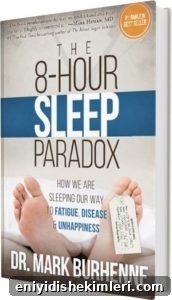 This book offers practical guidance to improve sleep quality so you can wake up refreshed and ready each day.
The program in the book guides you through simple steps to help you:
- Achieve a healthier weight by normalizing appetite and metabolism
- Slow signs of aging tied to poor sleep
- Wake up feeling rested and ready for the day
- Improve energy, focus, and mental clarity
- Eliminate daytime drowsiness and brain fog
Improving sleep ability is a powerful and practical way to boost health and performance in daily life.