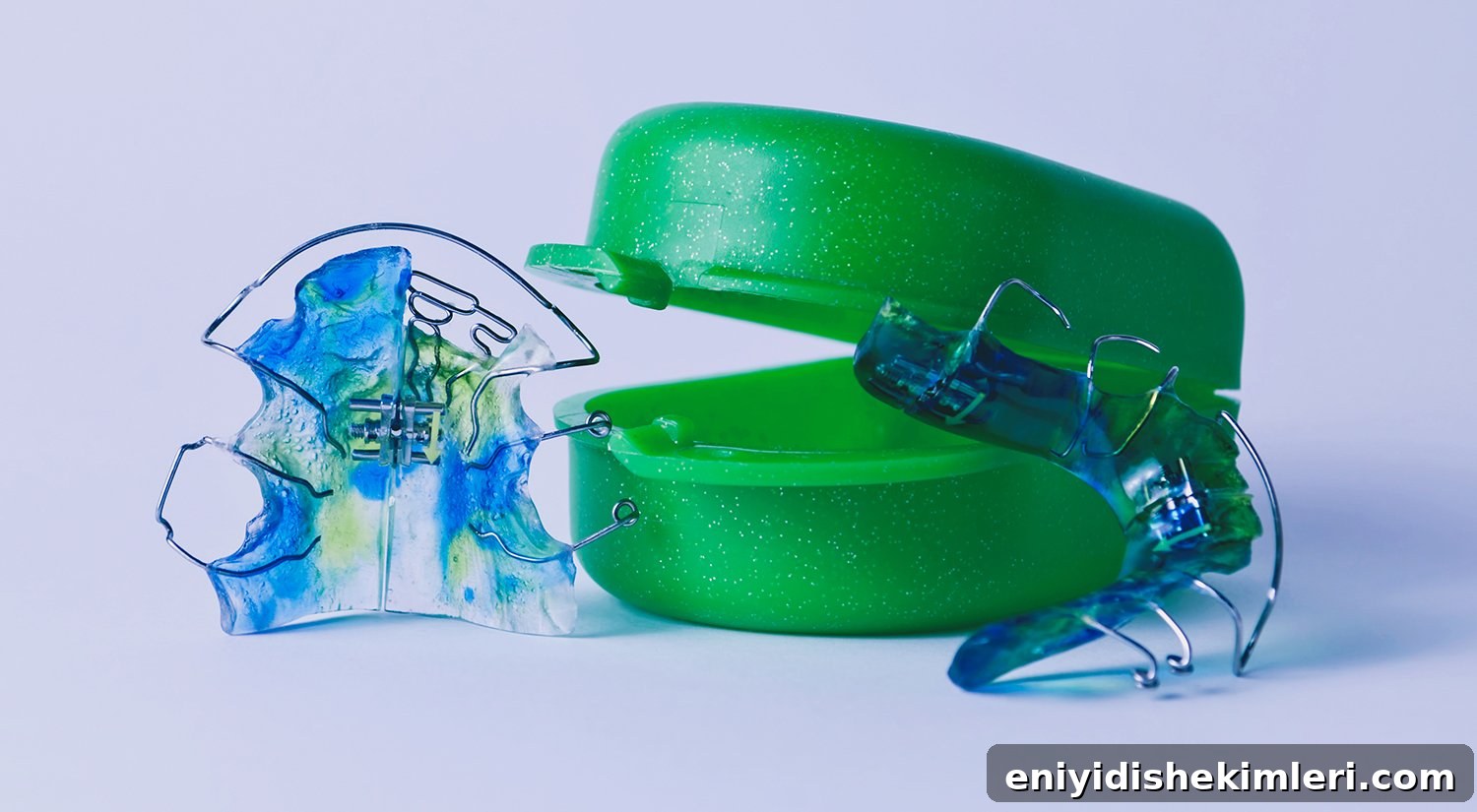
A retainer is an orthodontic appliance custom-made to fit your teeth. It holds teeth in their new positions after braces or helps make minor adjustments when braces aren’t necessary. Retainers are commonly made from metal wires or clear plastic materials.
Orthodontic retainers serve two main purposes:
- Passive retainer: To maintain the new position of your teeth after braces.
- Active retainer: To correct small orthodontic issues that don’t require braces.
If a retainer is prescribed, many patients will need to wear it long term, often nightly, to prevent teeth from shifting. The cost of retainers is frequently included with braces or Invisalign treatment, but standalone prices range roughly from $150 to $1,000 depending on the type and whether one or both arches are treated.
Most passive retainers should be worn overnight for many years after orthodontic treatment to preserve alignment and minimize relapse.
Types of Retainers
There are three primary types of retainers:
- Removable clear plastic retainers (brands include Invisalign, Vivera, Essix, Zendura)
- Removable Hawley retainers (metal wire with acrylic or plastic base)
- Permanent (fixed or lingual) retainers — metal wires bonded to the teeth
Clinicians prescribe either passive retainers to maintain tooth position after braces or active retainers to make small corrections. Fixed retainers are popular because they can’t be forgotten or lost, but they can trap plaque and make oral hygiene more challenging. Orthodontists often recommend fixed retainers, especially for lower front teeth and for younger patients, though they are used across age groups. It’s common to have a removable retainer on the upper arch and a fixed retainer on the lower arch.
Retainer Comparison Chart
The following comparison summarizes common retainer types by material, cost, lifespan, advantages, and disadvantages.
| Type of Retainer | Material | Cost | Expected Lifetime | Pros | Cons |
|---|---|---|---|---|---|
| Permanent retainers (wired, bonded, fixed) |
Metal wire bonded to teeth | Up to $500 per arch | Potentially permanent with good care | – No need to remember nightly wear – Not visible during speech – Hard to lose or misplace – Durable |
– Flossing is more difficult – Can accumulate plaque/tartar – May irritate the tongue – Not a guaranteed prevention of all movement |
| Removable clear plastic retainers (Invisalign, Essix, Zendura) |
Polyurethane or similar clear plastic | $400–800 for both arches | About 1–2 years | – Precise fit to bite – Nearly invisible in speech – Easy to remove for hygiene and meals – Comfortable and replaceable |
– Shorter lifespan – Require new impressions after major dental work – Can increase salivation initially – Easy to lose or damage |
| Removable Hawley retainers | Metal wire with acrylic or plastic base | $150–600 for both arches | Many years—up to 20 with care | – Easy to adjust – Customizable colors and designs – Durable and economical – Simple removal for hygiene |
– Visible metal components – Can irritate soft tissues – Can be lost or damaged |
Fitting Your New Retainer
When a retainer is prescribed, your dentist or orthodontist will take an impression of your teeth using alginate or another impression material to create a custom-fit appliance. The fitting process is typically quick and should not be painful.
Adjusting to a New Retainer
Adjustment varies by person. Expect some temporary changes to speech, especially with Hawley retainers, which may cause a slight lisp initially. Practicing by reading aloud for 10–20 minutes daily helps speed adaptation. Removable retainers can increase saliva production at first, but this usually subsides with time.
Q
Why does my retainer hurt my teeth?
A
Discomfort is often due to ligaments and tissues adjusting as teeth settle into or maintain their new positions. Active retainers that move teeth can cause soreness similar to orthodontic adjustments. Mild soreness after wearing a retainer, especially after sleeping, is normal. However, sharp or acute pain may indicate a poor fit or other problem—contact your orthodontist if that occurs.
How many hours per day should you wear your retainer?
General guidance is to wear the retainer about 22 hours per day for the first 9–12 months, then transition to wearing it nightly during sleep. Your orthodontist or dentist will give specific instructions tailored to your case; always follow their recommendations.
How long after braces do you need to wear your retainer?
Many clinicians recommend nightly retainer use for life to protect your results. Some people stop and experience no noticeable change, while others see shifting years later. Because it’s difficult to predict who will relapse, lifelong nighttime wear is the safest approach. Continuing retainer use also provides added protection during sports or activities and supports long-term oral health by helping maintain an optimal bite.
What Happens If You Stop Wearing Your Retainer
If you stop wearing your retainer, teeth can gradually shift back toward their original positions. This tendency, called mesial drift, and the “memory” in periodontal ligaments that were stretched during treatment, make relapse possible. The earlier you stop, the higher the chance of noticeable relapse; over time the risk may decrease but never disappears entirely. If relapse occurs, additional orthodontic treatment may be needed.
How to Clean Your Retainer
Cleaning recommendations for removable retainers:
- When not wearing it, keep the retainer in distilled water with a little baking soda to help prevent odor and bacterial growth.
- Store the retainer in a stainless steel container rather than plastic; stainless steel is less likely to harbor bacteria.
- Soak the retainer once a week in a white vinegar solution for about 15 minutes to reduce buildup.
- If stains or deposits persist, consider using an ultrasonic cleaner at home or asking your dentist for professional cleaning.
- Avoid persulfate-containing cleansers if you have sensitivities or allergies.
- Do not use mouthwash, toothpaste, or a hard toothbrush on clear plastic retainers; these can scratch, dry, or damage the material and create places for bacteria to hide.
Cleaning recommendations for fixed retainers:
- Maintain good daily oral hygiene by brushing at least twice a day.
- Use a floss threader to floss under and around bonded wires at least once daily.
- Brush the area around the fixed retainer vertically and horizontally to remove plaque from around the wires.
How much do retainers cost?
Costs vary by type: Hawley retainers typically range from $150–600. Clear replacement retainers generally cost $400–800 for both arches. Permanent retainers often cost $150–500 to place or replace. The initial retainer is commonly included in the overall price of orthodontic treatment. Replacement retainers are frequently an out-of-pocket expense and may not be covered by dental insurance, though coverage policies vary.
Final Thoughts
Retainers are essential for maintaining orthodontic results and can also correct small tooth movements. The three main types—clear removable, Hawley, and fixed—each have advantages and trade-offs related to visibility, durability, hygiene, and cost. For the first 9–12 months after starting retainer wear, full-time wear is usually recommended, followed by nightly wear indefinitely. Proper care and cleaning extend the life of your retainer and help protect your oral health. If you experience persistent pain, poor fit, or difficulty cleaning a retainer, consult your orthodontist or dentist for guidance.
References
- Survey and research on retention protocols and orthodontic outcomes.
- Studies evaluating retention practices and periodontal health after orthodontic treatment.