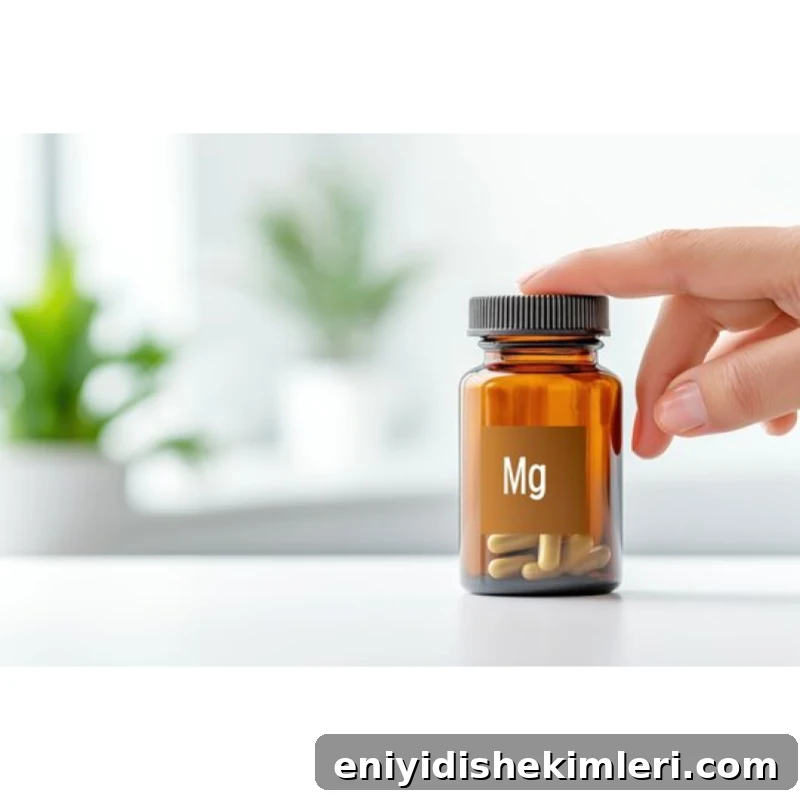
I’m going to tell you something most dentists won’t.
For four decades I watched patients do everything right — brush twice a day, floss, cut sugar — and still lose enamel, grind their teeth at night, wake up exhausted, and return with more sensitivity, recession, and damage.
In many cases, the issue wasn’t their toothbrush or floss. It was a mineral deficiency that almost nobody tests for and that NHANES data suggest nearly half of American adults may have right now: magnesium.
You’ve likely heard of magnesium, and you may already supplement it. But what follows changed how I practice dentistry and may change how you think about your teeth, sleep, and brain.
Your teeth may not be able to repair themselves without it. Magnesium is a component of tooth enamel. A 2016 study in Acta Biomaterialia found that magnesium ions interact with enamel through dissolution and re-precipitation, restructuring the crystal lattice at the surface and producing harder, more resilient teeth. A follow-up study in 2020 confirmed about a 20% increase in nanohardness.
When magnesium is low, saliva loses the ability to redeposit calcium and phosphate into enamel. That remineralization process is how teeth repair tiny cracks and daily wear. Without sufficient magnesium, that repair mechanism slows or stalls. Even exemplary oral hygiene won’t stop enamel from deteriorating if the body can’t remineralize effectively.
Your body has a built-in tooth repair system — and many people may have unintentionally switched it off.
Your brain may shrink more quickly without enough magnesium. A 2023 study in the European Journal of Nutrition tracked over 6,000 adults aged 40–73, comparing magnesium intake with brain volume on MRI. People with higher magnesium intake had brains that appeared about one year younger by age 55, with larger total volume, fewer white matter lesions, and better-preserved regions for learning and memory.
One year younger, from a mineral that costs pennies a day.
Women showed greater neuroprotective benefits in that study. Estrogen helps regulate magnesium retention, so during perimenopause and menopause magnesium levels can drop. Magnesium is also necessary for the body to utilize vitamin D, so supplementing vitamin D without adequate magnesium can reduce its effectiveness. This cascade is often overlooked.
If you care about preserving memory, focus, and cognitive function as you age, magnesium may be more important than many single interventions I’ve seen in 40 years of reviewing research.
This could explain nocturnal teeth grinding. A double-blind, placebo-controlled trial published in the Journal of Research in Medical Sciences (2012) gave participants 500 mg of magnesium daily for eight weeks. The group taking magnesium experienced increases in total sleep time and sleep efficiency, higher melatonin levels, reduced cortisol, and faster sleep onset. They fell asleep quicker and slept more soundly.
When patients slept better, jaw tension eased and grinding diminished. Enamel cracking and sensitivity reduced.
I take magnesium nightly, one to two hours before bed. Skipping it — especially while traveling or changing time zones — makes a noticeable difference for me.
Important caveat: magnesium is not a treatment for sleep breathing disorders. If you snore, gasp, or stop breathing at night you should consult an AADSM-trained dentist, sleep physician, or a myofunctional therapist. But for many people who lie awake, wake at 2 a.m., or never feel rested, magnesium is an important first thing to evaluate.
Sleep is when the body repairs: the brain’s glymphatic system clears proteins linked to cognitive decline, and the mouth restores its mineral balance. Poor sleep quality harms blood sugar control, mood, cravings, and blood pressure — effects I’ve observed repeatedly in patients.
Why most magnesium supplements worry me. After recognizing magnesium’s importance, I tried a popular supplement with a good label and solid reviews. Then I checked independent lab results.
ConsumerLab, an independent tester of supplements, has flagged several popular magnesium products for contamination with lead, cadmium, and arsenic. A product intended to support health may inadvertently increase toxic load.
Another issue: most supplements contain only one form of magnesium. The body uses different magnesium forms for different tissues — brain, muscles, bones, teeth, and nervous system each benefit from specific types. Taking a single form is like fueling a car but neglecting oil, coolant, or brake fluid. There are several important forms, and most products include only one or two.
You can’t always feel a magnesium deficiency, and routine labs often miss it. Standard blood tests detect only about 1% of the body’s magnesium, so serum levels can appear normal even when stores are low. NHANES hasn’t measured serum magnesium in its national survey since 1974, so deficiency can go unrecognized. By the time sensitive teeth, brain fog, jaw pain, or insomnia appear, a person may have been deficient for years — and cumulative damage to teeth, brain, and sleep may already be underway.
The implications extend beyond oral health. A 2017 randomized clinical trial found magnesium supplementation produced clinically significant improvements in depression and anxiety within two weeks. A dose-response meta-analysis in BMC Medicine (2016) reported every additional 100 mg/day of dietary magnesium was associated with a 22% lower risk of heart failure. A meta-analysis in Diabetes Care linked each 100 mg/day increment to a 14% reduction in type 2 diabetes risk across studies involving over half a million people. A 2018 paper in Open Heart described subclinical magnesium deficiency as a principal driver of cardiovascular disease and a public health crisis.
What I personally take — and why I switched. After discovering contamination warnings, I researched extensively. I wanted a magnesium product that was third-party tested for purity and heavy metals and that provided multiple forms so the brain, muscles, bones, teeth, and nervous system all received appropriate support.
I found a product that met those criteria and passed independent testing for purity and potency. Since switching, my teeth are less sensitive and my sleep is deeper. My wife and I both take it. If I had to keep only one supplement, this would be the one.

P.S. Patients have told me that correcting magnesium made more difference to their dental comfort than years of expensive dental work. I wish I could have told every patient sooner. Now I’m telling you.
Further Reading & Citations
My previous deep dives on magnesium:
- Why I Stopped Taking My Old Magnesium — the heavy metals story and what I switched to
- Once I Read This Study, I Never Skipped a Day of Taking This Mineral — the brain volume research that changed everything for me
- When My Teeth Get Sensitive, This Is EXACTLY What I Do — my full protocol for sensitivity, starting with magnesium
- I Kept Seeing This Weird Symptom in My Patients — Until I Finally Figured Out Why — how saliva quality connects to magnesium status
Studies cited in this newsletter: 1. Jia et al. (2016). “Diagenesis-inspired reaction of magnesium ions with surface enamel mineral modifies properties of human teeth.” Acta Biomaterialia, 37, 174–183.
2. Jia et al. (2020). “Magnesium incorporation into primary dental enamel and its effect on mechanical properties.” Acta Biomaterialia, 120, 190–200.
3. Alateeq, K., Walsh, E.I. & Cherbuin, N. (2023). “Dietary magnesium intake is related to larger brain volumes and lower white matter lesions with notable sex differences.” European Journal of Nutrition, 62(5), 2039–2051.
4. Abbasi, B. et al. (2012). “The effect of magnesium supplementation on primary insomnia in elderly: A double-blind placebo-controlled clinical trial.” Journal of Research in Medical Sciences, 17(12), 1161–1169.
5. Tarleton, E.K. et al. (2017). “Role of magnesium supplementation in the treatment of depression: A randomized clinical trial.” PLOS One, 12(6), e0180067.
6. Fang, X. et al. (2016). “Dietary magnesium intake and the risk of cardiovascular disease, type 2 diabetes, and all-cause mortality: a dose-response meta-analysis of prospective cohort studies.” BMC Medicine, 14, 210.
7. Dong, J.Y. et al. (2011). “Magnesium intake and risk of type 2 diabetes: meta-analysis of prospective cohort studies.” Diabetes Care, 34(9), 2116–2122.
8. DiNicolantonio, J.J., O’Keefe, J.H. & Wilson, W. (2018). “Subclinical magnesium deficiency: a principal driver of cardiovascular disease and a public health crisis.” Open Heart, 5(1), e000668.
Nearly half of us may be deficient, and most people don’t know it. The consequences are silent until they are not.
— Dr. Mark Burhenne (Dr. B)