
Q
I went to the dentist today and my normal office visit is 10 dollars. But today they charged me fifteen dollars — ten dollars for the official and five dollars for something called the acid etch fee. Is that an actual fee?
A
What you describe sounds like a managed-care or HMO-style dental office. In that model the dentist doesn’t bill per procedure in the usual way; instead the insurance pays a fixed monthly amount to the dentist for each enrolled patient. This arrangement is known as capitation — literally “per head.” The capitation payment covers a defined scope of services for a defined population for a set period of time, regardless of how many or what types of treatments a patient actually needs.
Knowing the dentist receives a fixed amount per enrolled patient should naturally make you consider how that payment structure affects care. If a patient requires more treatment than the capitation payment covers, the dentist effectively loses money the more they treat that patient. That creates a difficult financial pressure for dentists who participate in these plans.
Insurance companies favor capitation because it makes their costs predictable. Actuaries can estimate expenses precisely, and utilization no longer affects the bottom line. But predictable cost for the insurer does not always translate into the best outcome for the patient or a fair arrangement for the dentist.
So does this system make patients or dentists happy? Only in two narrow circumstances: if the dentist rarely sees you, and if you rarely need actual dental care.
Capitation payments to dentists can be very low in practice — often averaging only a few dollars per patient per month.
This brings us to the “acid etch fee.” There is no separate ADA code for an “acid etch fee” in the CDT (Current Dental Terminology) manual published by the American Dental Association. Acid etching is a routine step in placing many restorations; the acid and the act of etching are considered integral parts of the restorative procedure, not a standalone billable item.
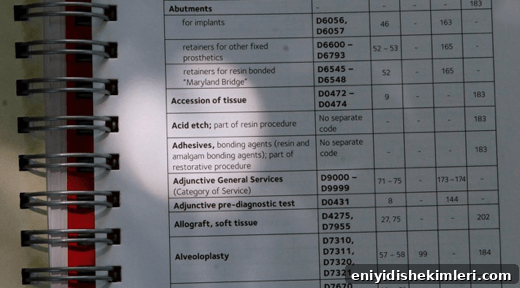
Many dentists working under tight capitation payments sometimes add miscellaneous charges or surcharges to make up for inadequate reimbursement. The actual cost of the etching material used before placing a composite filling is negligible — well under a penny — and by ADA standards it’s considered part of the restoration process rather than a separate procedure to be billed independently.
If your office tries to add an “acid etch fee,” it’s reasonable to question it. Ask for an itemized explanation of the charge and request which CDT code they are using. If there is no legitimate code or explanation, push back and ask them to remove it.
— Mark Burhenne, DDS