
If you’ve noticed shifting teeth, bite problems, or are weighing whether braces are the right choice, this guide answers common questions about braces, the types available, what to expect during treatment, and how to care for your orthodontics.
Whether you already wear braces or are considering them, the information below covers common options, how each system works, typical treatment timelines, aftercare, risks, and practical tips for successful results.
What are braces for teeth?
Braces are orthodontic appliances used to correct malocclusion — problems with the alignment of the teeth and jaw. Malocclusion includes overbite, underbite, overcrowding, spacing, rotated or missing teeth, open bite, and excessive overjet. These conditions can affect chewing, speech, oral hygiene, and self-confidence.
Orthodontic treatment aims to reposition teeth and improve jaw relationships. Most orthodontic approaches are effective and produce high rates of patient satisfaction. If a dentist or orthodontist diagnoses a bite issue, a range of treatment options can be discussed based on severity, aesthetic preferences, and budget.
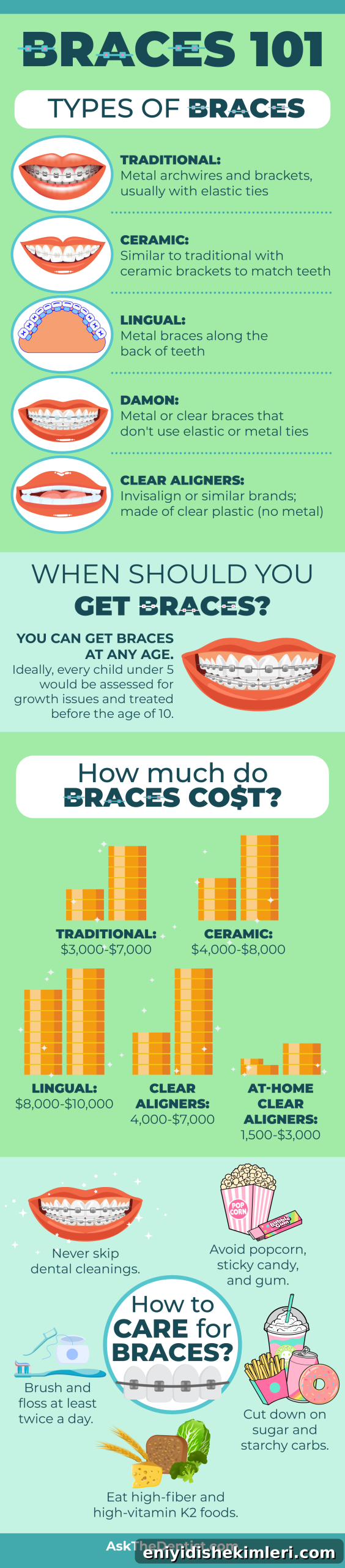
Types of Braces
There are several modern braces options. Choosing the best one depends on factors like treatment goals, visibility, comfort, timeline, and cost.
1. Traditional Metal Braces
Metal braces consist of brackets bonded to the front of the teeth connected by an archwire. Movement is controlled by periodic adjustments. Many patients, especially children, enjoy color elastic ties; self-ligating metal brackets replace elastic ties with built-in clips.
- Pros: typically the most affordable, effective for a wide range of issues, fast-acting.
- Cons: most visible option; areas around brackets can develop white spots if oral hygiene is poor.
2. Ceramic Braces
Ceramic braces work like metal braces but use tooth-colored or clear brackets that blend with enamel. They provide comparable control while being less noticeable.
- Pros: less conspicuous than metal braces, effective for many cases.
- Cons: brackets and elastic ties can stain, typically more expensive than metal, and white spot risk remains if hygiene is inadequate.
3. Lingual Braces
Lingual braces are metal brackets bonded to the inner (tongue-facing) surfaces of teeth. They are hidden in everyday situations but require special training to place and adjust.
- Pros: virtually invisible from the outside.
- Cons: harder to clean, may cause early tongue irritation, usually costlier, not ideal for very complex cases, and require more frequent specialized adjustments.
4. Damon Braces
Damon is a brand of self-ligating braces that use clips instead of elastic ties. They are available in metal and clear versions and are designed to reduce friction and, according to proponents, reduce adjustment frequency and discomfort.
- Pros: less noticeable than older metal systems, intended to reduce tightening discomfort and shorten some treatment plans for select cases.
- Cons: more expensive, not offered by every orthodontist, and long-term benefits depend on case selection.
5. Clear Aligners
Clear aligners (such as Invisalign) are removable, transparent trays worn in a series, each set advancing teeth incrementally, typically every one to two weeks. Aligners are discreet and easy to remove for eating and cleaning.
- Pros: nearly invisible, removable for eating and oral hygiene, no brackets or wires to irritate soft tissues.
- Cons: generally more expensive, require strong patient compliance, and may take longer for certain tooth movements; complex cases may still require orthodontist-directed in-office aligner treatment rather than mail-order systems.
At what age should you get braces?
Orthodontic treatment can be effective at any age, but younger patients tend to respond faster. Early assessment is recommended: specialists often separate care into Phase 1 (early intervention, usually in mixed dentition) and Phase 2 (adolescent or adult comprehensive treatment). Early intervention can guide jaw and palate growth and sometimes reduce the need for extractions or more invasive work later.
Adults can still achieve excellent results, although treatment may take longer because bone and tooth movement become less responsive with age. If you missed early intervention, don’t be discouraged — effective orthodontic options remain available.
How Dental Braces Straighten Teeth
All braces systems share common principles: controlled, sustained forces applied to teeth encourage remodeling of the surrounding bone, allowing teeth to move into new positions. Components differ between systems:
Brackets
Brackets are bonded to teeth and serve as anchors for the archwire or aligner attachments. They may be metal, ceramic, or placed on the inside of the teeth for lingual appliances.
Wires, Tubes, and Ties
Archwires connect brackets and apply continuous pressure to move teeth. Wires are changed periodically to guide progress. Ties or clips secure the wire to brackets; tubes anchor the wire at the molars. Elastics or springs are sometimes used to address bite relationships.
Movement
Together the brackets and wires (or sequential aligners) guide teeth along planned paths. Regular adjustments or new aligner sets maintain force levels and produce gradual movement over the course of treatment.
Special Appliances
Damon systems use self-ligating mechanics and shape-memory wires. Clear aligners use a sequence of trays for staged tooth movement. In severe cases, removable headgear, palatal expanders, or surgical intervention may be required to correct jaw discrepancies or create space.
Getting Braces: What to Expect
Before
Before placing braces, decay and gum disease should be treated. Your orthodontist will take x-rays, photos, and impressions or digital scans to plan treatment. Some cases require extractions, palatal expansion, or, rarely, orthognathic (jaw) surgery for proper alignment.
During
Bonding brackets and placing wires usually takes one to two hours. For metal or ceramic braces, the process typically includes cleaning, bonding brackets, placing bands if needed, and inserting the archwire. Lingual braces require more time and specialized skills. Clear aligner treatment begins with impressions or scans and then a planned series of trays manufactured for your case.
After placement and after each adjustment you may experience soreness for a few days. Over-the-counter analgesics, cold foods, or topical relief can help manage discomfort.
- Brush and floss diligently—braces trap food and plaque that can cause staining and decay.
- Consider toothpaste that supports remineralization and avoid alcohol-based mouthwashes that can disrupt oral flora.
- Wear a mouthguard for sports and follow your orthodontist’s instructions about elastic wear and appointments.
After
Removing braces is typically quick and less uncomfortable than placement. After debonding, glue is polished away and new images are taken to document results. A retainer will be provided to maintain tooth position; wearing it as instructed is essential to prevent relapse. Occasionally, additional procedures such as fiberotomy or minor gum contouring are recommended to optimize stability and appearance.
Pain with Braces: What’s Normal, What’s Not
Mild to moderate soreness is common after initial placement and following adjustments. It usually subsides in a few days. Severe, persistent pain, sharp poking wires, or loose brackets warrants a call to your orthodontist, as small problems can usually be fixed quickly.
Braces Cost (by Type)
Costs vary by region, provider, and complexity of the case. Typical ranges:
- Traditional metal braces: $3,000–$7,000
- Ceramic braces: $4,000–$8,000
- Lingual braces: $8,000–$10,000
- Clear aligners: $4,000–$7,000
- At-home clear aligners: $1,500–$3,000
Initial x-rays and consultations are additional. Many offices offer payment plans and financing. Insurance coverage varies; some policies cover a portion of orthodontic care, especially for children, while adult coverage is less common.
How to Care for Your Braces
Eating with Braces
Avoid sticky, hard, or chewy foods that can dislodge brackets or bend wires, such as popcorn, hard candy, chewing gum, and very crunchy items. Limit sugary and starchy foods that promote decay. Favor whole foods, vegetables, lean proteins, and foods that support oral health.
Problems with Wires or Brackets
If a wire or bracket becomes loose or irritates soft tissue, contact your orthodontist. Temporary relief can be achieved with orthodontic wax applied over the irritating area until you can be seen.
Wearing Retainers After Braces
Retainers stabilize teeth after active treatment. Full-time wear for the first year (commonly around 22 hours per day) is usually advised, followed by nightly wear long-term. Neglecting retainer use can allow teeth to drift back toward their original positions. Bonded retainers exist, but they require extra hygiene attention and may make flossing more difficult.
How to Brush and Floss with Braces
Careful brushing and flossing are critical. Use a toothbrush that reaches around brackets and wires, and consider an electric sonic toothbrush to improve plaque removal. Thread floss under the archwire with a floss threader or use a water flosser to clean between teeth and around appliances. Consistent, thorough hygiene reduces the risk of white spots, cavities, and gum inflammation.
Risks of Dental Braces
Orthodontic treatment is generally safe, but potential risks include increased gingivitis or gum recession if oral hygiene is poor, root resorption in some cases, white spot lesions after treatment, and the possibility of relapse if retainers are not worn. Metal appliances can release trace metal ions in susceptible individuals, and certain coatings or materials may raise concerns for some patients. Discuss material choices and risks with your provider if you have allergies or health concerns.
Dentists vs. Orthodontists for Braces
General dentists can offer many orthodontic services, but orthodontists are specialists with additional training focused on tooth movement and jaw relationships. For complex cases, growth modification, or surgical needs, an orthodontist is often the preferred provider.
Frequently Asked Questions
Q
How long does it take to move teeth with braces?
Treatment length depends on age, type of appliance, severity of the malocclusion, and whether growth modification or expansion is needed. Typical treatment ranges from several months for minor corrections to two years or more for more complex cases.
Q
Can I play sports with braces?
Yes. Wear a properly fitted mouthguard to protect your teeth, lips, and braces during contact sports.
Q
What if my wisdom teeth come in during/after braces?
Discuss wisdom teeth with your orthodontist. They will monitor eruption and recommend management to avoid shifting or decay. If you notice changes, continue retainer use and see your dentist promptly.
Q
Can I get braces for free?
Free braces are rare, but reduced-cost programs exist through teaching clinics and accredited orthodontic programs where treatment is supervised by faculty at a lower fee.
Key Takeaways: Dental Braces
Braces correct bite problems, crowding, and misalignments using several available systems. Selection depends on case complexity, aesthetics, comfort, timeline, and budget. Proper preparation, meticulous oral hygiene, and consistent retainer use are essential to maintain results. If you have questions about which approach suits your needs, consult a dental professional or orthodontist for a personalized plan.