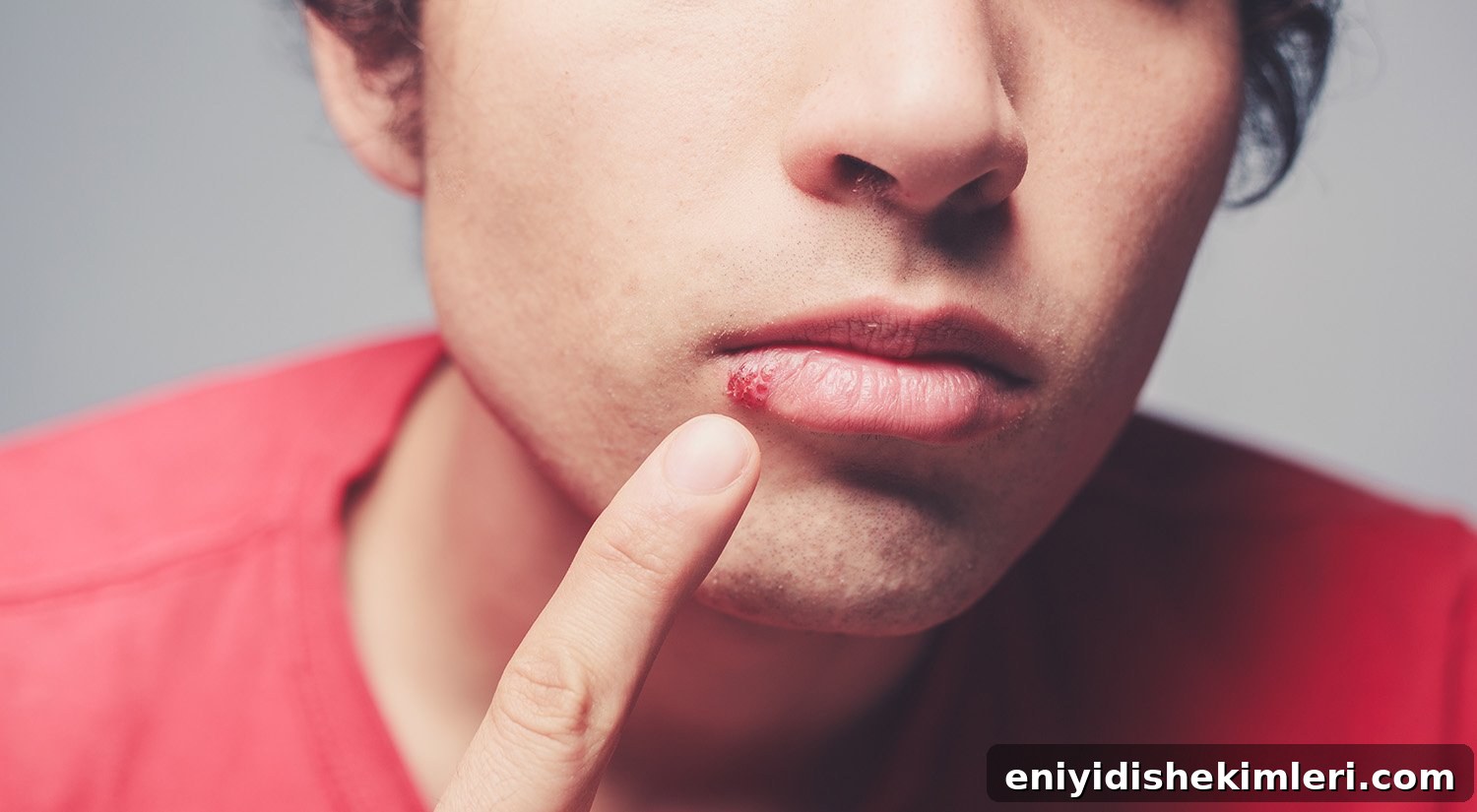
Cold sores, also called fever blisters, are painful fluid-filled blisters that most commonly appear on the lips or around the mouth. They are caused by the herpes simplex virus and are one of the most common viral infections worldwide.
Although there is no permanent cure for cold sores, antiviral medications and a range of home treatments can shorten outbreaks, reduce pain, and accelerate healing when used promptly.
What is a cold sore?
A cold sore is a blistering lesion, typically red or dark pink, that forms around the mouth and is caused by the herpes simplex virus type 1 (HSV-1). Cold sores may sometimes appear on other parts of the face and, in rare cases, can spread to the nose, inside the mouth, eyes, or fingers.
Also known as herpes labialis or oral herpes, cold sores spread through close skin-to-skin contact, such as kissing or oral sex, especially when active lesions are present. The virus is contagious even before blisters are visible, and outbreaks can recur because the virus lies dormant in nerve cells between episodes.
What does a cold sore look like?
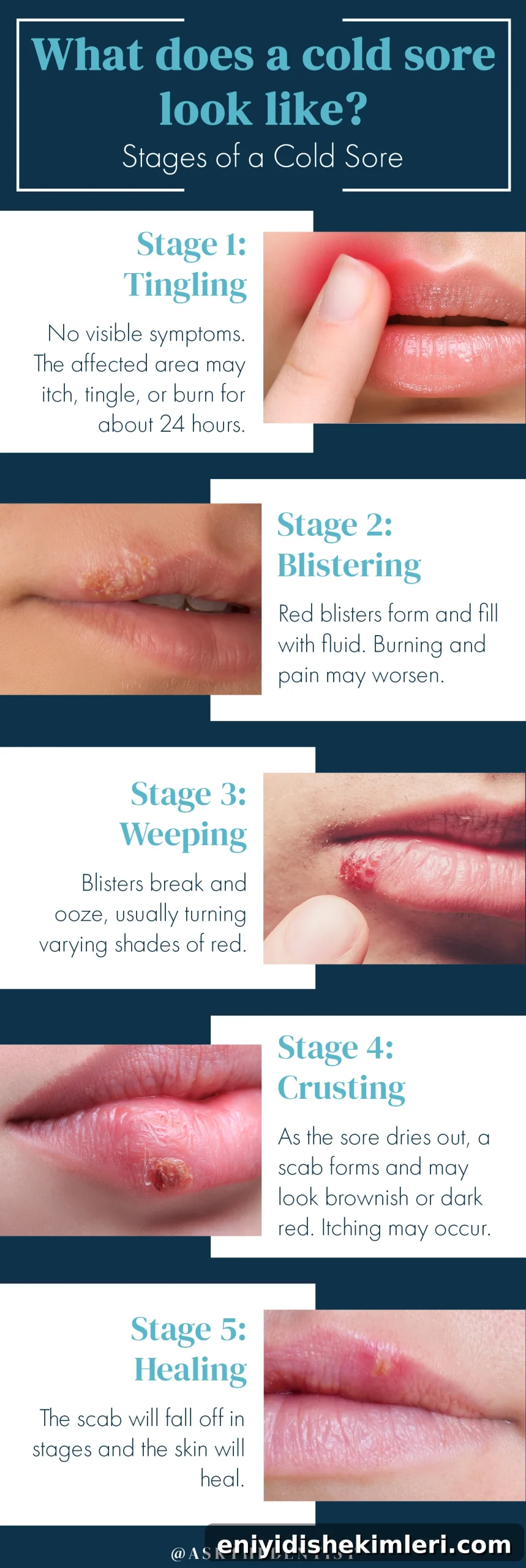
Cold sores follow a predictable progression with five stages, each having distinct signs:
- Stage 1 — Tingling: The area itches, tingles, or burns for about 24 hours before visible changes.
- Stage 2 — Blistering: Small fluid-filled blisters appear, often clustered together; the surrounding skin becomes red and inflamed.
- Stage 3 — Weeping: Blisters break and may ooze, causing painful open sores.
- Stage 4 — Crusting: The sores dry and scab over; itching and cracking are common.
- Stage 5 — Healing: Scabs fall off and the skin repairs itself.
Cold sores are contagious from the first tingling sensation until the lesion has fully healed and the skin is intact, with the highest risk of transmission during the weeping stage. Avoid picking or popping blisters, as this can prolong healing and increase the risk of scarring or spreading the virus.
Cold Sore Symptoms
Initial symptoms include tingling, burning, or itching of the skin around the mouth. As the outbreak progresses, pain and tenderness increase and multiple sores can form.
During a first outbreak, systemic symptoms may accompany the local lesion, such as:
- Sore throat
- Painful, swollen gums
- Fever or general malaise
- Headache
- Nausea or dehydration, especially if swallowing is painful
- Swollen lymph nodes
- Muscle or joint aches
In some cases, the infection can spread to the eyes; eye involvement requires immediate medical attention because untreated herpes infections of the eye can threaten vision.
What causes cold sores?
Cold sores are most commonly caused by HSV-1. The virus often enters the body in childhood and establishes lifelong latency in nerve ganglia. When reactivated by triggers, the virus travels along nerves to the skin surface to produce a new sore. HSV-2, which more often causes genital herpes, can occasionally cause oral lesions, and HSV-1 can be transmitted to the genital area through oral sex.
A person can develop symptoms several days after exposure, and they can be contagious during this incubation period even if they have not yet developed visible blisters.
Risk Factors
Many adults carry HSV-1, and most people are at some risk of developing cold sores. The most important risk factor for frequent or severe outbreaks is reduced immune function.
Conditions or situations that weaken immunity and increase risk include eczema, HIV/AIDS, autoimmune diseases, extensive burns, cancer treatments, and immunosuppressive drugs used after organ transplant. Genetic factors can also influence how often outbreaks occur.
Common triggers for reactivation include:
- Weakened immune defenses from illness or stress
- Viral or bacterial infections like a cold or flu
- Sun exposure or sunburn
- Physical or emotional stress and fatigue
- Hormonal changes such as menstruation
- Dental procedures or injury to the facial skin
Complications
While most cold sores are self-limited, complications can occur, particularly in people with weakened immune systems or certain skin conditions.
- Eczema herpeticum: People with eczema can develop widespread, potentially serious HSV infections that require urgent care.
- Herpetic whitlow: HSV can infect the fingertips and cause painful lesions.
- Eye infections: Herpes can infect the cornea and conjunctiva, risking vision loss if untreated.
- Genital infection: HSV-1 can be transmitted to the genital area during oral sex.
- Throat infections and gingivostomatitis: These can cause significant pain, fever, and difficulty eating or drinking.
- Rare central nervous system involvement: In immunocompromised individuals, HSV can rarely cause meningitis or encephalitis.
When to Call a Doctor
Most cold sores can be managed at home, but seek medical care if you or your child have:
- A high or prolonged fever
- Difficulty breathing or swallowing
- Signs of eye involvement, such as pain, redness, or vision changes
- Spreading of sores across areas of eczema
People with compromised immune systems should contact their healthcare provider promptly for guidance and possible antiviral treatment.
Diagnosis
Cold sores are typically diagnosed by physical examination. If necessary, a clinician can confirm the cause by testing fluid from an active lesion. Testing is more likely when complications are suspected or the diagnosis is uncertain.
Cold Sore Treatment
Early treatment shortens outbreaks and reduces symptoms. Over-the-counter topical antivirals and prescription oral antivirals are effective when started at the first sign of recurrence.
No treatment eradicates the virus, and no therapy reliably clears a cold sore within 24 hours. Without treatment, most outbreaks resolve in 7–10 days.
Creams & Ointments
Topical products that can help include FDA-approved docosanol cream and other topical antivirals and soothing agents. Many topical treatments work best when applied at the tingling stage and used several times daily. Use a cotton swab to apply creams to avoid spreading the virus by touch.
Medications
Prescription oral antivirals such as acyclovir, valacyclovir, or famciclovir can shorten the duration and severity of outbreaks. For people with frequent recurrences or high risk of complications, daily suppressive antiviral therapy may be recommended by a clinician.
Home Remedies
Some home remedies can ease symptoms and possibly reduce outbreak length. Common approaches include applying aloe vera gel, zinc oxide, or certain herbal preparations; using cold compresses; and avoiding known personal triggers. Evidence varies by remedy, and none replace prompt antiviral treatment when indicated.
Cold Sore Pain Relief
To relieve pain and discomfort, try:
- Cold compresses or ice wrapped in cloth
- Over-the-counter pain relievers such as ibuprofen or acetaminophen
- Topical numbing agents like lidocaine or benzocaine applied with a cotton swab
Avoid aspirin for viral illnesses in children due to the risk of Reye syndrome.
How to Prevent Cold Sores
Prevent transmission by avoiding sharing cups, utensils, lip balm, or toothbrushes with someone who has an active cold sore. Refrain from kissing or performing oral sex while sores are present. Frequent handwashing during an outbreak reduces spread.
To lower the chance of recurrences, protect lips from sun exposure with SPF lip balm, manage stress, maintain good sleep and nutrition, replace toothbrushes after outbreaks, and take steps to support immune health.
How long do cold sores last?
Initial outbreaks can last up to two weeks, while recurrent episodes generally resolve within 7–10 days. The virus remains dormant in nerve cells and can reactivate later.
Cold Sores vs. Canker Sores
Cold sores are viral, contagious blisters that occur on the outside of the mouth or lips. Canker sores are noncontagious ulcers that occur inside the mouth. They differ in appearance, cause, location, and recovery time.
Popping a Cold Sore
Do not pop a cold sore. Puncturing a blister increases the risk of spreading the virus, causing additional sores, introducing other infections, increasing pain, and promoting scarring.
FAQs
Q
Are there clinical trials available for people with frequent cold sores?
A
Clinical trial registries list ongoing studies of treatments for oral herpes; speak with your healthcare provider or search clinical trial databases for current opportunities if you are interested in participating.
Q
Do cold sores mean you have an STD?
A
Cold sores are most often caused by HSV-1, which is commonly acquired in childhood and is not typically classified as a sexually transmitted disease. However, herpes viruses can be transmitted during sexual activity, and HSV-1 can cause genital infections if transmitted to that area.
If you have concerns about frequent outbreaks, severe symptoms, eye involvement, or a weakened immune system, consult a healthcare professional for diagnosis and treatment recommendations tailored to your situation.