Need a dental crown? Crowns, often called tooth caps, are one of the most common dental treatments. Their main purpose is to protect the sensitive interior of a tooth after damage or extensive restoration.
There’s a lot of confusion about crowns: Can you glue one back on yourself? How should you care for it? Which material is best? If you or your child needs a crown, what should you expect and what are your options?
This article explains dental crowns in clear, practical terms so you understand what they are, why they’re used, how they’re placed, and how to care for them.
What is a dental crown and why might you or your child need one?
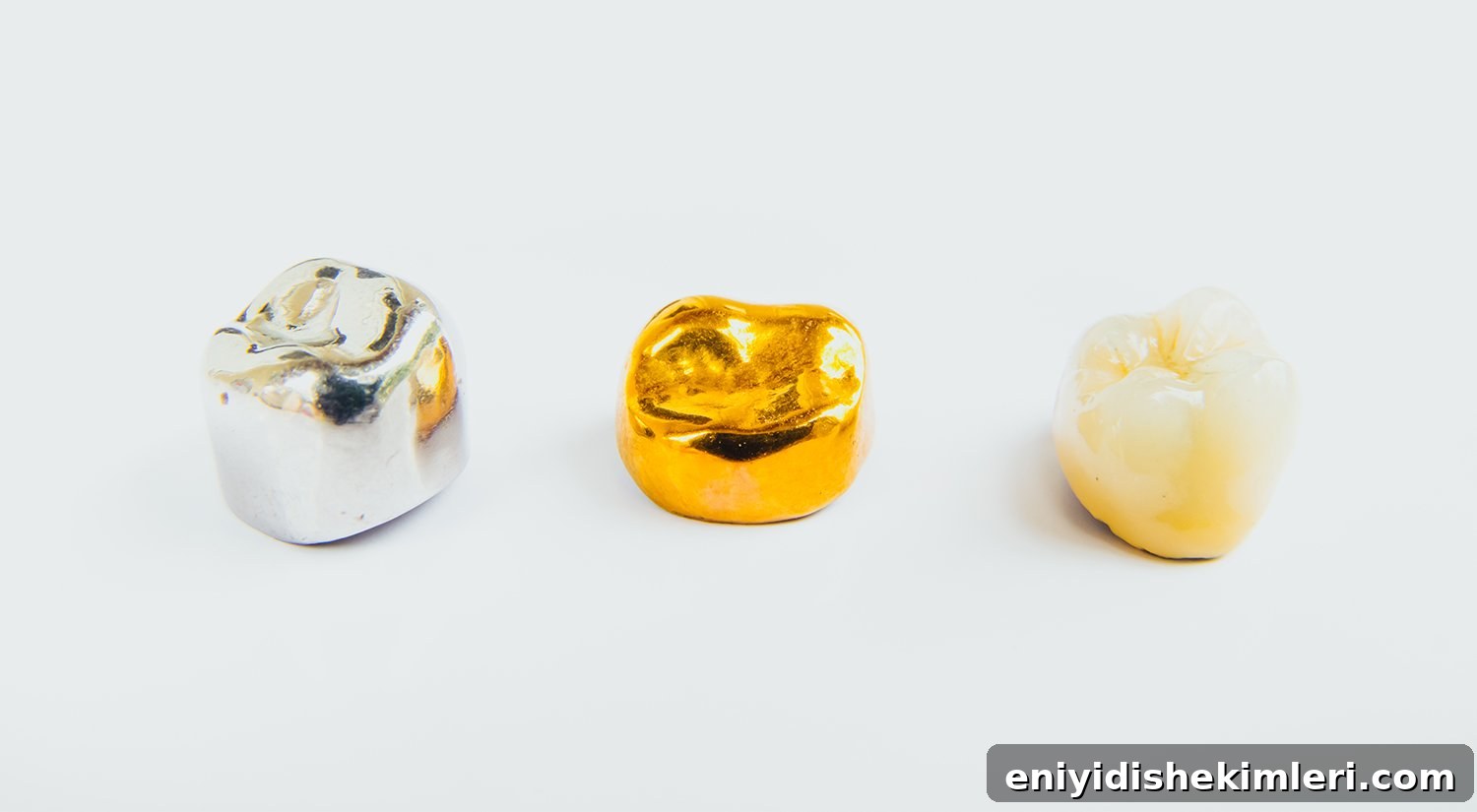
A dental crown is a cap made from a nonliving material—commonly porcelain, metal (including gold), or resin—shaped to fit over a prepared tooth. Traditional crowns cover the full visible portion of a tooth from the gum line; alternatives such as onlays or 3/4 crowns cover less of the tooth.
Common reasons for placing a crown include:
- To restore a tooth broken by blunt trauma
- After a root canal, to protect the treated tooth
- To repair a deep cavity
- When a large filling leaves too little natural tooth structure (a filling that occupies two-thirds or more of the tooth often needs a crown)
- As support for a dental bridge, where crowns are placed on the adjacent teeth to anchor the replacement tooth
The main goal of a crown is to protect the tooth from further fracture and to restore chewing function.
Children sometimes receive crowns on baby teeth when:
- The child has recurrent cavities or poor hygiene and is at high risk for further decay; crowns can be preferable to repeated fillings or procedures under general anesthesia
- A baby tooth is too decayed to be restored with a normal filling and a crown can preserve the tooth until it naturally exfoliates
Crowns are prosthetic appliances and do not behave like living teeth; understanding the differences helps with long-term care and expectations.
What happens during a crown procedure? Is it painful?
Most crown cases require two visits. During the first visit the tooth is numbed, shaped to allow the crown to fit, and an impression is taken. A temporary crown is placed to protect the tooth while the permanent crown is made—typically 2–3 weeks.
At the second visit the temporary crown is removed and the permanent crown is fitted and cemented. Some practices have in-house milling systems that can produce a crown in a single visit.
With local anesthesia, getting a crown is not usually painful. After treatment you may experience mild gum tenderness, but significant pain is uncommon.
How do crowns differ from natural teeth and how should they be cared for?
Teeth are living structures that continually undergo processes such as remineralization and wear. They can stain, respond to whitening, and change over time. Crowns are inert restorations: they don’t remineralize or respond to nerve activity, and their color remains fixed.
Temporary crowns require special care: chew on the opposite side, avoid sticky or hard foods, and slide floss rather than lift floss from between crowned teeth. Once a permanent crown is placed and the cement is set, care is essentially the same as for natural teeth: regular brushing, flossing, and maintaining a healthy oral environment.
Preventing decay at the margin where crown meets tooth is crucial. Bacteria can enter gaps and cause decay under the crown, which often leads to crown failure. Good hygiene and diet help protect the crown and the underlying tooth.
FAQs About Dental Crowns
What types of crowns are available and which is best?
Common crown materials include:
- Metal (gold or other alloys): Very durable and wears similarly to natural teeth. Gold has excellent longevity and a very small margin discrepancy.
- Porcelain (all-ceramic or porcelain-fused-to-metal): Preferred for visible front teeth for aesthetic reasons. Porcelain does not wear like natural tooth structure and may create a larger margin over time.
- Resin: Less expensive but prone to cracking and premature failure.
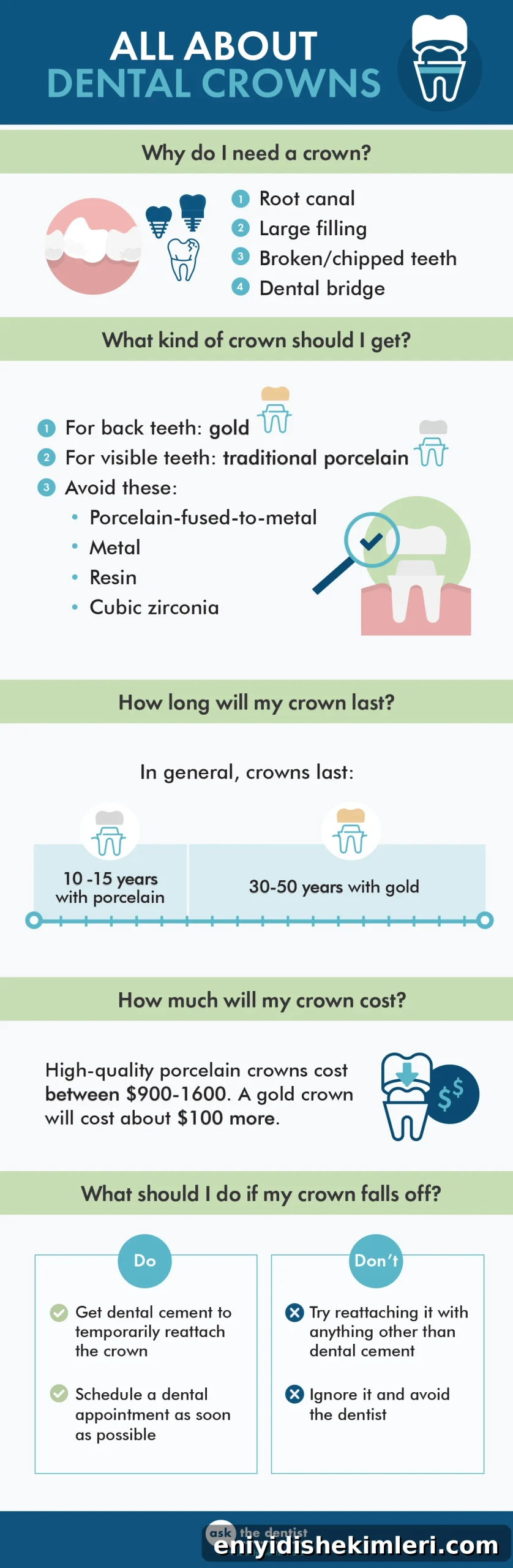
For back teeth where strength and longevity matter, gold is often the best choice when acceptable cosmetically. Porcelain is typically chosen for front teeth for a natural appearance. Stainless steel crowns are common for primary (baby) teeth.
Porcelain crowns usually last 15–20 years. Gold crowns can last 30–50 years. Porcelain-fused-to-metal crowns can show a dark line at the gumline over time.
How much do crowns cost and are there alternatives?
Prices vary by region and provider. A quality porcelain crown commonly ranges from about $900 to $1,600; gold may add to that cost. Lower-cost options from less reputable labs may be cheaper but can result in inconsistent quality. Ask your provider which brand and lab they use—reliable materials and craftsmanship matter for long-term success.
Although costs can be significant, a crown is an important investment in oral health. Delaying needed treatment risks further damage or infection. After a root canal, some delay (up to six months) may be acceptable if hygiene is excellent, but longer delays increase risk.
Can I wear a temporary crown forever?
Temporary crowns are intended only for short-term use. They may last longer in some cases, but they are softer, can change shape, promote shifting of adjacent teeth, and are more prone to bacterial buildup. A permanent crown should replace the temporary crown as soon as possible.
My crown fell off. Can I glue it back on myself?
If a crown comes off, use over-the-counter temporary dental cement available at pharmacies to hold it in place for a short time until you can see your dentist. Do not use household adhesives like Super Glue (cyanoacrylates). These can be toxic to gum tissue, damage the tooth, and complicate future dental care.
Temporary dental cement is designed to be reversible and safe for short-term reattachment; a permanent re-cementation or remake should be done by your dentist.
How does a crown stay on?
Crowns rely primarily on mechanical retention: the prepared tooth shape and a very precise fit keep the crown in place. Dental cement seals the margin against saliva but is not the primary mechanism that prevents the crown from dislodging. Proper tooth preparation with near-parallel walls is essential for long-term retention.
Why would a crown fall off and how can I prevent it?
Crowns may come off if the underlying tooth shape is inadequate, the fit is poor, or if trauma or extreme forces are applied. Sticky foods can loosen crowns over time. Preventive measures include good oral hygiene, avoiding very sticky foods, and protecting teeth from trauma.
General care tips: brush and floss properly, eat nutrient-dense foods, and address habits like mouth breathing. These habits benefit both natural teeth and crowns.
Can I whiten a crown?
Crowns cannot be whitened because they are not living tissue. Porcelain crowns resist staining, but if your natural teeth change color, the crown may no longer match. The only solution to change a crown’s shade is to have it replaced.
How long do crowns last?
With proper placement and care, porcelain crowns typically last 15–20 years; gold crowns can last 30–50 years. Crowns may require re-cementation or replacement earlier if the underlying tooth changes, if margins open, or if trauma occurs.
How should I care for a new crown immediately and over time?
After a permanent crown is placed, wait the recommended time (usually about an hour) before eating, brushing, or flossing to allow the cement to set. Once set, treat the crown like a natural tooth: regular brushing, flossing, and dental checkups. Report any looseness, pain, or shifting to your dentist promptly.
What’s the difference between crowns, veneers, and bridges?
Veneers are thin restorations that cover only the front surface of a tooth for cosmetic improvement and require less tooth reduction. Crowns encase the entire tooth and provide structural protection. Bridges use crowns on adjacent teeth to support a replacement (pontic) that fills the gap of a missing tooth.
Final thoughts on dental crowns
Crowns protect teeth when their outer structure is compromised by breakage, large fillings, root canal treatment, or decay. They’re commonly used for adults and, in some cases, for children to preserve severely decayed baby teeth.
Not every crown means a root canal is required. Crowns are prosthetic devices that require similar care to natural teeth—brushing, flossing, and routine dental care—but they cannot be whitened or biologically restored. Material choice affects longevity: gold crowns often outlast porcelain, while porcelain remains the preferred option for visible front teeth for aesthetics.
If a crown falls off, use temporary dental cement and see your dentist as soon as possible. Avoid household adhesives that can cause serious damage. With proper care and professional placement, crowns can protect teeth and restore function for many years.
What other questions do you have about crowns?