Q
Hi, I am getting braces soon, and I was wondering, do ALL your teeth have to have fallen out for you to get them?
A
Great question, Brooke. Don’t wait until every baby tooth has fallen out—by then you may have missed the best time to correct your bite.
Today’s best approach often involves two phases of orthodontic treatment. I usually recommend that children see an orthodontist by age 8. There’s no harm in an early visit, but there can be consequences if evaluation happens too late.
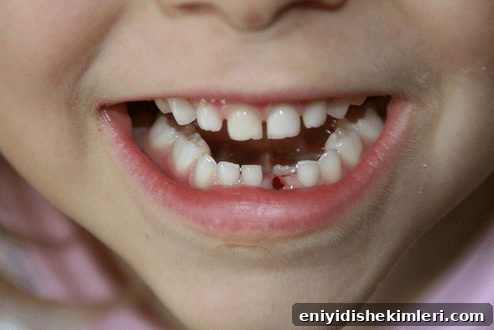
At age 8 it might be too early to start full braces, but it’s still the right time to assess how your teeth and jaws are developing. This is a transitional period when adult teeth are erupting while baby teeth are still present.
An orthodontist will evaluate jaw growth—for example, whether the lower jaw is keeping pace with the upper jaw. Often one jaw grows faster, and detecting that early allows guidance or treatment that produces a better result than intervening after all the adult teeth have come in.
When the jawbones are aligned properly, teeth require less movement to reach an ideal position. That generally means shorter treatment, fewer adjustments, and a lower risk of relapse. That is the rationale for splitting treatment into two phases.
In the best-case scenario an early visit confirms that jaw development is on track and the orthodontist simply schedules follow-up visits at the appropriate times. That gives you peace of mind and ensures you won’t miss the optimal window to correct the bite.
By guiding balanced growth of the upper and lower jaws, phase one makes the second phase simpler and shorter with less chance that teeth will return to a crowded position as you finish growing. Relapse—when teeth drift back toward their original crowded positions—can be costly and time consuming to fix later.
Phase one creates the correct amount of space for incoming adult teeth so they erupt into a proper position. With jaws aligned and space available, phase two is primarily fine-tuning, not large-scale movement.
One useful analogy: planning orthodontic treatment is like plotting a rocket flight to the moon. A careful flight plan at the start determines whether you even have a moon to land on later. Effective early treatment sets you up for a successful “moon landing” in the second phase—timing and preparation matter. Plan by age 8 or 9 to improve the odds of a smooth result by age 12 or 13.
Do not wait until all your baby teeth have fallen out—you could miss your launch window.
Mark Burhenne DDS
Learn More:The Best Electric Toothbrush for Kids