
Last week’s piece sparked more reaction than I expected — especially the part about dark chocolate! (If you missed it, it’s available on the site.)
Let’s continue the conversation.
Dentists spend a lot of time telling patients what to avoid — sugar, soda, ice, sticky candy. Less often do they explain what to eat. If you’re not working with a functional dentist, here are six more foods that benefit your teeth and support a healthy oral microbiome.
7. Green tea
I drink one cup mid-morning, after coffee. The catechin EGCG in green tea is an antioxidant that also interferes with glucosyltransferase enzymes (GTF) used by Streptococcus mutans, the main cavity-causing bacterium, to build the sticky biofilm that lets it cling to enamel. Reduce the biofilm and you reduce S. mutans’ foothold.
Research from 2021 shows EGCG inhibits S. mutans biofilm formation in a dose-dependent way — the more consistently you drink green tea, the more you disrupt early steps in cavity formation. One caution: lower-quality teas can contain heavy metals depending on where they’re grown. Choose teas tested for contaminants or from reputable sources.
8. Pastured eggs
I often have two soft-boiled eggs in the morning. The benefit comes from the yolks. Pastured hen yolks supply vitamin D3 and vitamin K2, two fat-soluble nutrients that work together: D3 improves calcium absorption while K2 directs calcium into teeth and bones rather than soft tissues or arteries.
Many people supplement D3 without K2, which can raise blood calcium but misdirect mineralization. Pastured eggs provide both vitamins in a bioavailable balance. Conventional supermarket eggs from caged hens usually contain much lower levels of D3 and K2, so if you can access pastured eggs at a farmers’ market they’re worth choosing.
9. Arugula, spinach, and beets
Dark leafy greens and beets are rich in dietary nitrates. Certain bacteria on the tongue convert those nitrates into nitric oxide, a molecule that dilates blood vessels, supports healthy blood pressure, and ensures the tissues around your teeth receive blood and nutrients needed for repair.
Using antiseptic mouthwash indiscriminately kills these beneficial oral bacteria and can blunt nitrate-to-nitric-oxide conversion. A 2017 study following nearly 1,000 adults over three years found that twice-daily mouthwash users had a higher risk of developing prediabetes or diabetes, likely because oral bacteria that generate nitric oxide were suppressed. Eat your greens, avoid frequent antiseptic rinses, and consider alternatives that preserve helpful oral microbes.
10. Sardines
A 4-oz tin of wild sardines in olive oil delivers more vitamin D3 than several eggs and provides long-chain omega-3s (EPA and DHA). Those omega-3s help lower systemic inflammation, a driver of gum disease, cardiovascular disease, and arthritis. Sardines are low on the food chain, so they typically carry less mercury and heavy metal contamination than larger fish. Choose wild-caught fish, packed in olive oil, with bones and skin intact for the best nutrient profile.
11. Shiitake mushrooms
Compounds in shiitake mushrooms interfere with how Streptococcus mutans adheres to teeth. Specifically, they inhibit the glucosyltransferases S. mutans uses to turn sugar into sticky glucans that build an acid-retaining biofilm. In other words, shiitake doesn’t simply kill bacteria — it reduces their ability to cling and form harmful biofilms.
This approach is called modulation: changing microbial behavior rather than eradicating microbes. Shiitake targets virulence mechanisms that are stronger in S. mutans than in benign commensals, so the oral biofilm shifts away from a cavity-promoting state instead of being indiscriminately wiped out. Shiitake also supplies B vitamins that gum tissue uses during repair.
12. Leeks
Leeks belong to the allium family (onions, garlic, shallots) and are rich in prebiotic fibers called fructans. These fibers feed beneficial commensal bacteria in the mouth — the species that help produce nitric oxide, support remineralization, and crowd out cavity-causing microbes. Streptococcus mutans prefers simple sugars and cannot efficiently use fructans, so eating leeks favors helpful bacteria over harmful ones.
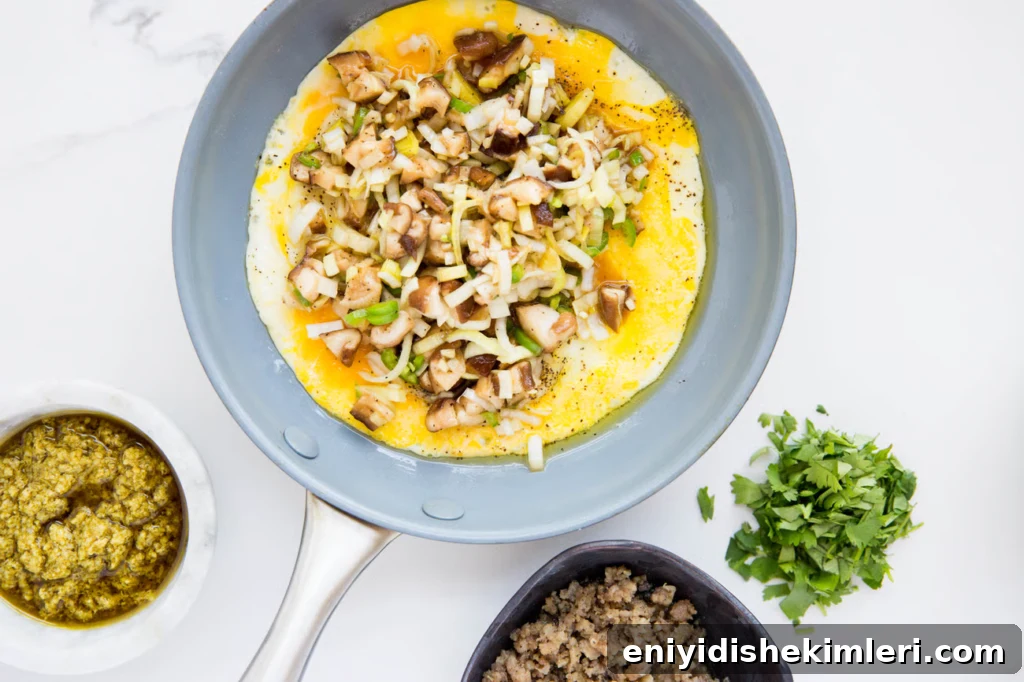
I sauté leeks with shiitake and serrano peppers and fold them into an oral-microbiome-friendly omelet on weekends. If you want a single breakfast combining pastured eggs, shiitake, and leeks, try a recipe that brings them together for a nutrient-rich start to the day.
Eat well. And remember a practical rule from last week: wait 30 to 45 minutes after eating before brushing your teeth to protect softened enamel. If you’re rushing out in the morning, brush before breakfast rather than immediately after.
— Dr. B

Further reading on AsktheDentist.com:
Why Your Cardiologist Should Talk to Your Dentist — a deep dive on the gum-disease and heart-health link that explains why greens and beets matter.
I Add This to My Water Every Morning — a look at mineral-rich hydration and how it supports saliva and oral health.
What I Wish More People Knew About Green Tea and Your Teeth — an in-depth exploration of why green tea can be a useful part of your oral care routine.
Top Vitamin K2 Foods — explains how K2 helps direct calcium into teeth and bones instead of arteries.
Citations:
EGCG and S. mutans biofilm inhibition: Zayed SM, Aboulwafa MM, Hashem AM, Saleh SE. “Biofilm formation by Streptococcus mutans and its inhibition by green tea extracts.” AMB Express. 2021;11:73.
Mouthwash, nitric oxide, and prediabetes risk: Joshipura KJ, Muñoz-Torres FJ, Morou-Bermudez E, Patel RP. “Over-the-counter mouthwash use and risk of pre-diabetes/diabetes.” Nitric Oxide. 2017;71:14-20.
Shiitake antigingivitis selectivity: Ciric L, Tymon A, Zaura E, et al. “In vitro assessment of shiitake mushroom (Lentinula edodes) extract for its antigingivitis activity.” Journal of Biomedicine and Biotechnology. 2011;2011:507908.