As a dentist, I believe in giving patients the tools and knowledge to address the root causes of dental problems rather than merely treating symptoms. That approach is especially important when it comes to cavities.
Many people experience dental anxiety tied to cavities, and fillings are often presented as the default solution—even for very small areas of decay. While some cavities do require fillings, particularly those that reach the nerve and cause pain, smaller cavities can sometimes be reversed at home. Much of the ability to halt or reverse early decay comes from the foods you eat and the nutrients you provide your body.
Preventing cavities is the best strategy, and the same nutritional habits that help heal early decay also protect against new cavities forming.
Before we look at specific foods that support cavity prevention and healing, it helps to understand how cavities form and the role diet plays in that process.
Four main factors contribute to typical cavity formation:
- Your saliva and its properties — including mineral content, volume, and pH.
- Your oral microbiome — the community of microbes in your mouth, which can be harmful, beneficial, or neutral.
- Your diet — whether you’re consuming the nutrients needed for remineralization.
- Frequency — how often these elements align to promote decay.
The foods you eat directly affect both your oral microbiome and saliva. Diets high in the wrong foods create an environment where decay-causing bacteria thrive. Diet quality also determines if you’re getting the vitamins and minerals necessary for your teeth to remineralize. Remineralization is the natural process of restoring minerals to demineralized areas of teeth, allowing them to repair and maintain their structure.
Teeth undergo constant wear and repair. That ongoing regenerative ability depends on adequate intakes of specific nutrients. If those nutrients are missing from your diet or supplements, you limit your teeth’s capacity to heal.
In short: some foods contribute to cavities, but others can help prevent and even heal early decay.
What to Eat to Heal Cavities Naturally
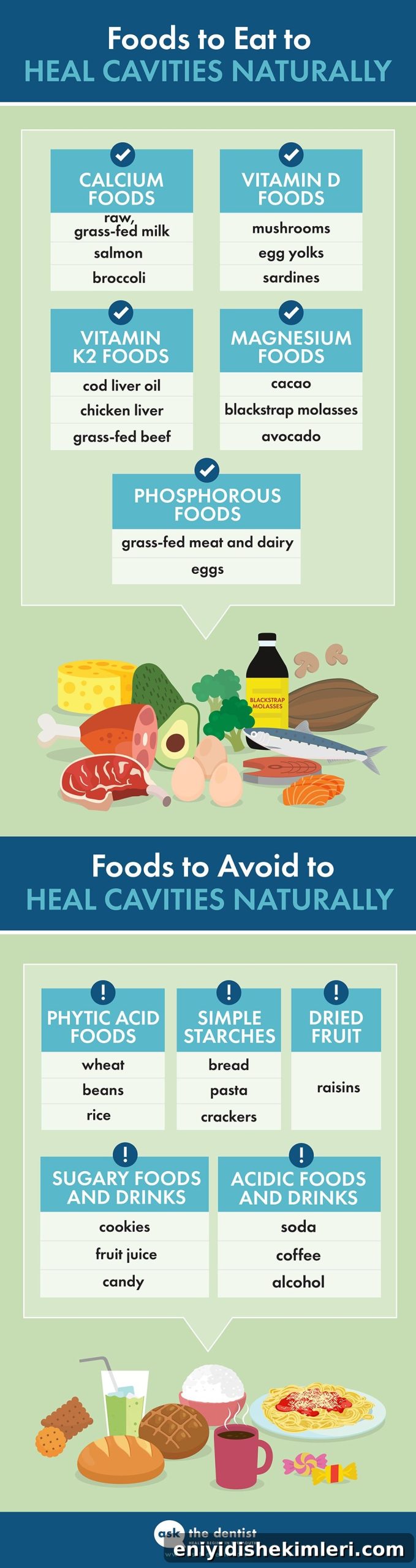
Below are the nutrients most important for remineralization and common food sources for each.
Calcium
Calcium is a primary building block for teeth and supports saliva production, which helps redeposit minerals onto tooth surfaces. While dairy like milk and cheese are well-known calcium sources, they’re not the only options and may be problematic for those with allergies or sensitivities. Raw, grass-fed dairy tends to be richer in minerals and more easily tolerated by some people. Other excellent calcium sources include salmon, oysters, clams, shrimp, broccoli, leafy greens, nuts, cauliflower, figs, and olives.
Vitamin D
Vitamin D helps the body absorb calcium and phosphorus. Without adequate vitamin D, supplementing minerals is less effective. Sun exposure is the best natural source, but dietary sources include mushrooms (exposed to sunlight), egg yolks, and fatty fish such as salmon and sardines. Clinical reviews suggest vitamin D may help reduce the incidence of dental caries, supporting its role in prevention.
Vitamin K2
Vitamin K2 works with vitamin D to direct calcium and other minerals into bones and teeth. Foods rich in K2 include cod liver oil, egg yolks, chicken liver, grass-fed organ meats, and aged cheese for those who tolerate dairy. D3 and K2 are most effective when balanced together, and obtaining both consistently from food can be challenging for many people.
Magnesium
Magnesium supports numerous bodily processes, including mineral balance and tooth remineralization. It helps regulate calcium and phosphorus so they function properly. Good sources of magnesium include squash seeds, cacao, blackstrap molasses, leafy greens, and avocado.
Phosphorus
Phosphorus is another mineral important for tooth structure. While it’s present in beans, grains, and nuts, those plant sources often contain phytic acid, an antinutrient that binds minerals and reduces their absorption. Phytic acid-free sources of phosphorus—such as meats, eggs, and dairy—are generally easier for the body to use.
Foods to Avoid When Trying to Heal Cavities
Understanding demineralization helps explain why certain foods undermine dental health. Demineralization refers to the loss of essential minerals from the teeth; it can stem from nutrient deficiencies or from consuming foods and drinks that strip or block mineral absorption.
Below are foods and categories that promote demineralization and make natural healing of cavities difficult.
Foods High in Phytic Acid
Phytic acid is an antinutrient that inhibits absorption of minerals like calcium and magnesium. It’s commonly found in grains, legumes, and nuts, including:
- Wheat
- Beans
- Rice
- Almonds
- Soybeans
- Corn
- Lentils
Reducing intake of high-phytate foods, or using preparation methods that reduce phytic acid (soaking, fermenting, or sprouting), can improve mineral availability.
Simple Starches
Simple starches break down into sugars quickly in the mouth, feeding decay-causing bacteria. Even foods that seem harmless—like saltine crackers—can contribute to cavity formation. Other examples include:
- Pasta
- White bread
- White rice
- Snack crackers
Sugary Foods and Drinks
Sugary items feed oral bacteria and often displace nutrient-dense foods that support remineralization. To support healing, minimize or avoid:
- Cookies and cake
- Sugary drinks and punch
- Fruit juice
- Candy
Dried Fruit
Dried fruit concentrates natural sugars and becomes sticky, adhering to teeth and prolonging bacterial exposure—similar to a slow-release sugary coating that promotes decay.
Acidic Foods and Drinks
Highly acidic items can erode enamel and accelerate demineralization. Examples include:
- Soda
- Coffee
- Citrus juices (orange, lemon, grapefruit)
- Sports drinks
- Energy drinks
- Alcohol
- Kombucha
Acidic beverages lower enamel hardness and strip minerals from teeth. If you consume acidic or sugary beverages, rinse your mouth with water afterward and avoid prolonged sipping.
Final Thoughts: Best Diet for Remineralization
A diet focused on vitamin D, vitamin K2, magnesium, calcium, and phosphorus supports tooth remineralization and helps reverse early decay. Avoiding or minimizing sugary, starchy, highly acidic, and high-phytate foods makes remineralization more achievable.
When you do eat acidic or sugary foods, rinse with water afterward and keep those foods to a minimum. Prioritizing nutrient-dense whole foods, adequate sunlight, and balanced mineral intake gives your teeth the best chance to heal and remain strong.
Dr. Mark Burhenne