
As you walk down the toothpaste aisle at the grocery store, you’re met with a chorus of claims:
“Anti-cavity!”
“Professional strength whitening!”
“Tartar control!”
“Fresh breath!”
Can a single toothpaste really do all of that?
What’s misleading is that toothpaste is primarily useful for one thing: it’s a polishing paste that helps remove the film that builds up on your teeth throughout the day (and night).
That’s the main job.
With all the added features and marketing language, it’s easy to believe toothpaste is a cure-all. Manufacturers have turned toothpaste into a multitool of oral claims — which should make you skeptical. Toothpaste is an aid to brushing, not a replacement for basic oral care. Below I’ll explain what common marketing claims actually mean and what truly matters when choosing a toothpaste.
Toothpaste Marketing Translations
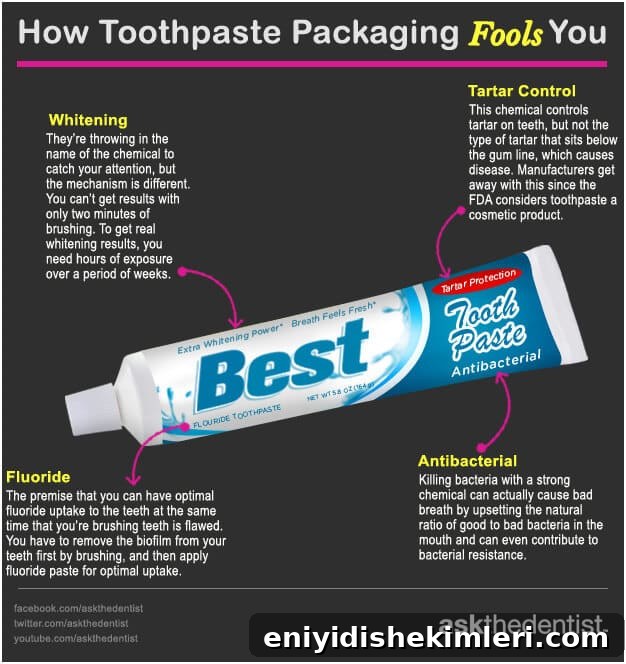
Whitening
There are two main types of whitening toothpastes. Some newer formulas include hydrogen peroxide or similar chemicals intended to whiten teeth chemically. However, you won’t get meaningful whitening from just two or five minutes of brushing; effective peroxide whitening requires longer contact time, often measured in hours.
Other whitening toothpastes rely on increased abrasives — essentially acting like a gentle sandpaper to polish and remove surface stains from coffee, tea, and berries. These can reduce surface discoloration, but they do not change the intrinsic color of your teeth. I don’t recommend abrasive whitening toothpastes because repeated use can wear away enamel and dentin over time.
Freshens Breath
“Freshens breath” on a tube is mostly a short-term cosmetic effect. Many formulas rely on strong flavors to mask bad breath for a few minutes. Some products include antibacterial agents that can temporarily reduce odor-causing bacteria, but these agents may also disrupt the mouth’s healthy bacterial balance and, in some cases, make breath worse.
Persistent bad breath isn’t solved by toothpaste alone. It usually stems from inadequate brushing and flossing, failure to clean the tongue, or an underlying medical issue. Address the root cause rather than expecting toothpaste to cure halitosis.
Fluoride
Topical fluoride can help remineralize teeth, and most dental professionals agree fluoride has a role in preventing decay. But toothpaste fluoride has limits. Many store-brand toothpastes contain about 1,100 parts per million (ppm) of fluoride, which offers some protection but is not the higher-concentration therapy sometimes needed for remineralization. Prescription fluoride gels or pastes with higher fluoride concentrations (around 5,000 ppm) are available from dentists for patients who need more intensive treatment.
Also, optimal fluoride uptake is best achieved after cleaning the teeth — removing the biofilm first and then applying a fluoride product. Brushing and delivering fluoride at the same time is not the most effective sequence for maximum uptake.
Tartar Control
“Tartar control” usually means the formula contains chemical ingredients that reduce the rate at which plaque mineralizes into tartar in lab tests. That said, tartar below the gumline is what contributes to gum disease, and toothpaste cannot reach effectively beneath the gums. The most reliable way to control tartar is prevention: frequent and proper brushing, daily flossing, and regular professional cleanings. No toothpaste can replace those habits.
What Really Matters in a Toothpaste
I favor prevention through healthy habits rather than relying on chemicals or quick fixes. Marketers know we want instant solutions, and with toothpaste they often promise more than is realistic. Understanding what toothpaste actually does helps you make better choices.
My Recommendation
Choose a natural, safe toothpaste free of unnecessary harsh chemicals. Don’t be swayed by flashy marketing—remember the primary purpose of toothpaste is to assist mechanical cleaning.
Pick a flavor you like. Enjoying the taste makes brushing a habit you’ll stick with. A pleasant flavor helps encourage consistent brushing twice a day.
Dry brush when needed. You don’t always need toothpaste to clean your teeth. Keeping a toothbrush in your bag or car allows you to clean your teeth after meals when brushing isn’t convenient.
Inform yourself. Learn how to read ingredient lists and marketing claims so you can choose products that match your needs. If you want deeper guidance, reputable consumer guides and your dental professional can help you cut through advertising noise.
Consider making your own toothpaste. Some people prefer DIY recipes that use simpler, familiar ingredients. If you try homemade toothpaste, make sure the recipe is safe and supports oral health.
Mind your diet. Foods that promote an alkaline environment — vegetables, nuts, and minimally processed foods — reduce acid in the mouth, which helps discourage decay. Limiting sugary and highly acidic foods supports dental health.
Check your technique. Brushing and flossing effectively matters more than relying on toothpaste claims. Poor technique can damage teeth and gums or fail to remove plaque properly.
Don’t let packaging mislead you. Toothpaste is an aid to good oral hygiene, not a magic solution. Prioritize consistent, correct cleaning habits and professional care, and choose products that support those goals.
Mark Burhenne DDS