Last Updated February 2023
Below is an up-to-date collection of studies on the safety and effectiveness of hydroxyapatite toothpastes. This resource is intended for patients and dental professionals who want a concise, evidence-based reference. Bookmark it, share it with patients, or contact us if you know of additional studies that should be included.
Credit for the idea goes to Jacqueline Carcaramo, RDH (the.flossophy on Instagram), who maintained a similar repository. Combining our lists allowed us to publish a more comprehensive database for clinicians and hygienists focused on biomimetic oral care.
Studies on Hydroxyapatite Toothpaste Efficacy & Safety
Biomimetic hydroxyapatite and caries prevention: a systematic review and meta-analysis (2021)
A systematic review and meta-analysis of studies on micro-hydroxyapatite concluded there is good evidence that micro-hydroxyapatite in oral care products can reduce caries even without fluoride. The review did not determine an optimal concentration, though later research suggests effective micro-hydroxyapatite levels around 10–15% by formulation standards.
Nano-hydroxyapatite and its applications in preventive, restorative and regenerative dentistry: a review of literature (2014)
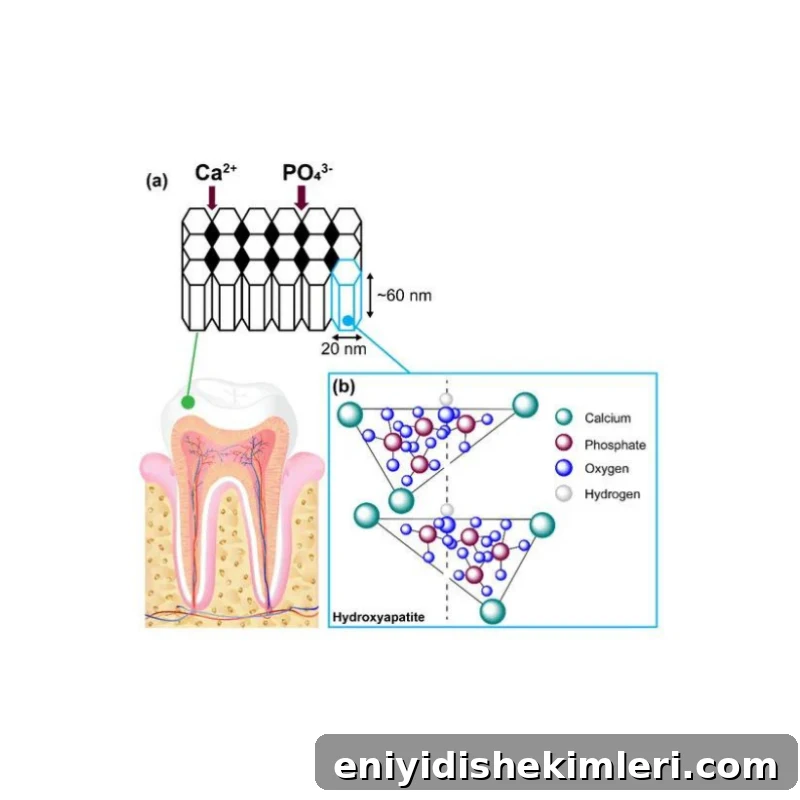
This review summarizes the literature on nano-hydroxyapatite, highlighting its preventive, restorative, and regenerative uses in dentistry and other medical fields. It provides a broad perspective on how nano-hydroxyapatite has been applied across disciplines.
Remineralization potential of fully demineralized dentin infiltrated with silica and hydroxyapatite nanoparticles
Infiltrating demineralized dentin with silica and hydroxyapatite nanoparticles promoted heterogeneous mineral deposition in the dentin collagen matrix after exposure to artificial saliva, indicating a promising route for dentin repair.
Reconsidering remineralization strategies to include nanoparticle hydroxyapatite
An in vitro study showed deposition of nanoparticle hydroxyapatite on demineralized enamel after treatment with an experimental remineralization gel. The findings support combining pH neutralization approaches with nanoparticle hydroxyapatite for improved remineralization.
Effect of nano-hydroxyapatite concentration on remineralization of initial enamel lesion in vitro (2009)
This study examined four concentrations of nano-hydroxyapatite (1%, 5%, 10%, 15% by weight). The 10% and 15% groups showed measurable remineralization. Note: concentration here was calculated by weight, which may differ from how commercial toothpastes report hydroxyapatite concentration.
Remineralization Potential of Nano-Hydroxyapatite on Initial Enamel Lesions: An in vitro Study (2011)
This in vitro work found nano-hydroxyapatite produced greater remineralization when pH was below neutral. Ion exchange for remineralization is most effective in a slightly acidic range (around pH 5.5–6.5). The study reported better surface microhardness recovery with nano- versus micro-hydroxyapatite.
Combined Effects of Nano-Hydroxyapatite and NaF on Remineralization of Early Caries Lesion
This study evaluated the combined effects of nano-hydroxyapatite and fluoride mouthrinse on early enamel lesions using an in vitro remineralization model.
Effectiveness of nano-hydroxyapatite toothpaste in reducing dentin hypersensitivity: a double-blind randomized controlled trial
A double-blind randomized clinical trial compared a nano-hydroxyapatite dentifrice with a fluoride dentifrice and a placebo for reducing dentin hypersensitivity, demonstrating clinical benefit from nano-hydroxyapatite formulations.
Comparison of Nano-Hydroxyapatite and Sodium Fluoride Mouthrinse for Remineralization of Incipient Carious Lesions
Both nano-hydroxyapatite and sodium fluoride mouthrinses significantly enhanced remineralization and increased tooth microhardness in this study.
Remineralization Potential of New Toothpaste Containing Nano-Hydroxyapatite
A study comparing nano-hydroxyapatite toothpaste with a control found similar Vickers hardness results and indicated that nano-sized hydroxyapatite can remineralize early caries lesions. Adding fluoride did not show a synergistic effect in that experiment.
Enamel remineralization and repair results of Biomimetic Hydroxyapatite toothpaste on deciduous teeth: an effective option to fluoride toothpaste (2019)
This research included both in vitro and in vivo components, strengthening evidence that biomimetic hydroxyapatite formulations can support enamel repair in primary teeth.
Comparison of hydroxyapatite and fluoride oral care gels for remineralization of initial caries: a pH-cycling study (2020)
A peer-reviewed pH-cycling study showed a 15% micro-hydroxyapatite gel was as effective as a high-strength fluoride gel (12,500 ppm) in remineralizing initial caries lesions, suggesting micro-hydroxyapatite can be a clinical alternative in some scenarios.
Enamel and dentine remineralization by nano-hydroxyapatite toothpastes
Studies comparing nano-hydroxyapatite toothpastes to amine fluoride toothpastes found higher remineralizing effects on dentine and comparable effects on enamel, indicating nano-hydroxyapatite’s broad potential for tooth repair.
Remineralization of early caries by a nano-hydroxyapatite dentifrice
A randomized, double-blind, crossover in situ study reported that an nHAP dentifrice produced remineralization comparable to fluoride dentifrice and also inhibited caries progression, supporting nHAP as a viable fluoride alternative.
Synthetic biomimetic carbonate-hydroxyapatite nanocrystals and other early studies consistently demonstrate nano-hydroxyapatite’s ability to support enamel remineralization.
Research on remineralizing dental composites and hydroxyapatite nanoparticles shows these particles release calcium and phosphate in low pH environments and can promote remineralization of caries-like lesions.
Effect of hydroxyapatite nanoparticles on enamel remineralization and estimation of fissure sealant bond strength to remineralized tooth surfaces: an in vitro study
This in vitro study assessed nano-hydroxyapatite’s capacity to remineralize enamel and evaluated its impact on sealant microleakage and shear bond strength, reporting positive remineralizing effects without adverse impacts on bonding performance.
Comparative efficacy of a hydroxyapatite and a fluoride toothpaste for prevention and remineralization of dental caries in children (2019)
Clinical comparisons in pediatric populations indicate that hydroxyapatite toothpastes can match fluoride toothpastes in preventing and remineralizing caries under study conditions.
SCCS Final decision
Regulatory and safety assessments, such as SCCS opinions on hydroxyapatite nanoparticles, provide additional context on product safety and acceptable use in consumer formulations.
Other clinical and laboratory studies, including split-mouth trials after orthodontic debonding, further document beneficial effects of nano-hydroxyapatite in reducing demineralization and supporting enamel recovery.
Putting the research into practice
The body of evidence supports nano- and micro-hydroxyapatite as safe, biomimetic alternatives or complements to fluoride for remineralization and sensitivity reduction. When selecting a product, consider the form (nano vs micro), concentration, and whether the formulation preserves the particles’ bioavailability. For routine daily care, products that deliver clinically studied particle sizes and adequate concentrations can support enamel maintenance. For higher-risk situations — such as early cavities, post-orthodontic white spots, recession-related sensitivity, or periods of increased caries risk — higher-concentration topical applications may be appropriate and are used in clinical practice under professional guidance.
References
Comparative efficacy of a hydroxyapatite and a fluoride toothpaste for prevention and remineralization of dental caries in children
In vitro determination of the remineralizing potential and cytotoxicity of non-fluoride dental varnish containing bioactive glass, eggshell, and eggshell membrane
Comparative efficacy of a hydroxyapatite and a fluoride toothpaste for prevention and remineralization of dental caries in children (Nature publication)
Nano-hydroxyapatite toothpaste ingredient for teeth remineralization and sensitivity (industry overview)
Nano Hydroxyapatite Powder (ingredient reference)
SCCS Final decision
Bionic effects of nano hydroxyapatite dentifrice on demineralised surface of enamel post orthodontic debonding: in-vivo split mouth study