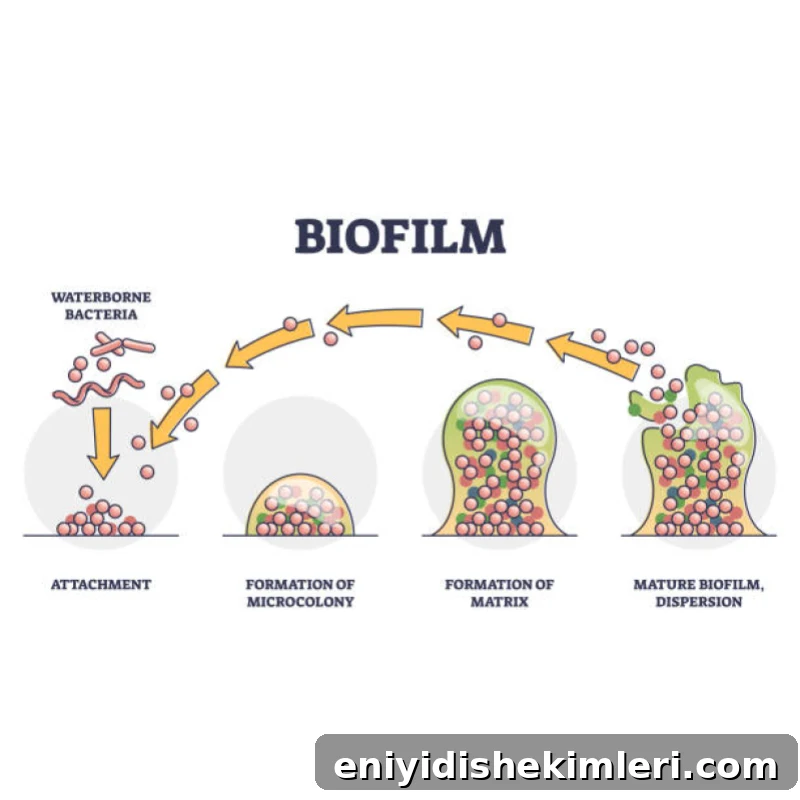
I used to think biofilm was the enemy. That’s what we were taught in dental school: scrub harder, rinse longer, kill the “sugar bugs.” Over time I learned that approach is misguided.
When biofilm is depleted, it’s not just your gums that are at risk. You lose one of the body’s primary immune barriers. This is about whole-body resilience, not only dental health.
Biofilm isn’t simply grime. It’s infrastructure: a living matrix that houses the oral microbiome—an ecosystem that evolved to help protect us. Biofilm and the microbes within it work together to reinforce and defend the mouth, and their stability relies on minerals—above all, magnesium.
What biofilm is really made of
That thin, fuzzy film you notice on your teeth in the morning is biofilm. It’s a living shield and the mouth’s first line of defense, yet many common habits degrade it. Brushing too aggressively, frequent antiseptic rinses, and detergents can strip away this protective layer.
Biofilm is a structured community: a scaffold attached to enamel and gums that depends on nutrients and minerals to remain stable. You’ve likely heard about calcium, phosphate, and boron—minerals that help remineralize teeth. Hydroxyapatite toothpastes supply these to saliva, biofilm, and oral bacteria.
Magnesium plays a central role. It helps beneficial bacteria maintain membrane stability, supports nutrient exchange, and strengthens the biofilm matrix. Without adequate magnesium, that structure weakens and becomes less functional.
How to get magnesium
- Dark leafy greens such as spinach and chard
- Pumpkin seeds and almonds
- Mineral-rich bottled or filtered water (check labels)
- If diet alone isn’t enough, a well-absorbed magnesium supplement can help. Soil depletion means many foods contain less magnesium than they once did, so supplementation is common and often effective.
Once absorbed into the bloodstream, magnesium is secreted into saliva by the salivary glands, providing the oral microbiome with what it needs. A healthy biofilm is protective, not pathogenic.
- It buffers oral pH
- It helps block harmful microbes
- It modulates local immune response
The real problem is not biofilm itself but how we treat it. Repeated use of antiseptic mouthwashes, detergent-heavy toothpastes, and mineral-poor diets strips away the protective layer. Then we wonder why issues like cavities, bleeding gums, or even cognitive fog persist.
Where biofilm belongs
The mouth is highly exposed—constantly challenged by dryness, toxins, and foreign substances. Biofilms naturally form on moist, non-sterile surfaces such as the mouth, nasal passages, gut lining, skin, and teeth. They don’t form on internal organs because those surfaces are protected from the external environment.
Biofilm begins to reform on teeth within minutes after brushing. This rapid restoration reflects how urgently the body tries to rebuild its barrier, similar to clotting after a cut. Biofilm formation is a cooperative process between host tissues and microbes.
Watch for these signs of a compromised oral barrier:
- Dry mouth upon waking
- Gums that bleed even with gentle brushing
- Persistent bad breath
- Frequent canker sores that heal slowly
These signs can indicate a depleted biofilm, and low magnesium may be a contributing factor. Support oral stability by avoiding essential oil‑based and alcohol‑based mouthwashes, choosing milder toothpastes without harsh detergents, eating mineral-rich foods, staying hydrated, and brushing gently rather than obsessively.
What this means beyond the mouth
Magnesium deficiency affects the whole body, not just the gums. Common symptoms associated with low magnesium include poor sleep, sugar cravings, shallow breathing, brain fog, and fatigue. Oral and systemic health are connected: what happens in the mouth often reflects wider mineral and immune status.
Practical steps to take
Many adults do not reach 500–600 mg of magnesium daily. The RDA (around 300 mg) was set to prevent obvious deficiency, not to optimize health. Try this approach:
- Track your magnesium intake for three days to establish a baseline.
- Prioritize food sources:
- 1 cup cooked spinach ≈ 150 mg
- 1 oz pumpkin seeds ≈ 150 mg
- 1 oz almonds ≈ 80 mg
- Dark chocolate (85%) ≈ 65 mg per square
- Drink mineral-rich water when possible.
- If needed, supplement with a well-absorbed magnesium product to reach a target range—many people aim for 500–600 mg total daily for a 30‑day trial to assess effects.
If magnesium is low, the biofilm cannot fully stabilize. A weakened biofilm leaves the oral immune system at a disadvantage, increasing inflammation, bleeding gums, and systemic symptoms like fatigue. Addressing magnesium status can be a key step toward restoring oral and overall resilience.
Before buying another oral care product, track and optimize your magnesium intake. Try increasing to a consistent daily target for 30 days, then evaluate: is breath fresher? Are gums calmer? Is energy steadier? These improvements can indicate the biofilm is recovering.
—Dr. B

P.S. What should I write about in the next newsletter? Reply and let me know the topics you’d like to see covered.